GPPAC Multistakeholder Forum at RCSS, Sri Lanka On Climate-Disaster Vulnerability and Need for Community-Centred Solutions in Sri Lanka — 5 June 2026
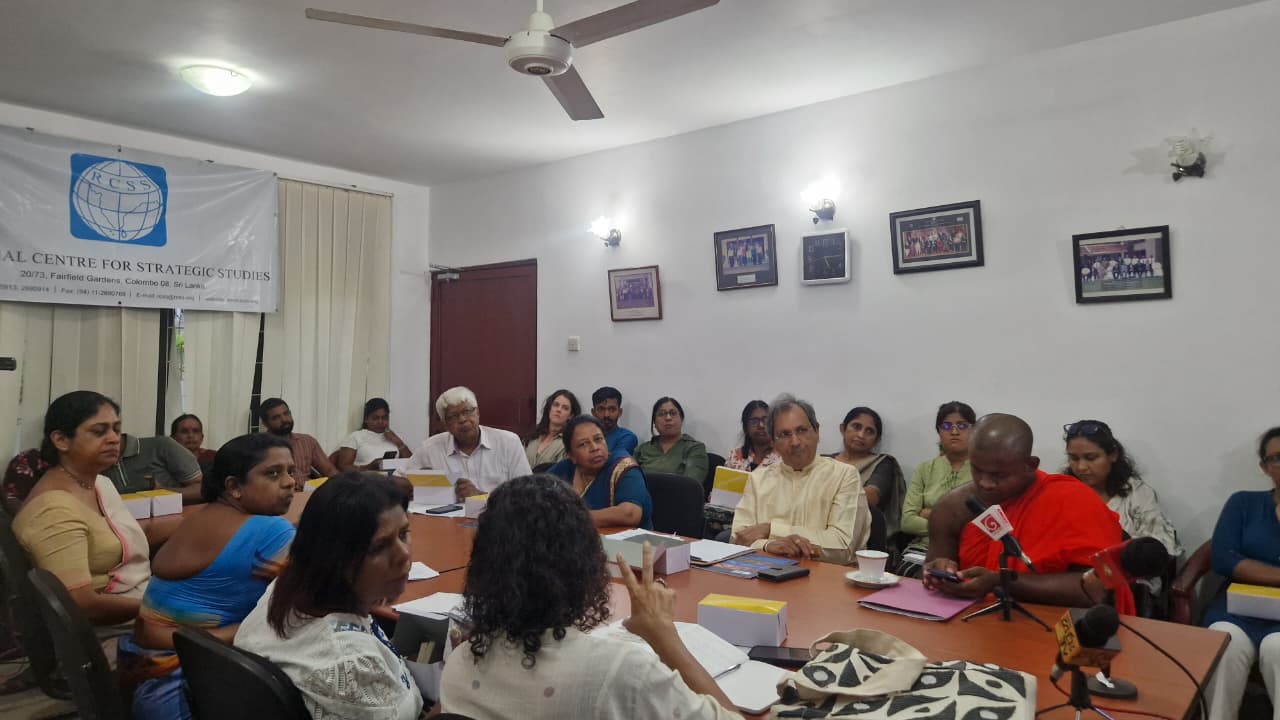
A multistakeholder forum on ‘Empowering Estate and Rural Communities for Climate and Disaster Resilience and Social Equity’ convened at the Regional Centre for Strategic Studies (RCSS) in Colombo, Sri Lanka on 5 June 2026. Initiated under the GPPAC Climate, Peace, and Security (CLIMPSE) project, it was held in collaboration with GPPAC-Sri Lanka counterpart organizations; the National Peace Council (NPC), the Centre for Policy Alternatives (CPA), Women & Media Collective (WMC), Viluthu - Centre for Human Resource Development, and the Association of War Affected Women (AWAW). It brought together policymakers, academics, civil society representatives, journalists, disaster risk management experts, and community members, which included a representation of women and youth from cyclone ‘Ditwah’ affected communities.
Ambassador (Retd.) Ravinatha Aryasinha, Executive Director of the RCSS and former Foreign Secretary of Sri Lanka who chaired the forum, noted that the project lay at the intersections of climate change, disaster risk, social equity, and peacebuilding. He said Sri Lanka’s contribution to this project had particular value, as it featured two recent case studies carried out by researchers from the RCSS and the NPC, which examined the aftermath of Cyclone ‘Ditwah’, which was identified as the second-deadliest disaster in Sri Lanka after the 2004 tsunami, affecting 2.3 million people and killing 639.
Professor Mallika Joseph, Regional Coordinator for GPPAC (South Asia), joining the discussion virtually from India, introduced GPPAC as a civil society network headquartered in The Hague with 15 regional networks, of which South Asia is one of the strongest, particularly in terms of gender focal points. She noted that the CLIMPSE project builds on previous civil society work to foreground peacebuilders' perspectives on climate change, moving beyond purely ecological or environmental framings.
Ms. Chamika Wijesuriya, Research/Programme Officer RCSS, in a case study on the Malaiyaha Tamil community in the Upcot region in the Nuwera Eliya district, and Mr. Sampath Randunna, Senior Project Officer NPC, in a case study on the post-cyclone impacts and recovery challenges in Hasalaka in the
Kandy District, both revealed the inadequate infrastructure especially related to early warning, amplified community vulnerability far beyond the immediate disaster impact of cyclone ‘Ditwah’, and advocated for community-centred solutions.
Subsequently a 3 member Panel of Experts, constituting; Anoja Senevirathna, Disaster Risk Management Expert; Professor Udayangani Kulatunga, Former Director, Centre for Disaster Risk Reduction, University of Moratuwa; and Dilrukshi Handunnetti, Co-Founder/Director, Center for Investigative Reporting (CIR) and Co-Convenor, South Asia Journalism Collective (SAJC), discussed challenges to disaster risk reduction in Sri Lanka. Professor Amal Jayawardane, Member of Board of RCSS, and Heads of GPPAC-Sri Lanka counterpart organizations present Kumudini Samuel, Director (Programs and Research), Women & Media Collective (WMC) and Visaka Dharmadasa, Founder and Chair of Association of War Affected Women (AWAW) also made comments.
An open discussion followed which highlighted a number of failures in Sri Lanka’s climate and disaster resilience, including the lack of initiative regarding accountability and disaster risk mitigation, lack of accountability for development projects that were conducted without proper Environmental Impact Assessment (EIA), the failure of early warning systems to reach marginalized communities, lack of community consultation in relocation decisions, digital inequality, accountability gaps in disaster governance, and the need for people-centered climate resilience. The need for integrated reform combining land tenure, infrastructure investment, community participation, and institutional accountability. The participants agreed to advocate for the policy recommendations arising from both case studies and push for the institutionalization of participatory decision-making in relocation and recovery planning at local and national levels. Furthermore, the need to explore mechanisms for public expenditure tracking in disaster recovery funding was also expressed as important. The forum concluded with remarks underscoring the significance of fundamental commitment to inclusion, equity, and community agency.