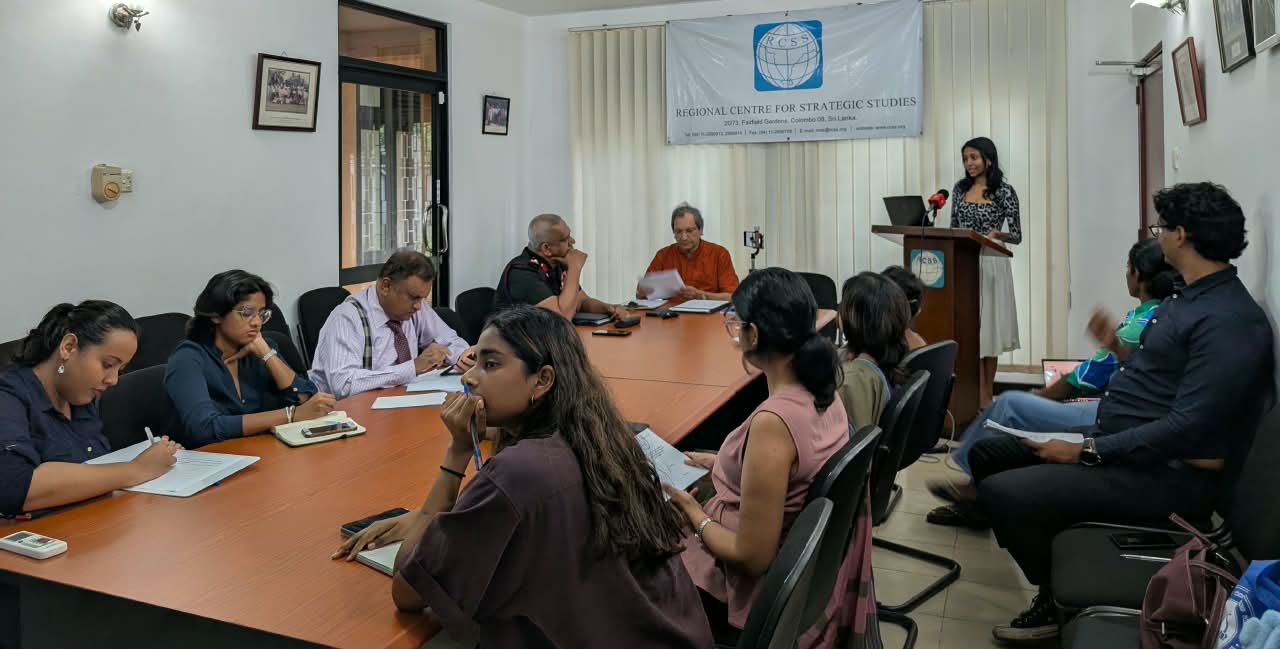
RCSS releases new report on the war in the Middle East
RCSS study says Middle East War Exposed South Asia’s deep dependence on the Middle East and calls for diversification to build resilience.
Foreword: The 2026 Iran War, triggered by coordinated US-Israeli strikes on Iranian nuclear and military facilities on February 28, 2026, and escalated by Iran’s subsequent closure of the Strait of Hormuz, exposed the depth of South Asia’s structural vulnerability to disruption in the Middle East. This paper argues that the relationships of the South Asian states with the Middle East countries are not simple bilateral economic partnerships, but a multi-channel, asymmetric, and structurally embedded dependency constructed over decades across five critical pillars: energy supply, remittance flows, trade routes, aid and investment, and politico-strategic partnerships; each of which is legible less as an independent foreign policy than as a by-product of South Asia’s own internal rivalries. Drawing on Keohane and Nye’s framework of complex interdependence as its primary analytical lens, the paper probes how this dependency was formed, assesses how the 2026 conflict disrupted all five channels simultaneously, and proposes potential structural, regional, and diplomatic pathways through which South Asian states may reduce their vulnerability to future disruptions of comparable character.
Foreword: The 2026 Iran War, triggered by coordinated US-Israeli strikes on Iranian nuclear and military facilities on February 28, 2026, and escalated by Iran’s subsequent closure of the Strait of Hormuz, exposed the depth of South Asia’s structural vulnerability to disruption in the Middle East. This paper argues that the relationships of the South Asian states with the Middle East countries are not simple bilateral economic partnerships, but a multi-channel, asymmetric, and structurally embedded dependency constructed over decades across five critical pillars: energy supply, remittance flows, trade routes, aid and investment, and politico-strategic partnerships; each of which is legible less as an independent foreign policy than as a by-product of South Asia’s own internal rivalries. Drawing on Keohane and Nye’s framework of complex interdependence as its primary analytical lens, the paper probes how this dependency was formed, assesses how the 2026 conflict disrupted all five channels simultaneously, and proposes potential structural, regional, and diplomatic pathways through which South Asian states may reduce their vulnerability to future disruptions of comparable character.