The volunteer group that became a model for citizen-led environmental action in Chennai

As part of the NIAS Climate Change, Civil Society and Peace (C3SP) initiative in collaboration with GPPAC South Asia, Preetha Renganarayanan, Research Assistant at the National Institute of Advanced Studies (NIAS), Bengaluru, examined the experience of ‘Chitlapakkam Rising,’ a citizen-led environmental group in South Chennai. Drawing on documented accounts, insights from residents, and publicly available reports, this case study explores how sustained community participation, technical expertise, and collaboration with public institutions transformed one of Chennai’s flood-prone localities into a recognised model of urban environmental restoration and flood resilience.
The case study examines how citizen mobilisation developed from neighbourhood clean-up drives to influencing lake restoration, flood mitigation, and government action. It also reflects on the lessons Chitlapakkam provides for integrating community participation, scientific knowledge, and institutional collaboration to strengthen urban climate resilience.
In December 2023, as Cyclone Michaung brought record rainfall and widespread flooding across Chennai, many localities struggled with severe inundation, damaged infrastructure, and disrupted lives. However, in one suburb in South Chennai, the story was evidently different. Chitlapakkam, once known for chronic flooding, remained largely flood-free despite receiving nearly 50 centimetres of rainfall within 48 hours. This outcome was not coincidental, it was the result of years of citizen mobilisation, technical planning, environmental advocacy, and collaboration between residents and government agencies. At the centre of this change stood the citizen-action group: The Chitlapakkam Rising. An initiative that began as a small volunteer group to address civic issues eventually took shape as one of Chennai’s most recognised examples of citizen-led environmental action, influencing lake restorations and flood mitigation efforts far beyond its own locality.
Understanding Chitlapakkam’s flood vulnerability
Located in the southwestern suburbs of Chennai, Chitlapakkam was once highly vulnerable to flooding. The locality sits between the flood plains of Selaiyur Lake and Chitlapakkam Lake, making it particularly sensitive whenever surplus water channels failed to function properly. Repeated flooding in the area prompted local residents to address the issue. Among them was Dayanand Krishnan, a civil engineer and GIS consultant who became actively involved in understanding the area’s hydrological challenges. As part of the Chitlapakkam Rising team, he undertook detailed studies of flood surplus discharge patterns, terrain characteristics, contour maps, revenue records, and historical water channels connecting Selaiyur, Chitlapakkam, and Sembakkam lakes. The findings showed that several surplus channels connecting the lakes had either disappeared or reduced significantly over time. Water which naturally moved through these interconnected channels was now hindered, causing the flooding in residential areas. In this context, the residents no longer viewed the problem as just about excessive rainfall. It was increasingly understood as an outcome of disrupted ecological systems and inadequate urban planning.
The origins of collective action in Chitlapakkam
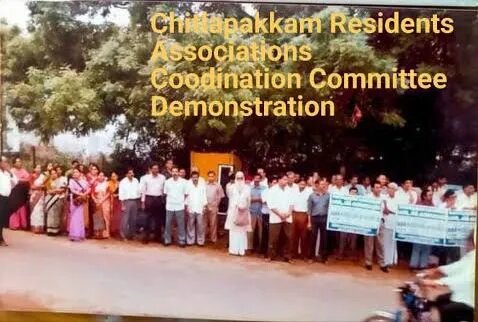
Long before Chitlapakkam Rising, the locality had already developed a tradition of civic participation. During the 1990s, residents began organising themselves through various Resident Welfare Associations (RWAs) in response to concerns over lake encroachments and environmental degradation. These efforts eventually led to the formation of the “Coordination Committee of Chitlapakkam Associations,” which became an important platform for addressing shared civic concerns. One of its earliest campaigns focused on protecting Chitlapakkam Lake from development proposals by the Tamil Nadu Housing Board (TNHB). The TNHB proposed to construct tenements in the area, this prompted the residents to organise peaceful demonstrations, form human chains, submit representations, and create a dedicated “Chitlapakkam Lake Preservation Committee.”
Residents also collectively contributed funds to construct a protective bund around the lake, acknowledging that safeguarding the water body was essential to the future of the locality. These efforts proved critical. As without the bund and continued citizen action, residents believe that large portions of the lake may have been lost to encroachment decades ago. The story of Chitlapakkam Rising therefore did not begin with a single campaign or flood event. It came from a much longer culture of community ownership and collective action in the locality.
The Chitlapakkam Rising: From weekly clean-up drives to addressing broader ecological concerns
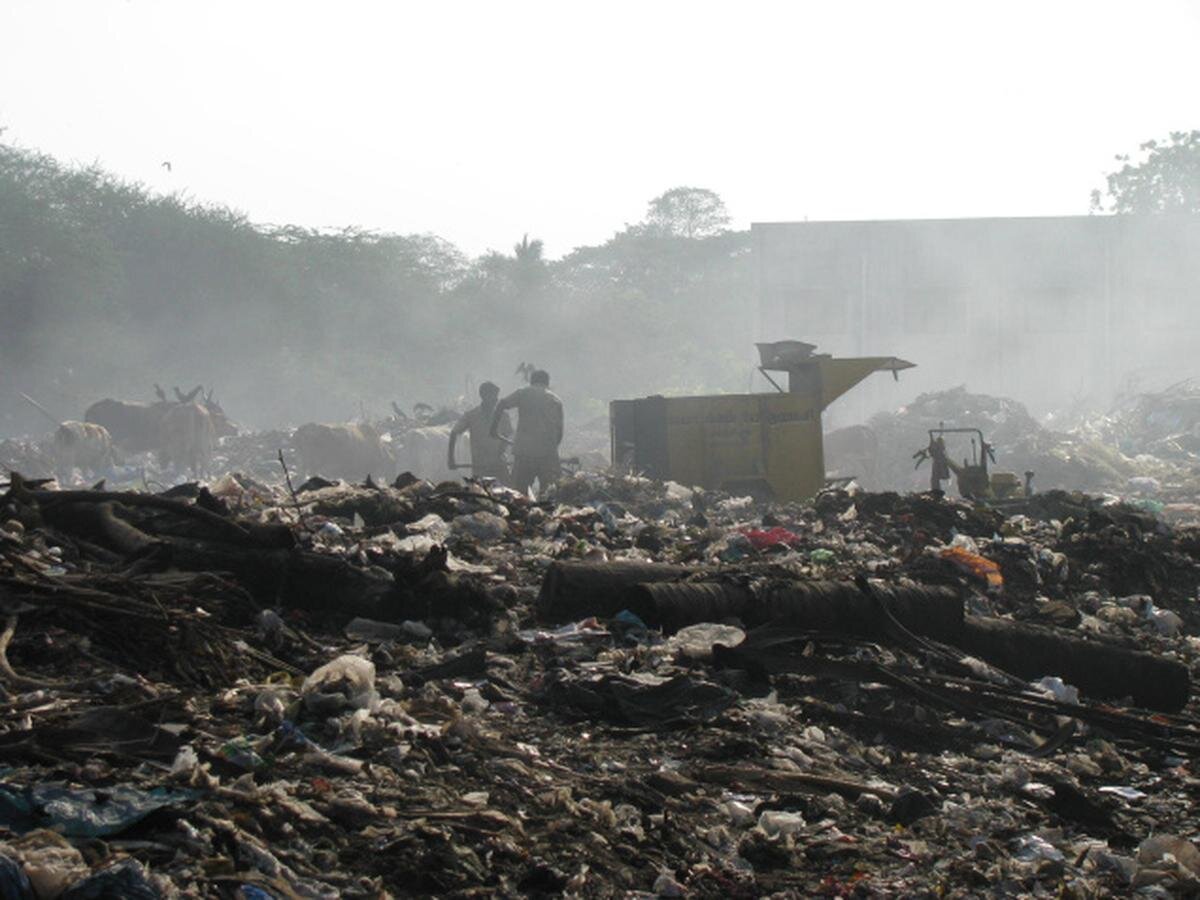
After spending fourteen years in the United States, software professional Sunil Jayaram returned to Chennai and was alarmed by the deteriorating condition of the Chitlapakkam Lake. Once core to the area’s identity, the lake had become heavily polluted and surrounded by waste. This became the starting point for Jayaram, and fellow residents Udaya Utthandi and Ezhildasan, who began organising small civic initiatives. In the beginning, these efforts focused on weekend clean-up drives, painting anti-littering messages, and encouraging neighbourhood participation.
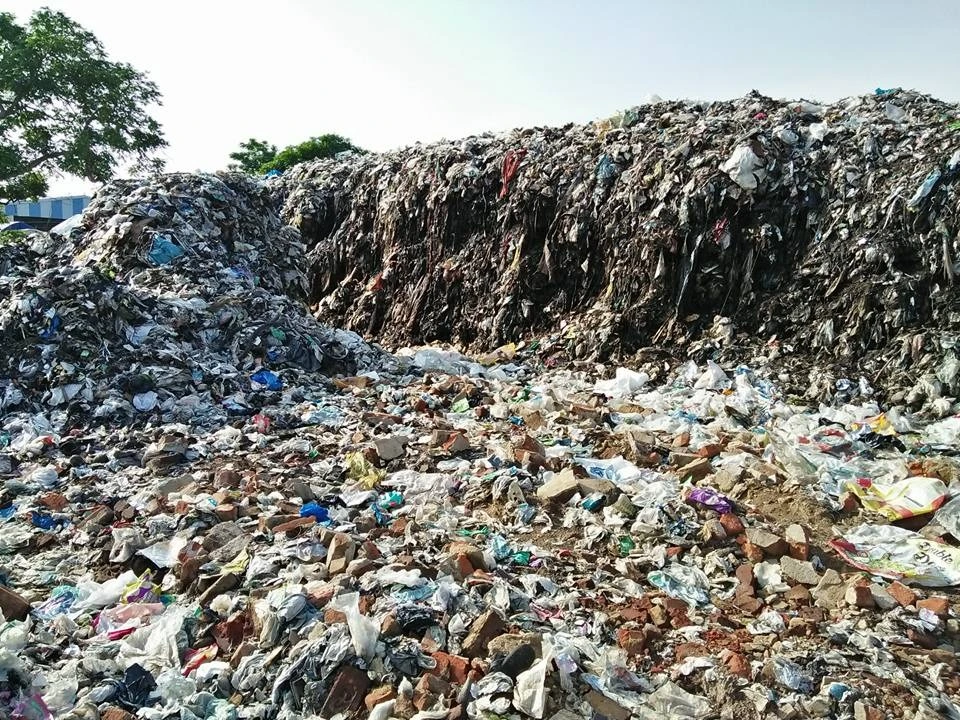
Eventually, these discussions went beyond waste management to broader questions of environmental degradation, governance failures, and water security. This resulted in the formation of Chitlapakkam Rising in the October of 2014. Over the next decade, the initiative grew from a handful of volunteers into a collective involving thousands of residents, supported by a core team of environmental advocates, technical experts, retirees, homemakers, engineers, and professionals.
Science, citizens, and the making of a restoration model
One of the defining features of the Chitlapakkam Rising group is the combination of community participation with technical knowledge. Instead of relying solely on advocacy, volunteers utilised their technical background to understand the scientific and hydrological dimensions of flooding and lake degradation. Through detailed mapping exercises, terrain analysis, and flood modelling, members of Chitlapakkam Rising identified critical gaps in drainage infrastructure and lake management. This knowledge informed a series of proposals submitted to the Government of Tamil Nadu.
One of the most significant interventions was the construction of a macro cut-and-cover drain. The project became one of the first interventions of its kind in Chennai and helped address flooding in vulnerable residential stretches. Alongside this, the group developed what became known as the DDD approach: Deflect, Drain, and Desilt-Deepen. The strategy involved:
- Deflecting sewage away from the lake.
- Draining polluted water from the water body.
- Desilting and deepening the lake to improve rainwater storage and groundwater recharge.
Residents also proposed solutions such as sewage interception systems, collection wells, and controlled inlet structures designed to prevent untreated wastewater from entering the lake. Many of these proposals were later adopted and implemented through collaboration with government agencies. The result was not just the restoration of a lake but the creation of a technically informed model of urban climate adaptation. As a volunteer involved in the initiative observed:
“The lake was no longer just water storage; it was climate adaptation in action.”
When citizen action influenced policy
The Chitlapakkam experience shows that citizen action can influence public policy when supported by sustained engagement and credible technical evidence. The findings generated by residents and technical experts were presented to the Water Resources Department (WRD), local authorities, and elected representatives. It also attracted support from civil society organisations and environmental advocates. In 2018, the Government of Tamil Nadu approved approximately INR 17.5 crore for the construction of the macro cut-and-cover drain. In 2019, a further INR 25 crore was sanctioned for lake restoration activities, including desilting, deepening, sewage diversion, and restoration of rainwater inlets.
The Test: Cyclone Michaung
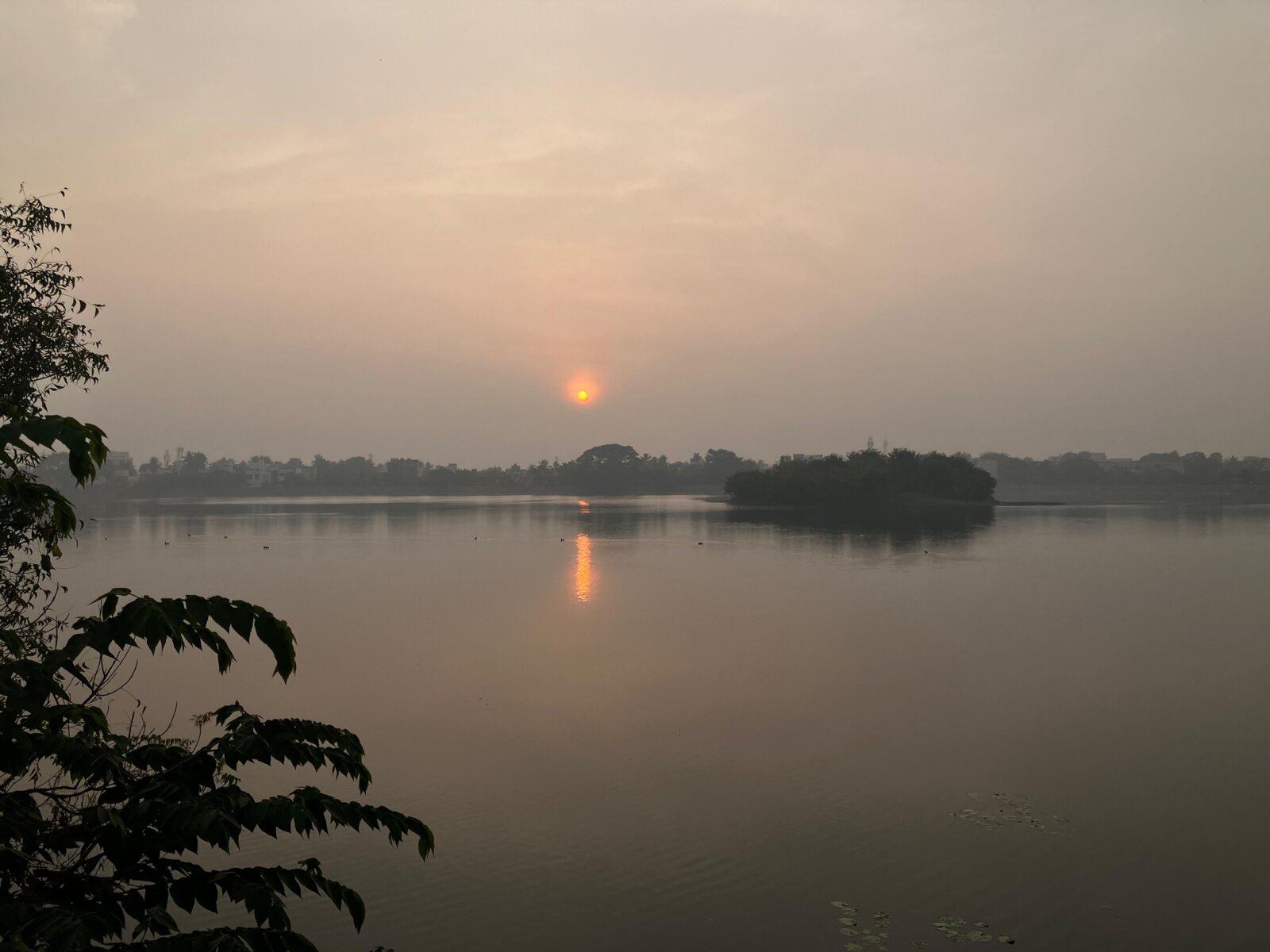
The true test of the restoration effort arrived in December 2023 when Cyclone Michaung brought some of the heaviest rainfall Chennai had experienced in recent years. Historically, such rainfall would have resulted in severe flooding across Chitlapakkam. This time, however, the outcome was evidently different with residents reporting that streets became free of inundation within approximately twelve hours despite nearly 50 centimetres of rainfall being recorded over two days.
For those involved in the restoration effort, the event stood as evidence that the lake’s storage capacity had enhanced significantly. Improved drainage systems, restored hydrological connections, and strengthened infrastructure collectively helped reduce flood impacts. For many residents, Cyclone Michaung provided tangible proof that environmental restoration and flood mitigation are not separate objectives but closely interconnected ones.
Beyond Chitlapakkam: Ripple effects across Chennai
The influence of Chitlapakkam goes well beyond its own geographical boundaries. One of the most striking examples was seen in neighbouring Medavakkam. Following the devastating floods of 2023, residents including Arjun Shankar began studying the Chitlapakkam experience to understand how similar interventions might be adapted locally. They consulted technical experts, interacted with residents involved in Chitlapakkam Rising, and drew lessons from the locality’s flood mitigation strategies. Inspired by these efforts, Medavakkam residents later facilitated the construction of a cut-and-cover drain near the Medavakkam Periya Eri through CSR support. For Arjun, the significance of Chitlapakkam was not only in its environmental achievements but in its ability to generate transferable knowledge. It showed that successful citizen-led initiatives can create ripple effects, inspiring similar efforts in other localities facing comparable environmental challenges.
First mile connectivity and the limits of citizen action
The Chitlapakkam experience also highlights certain key challenges. Citizen action alone cannot substitute for effective governance. Environmental restoration also requires consistent interaction with multiple government departments, media support, legal processes, funding mechanisms, and so on. Civil society organisations such as Arappor Iyakkam played an important role in supporting environmental accountability, including efforts to address encroachments through Public Interest Litigation (PIL). In 2022, the Madras High Court closed the petition after the State government informed the court that most encroachments on the lake had been removed. However, such avenues remain difficult for many residents to access due to financial, legal, and procedural barriers. The case therefore raises important questions about First Mile Connectivity – the relationship between communities and formal governance systems before, during, and after environmental crises. While citizen groups increasingly produce knowledge, mobilise communities, and advocate for environmental protection, effective solutions ultimately depends on institutions engaging with these efforts consistently.
Conclusion
The story of Chitlapakkam Rising reflects a case of how a community moved from environmental concern to technical expertise, and from local advocacy to influencing actionable policy. With time, residents changed themselves into environmental stewards, producing knowledge, building partnerships, and shaping climate resilience from the ground up. The success of Chitlapakkam shows that climate adaptation is not just an engineering challenge, it is as much a social process built on community ownership, collective action, scientific understanding, and sustained civic engagement.
Today, the impact of Chitlapakkam goes beyond its restored lake and improved flood resilience. Its lessons continue to inform environmental initiatives in neighbouring localities including Medavakkam and offer a practical template for citizen-led environmental action in rapidly urbanising cities. As Chennai and other Indian cities increasingly confront climate challenges, the experience of Chitlapakkam suggests that some of the most effective solutions come from organised grassroots communities, who naturally serve as the zero responders during disasters.
Subasree, “The Chitlapakkam Rising story: How a Chennai community saved a lake,” Good Food Movement, 06 September 2025
Dayanand Krishnan, “How Chitlapakkam remained flood-free during the recent Chennai rains,” Citizen Matters, 22 December 2023
L Sundararaman, “Chitlapakkam lake revival a model for collective effort,” Citizen Matters, 20 July 2023
Sowmya Mani, “‘We No Longer Pay For Water’: These Chennai Citizens Dedicated 7 Years to Revive a 50-Acre Lake,” The Better India, 26 July 2024