Climate Change and Civil Society: Interviews from the Field
Coping with Climate Change in Coastal India
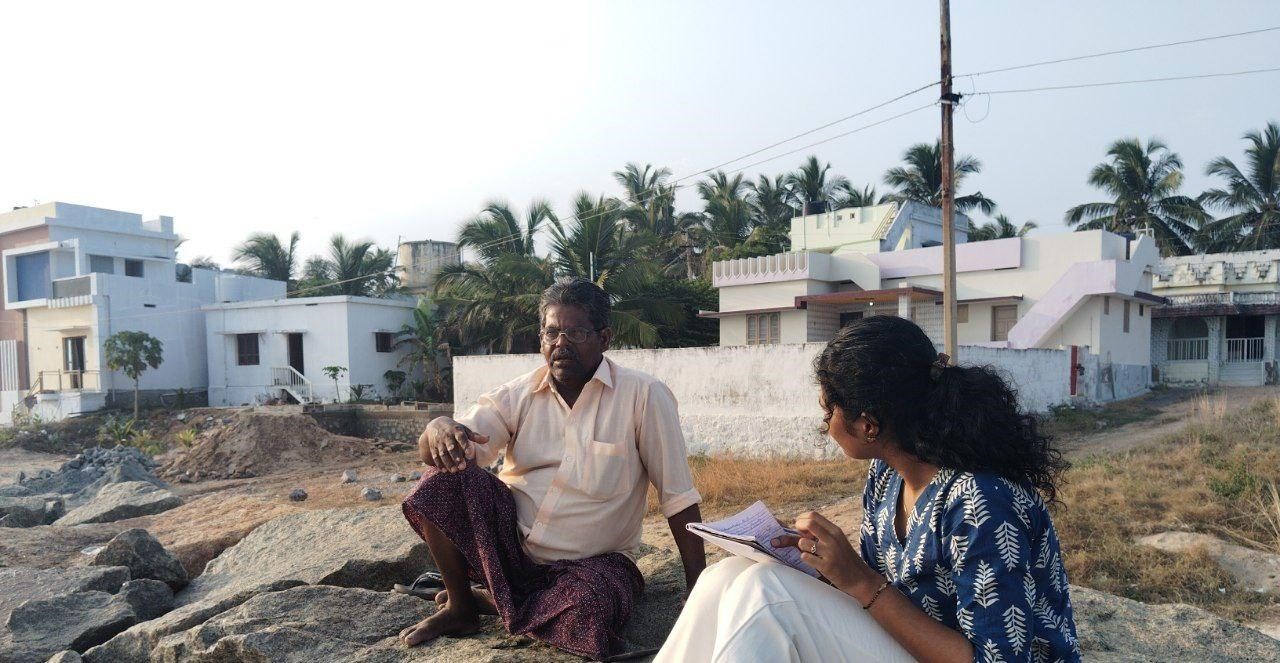
As part of the GPPAC South Asia research on Climate Change, Civil Society & Peace in South Asia, Lekshmi MK, Research Assistant at the National Institute of Advanced Studies, Bengaluru, interviewed Ronald Georgea, fisherman from Keezhamanakudy, to understand the lived experiences of coastal communities in Kanyakumari district and the changing trends associated with climate change. The conversation aimed to capture the perspectives of local fishermen who directly interact with the sea and are often among the first to observe environmental changes. The respondent shared his observations and experiences in Tamil, and the responses have been translated into English for the purpose of this report.
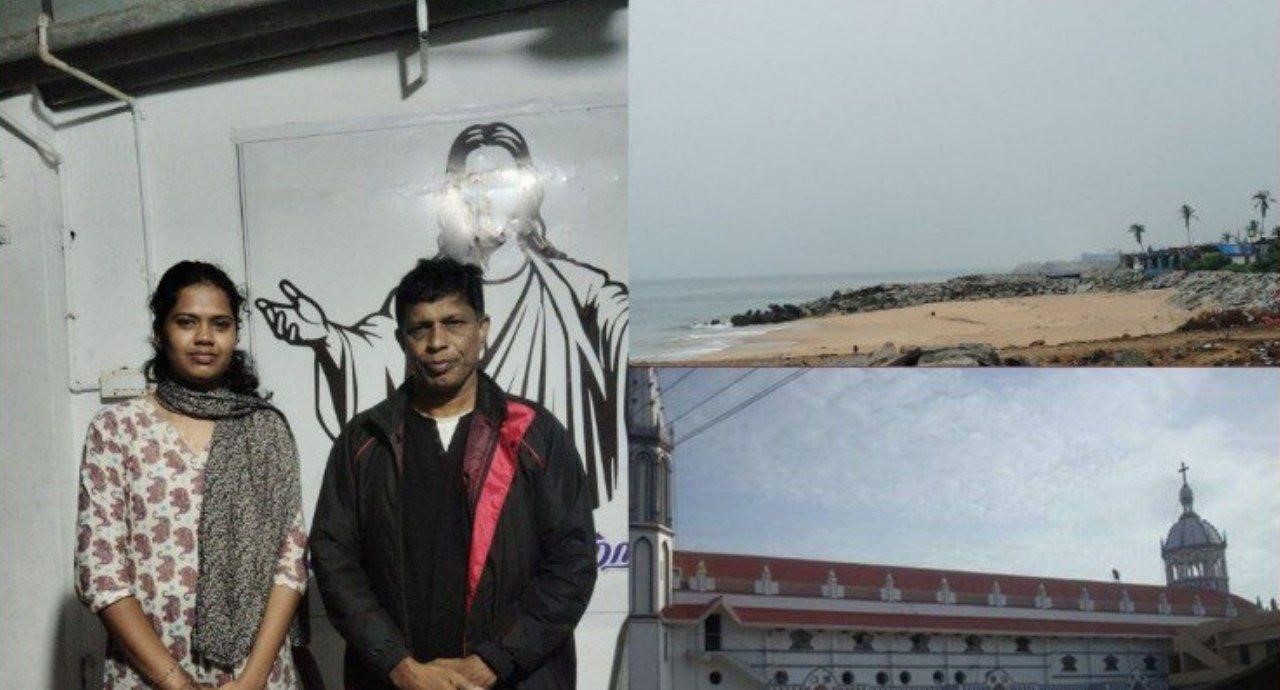
The coastal village Keezhamanakudy in Kanyakumari district has witnessed significant environmental and social changes over the years. Traditionally known for its sandy shores and rich coastal ecosystem, the village has increasingly experienced coastal erosion, changing sea patterns, declining fish availability, and the disappearance of migratory birds that once visited nearby areas such as Alayathikadu. Local residents recall that strong seasonal waves and predictable weather patterns, which earlier guided fishing practices, have changed considerably over time, especially after the 2004 Indian Ocean Tsunami and Cyclone Ockhi. These transformations have affected not only the coastal landscape but also the livelihoods, traditional knowledge systems, and everyday lives of the fishing community in Keezhamanakudy.
What are the visible changes in climate change, that are observed in the coastal regions here?
The name Manakudy comes from the Tamil word Manal Kudy, which refers to the large deposits of sand (manal) that once existed in this area. Over time, due to strong waves, irregular water patterns, and coastal erosion, much of this sand has been washed away into the sea. This itself is an effect of climate change in this coastal village of Kanyakumari district.
Earlier, around 1995, the waves used to be very strong and tall during certain months and seasons. However, after the 2004 Indian Ocean Tsunami, the wave patterns have changed significantly. The tall and powerful waves that we used to expect during particular seasons are no longer the same.
Climate change has also led to several other impacts in this region, including coastal erosion, reduction in fish stocks, and a general decline in fish availability. In the past, fishermen could predict the weather by observing winds, rainfall patterns, and natural indicators. But now these predictions often fail because the climate patterns have changed.
Another major change is the disappearance of bird migration. Earlier, more than 40 species of birds used to visit areas like Alayathikadu Savukku Maram, but such migrations are rarely seen now.
The two major events that had the greatest impact on our community were the 2004 Indian Ocean Tsunami and Cyclone Ockhi.
The two major events that had the greatest impact on our community were the 2004 Indian Ocean Tsunami and Cyclone Ockhi.
How is civil society in the coastal region responding to the changes?
During the months of June, July, and August, the sea waves bring water close to the shore and remove large amounts of sand. As a result, the shore becomes rocky and unsuitable for docking boats. During that time, fishermen from Keezhamanakudy travel to the nearby village of Muttom to fish and park their boats. This sometimes creates conflicts with fishermen from that village. To resolve such disputes, fishermen approach the Assistant Directorate of Fisheries office for mediation.
During Cyclone Ockhi, many fishermen faced severe difficulties because they were not properly informed about the approaching cyclone. Without early warning, many struggled to secure their boats or return safely to shore.
During Cyclone Ockhi, many fishermen faced severe difficulties because they were not properly informed about the approaching cyclone. Without early warning, many struggled to secure their boats or return safely to shore.
Fisherfolk themselves initially demanded protective measures like stone walls along the coast even before MG Ramachandran became the Chief Minister of Tamil Nadu. When he came to power, the stone walls were constructed based on the demands of the local people. Earlier, about sixteen houses were located very close to the shoreline. But due to climate change and coastal erosion, those houses had to be evacuated, and today those areas have been taken over by the sea.
During difficult periods, support also came from religious institutions. The church provided food and other assistance to affected families. Priests such as Father Amalraj and Father Wenceslas helped coordinate relief efforts.
How have the different social, political and other institutions responded?
Political parties and organisations provided support during earlier periods by giving fishing nets, boats, and rehabilitation assistance. However, such support has reduced over time. From the religious side, churches played a significant role. During the 2004 Indian Ocean Tsunami, many people were given shelter at the Panimatha Church in Thamaraikulam.
At one point, there were discussions about a sand extraction project in the Manakudy region. According to experts, if the sea sand contains more than six valuable mineral elements, it becomes commercially profitable to mine it. Manakudy reportedly contains more than nine such elements. However, the local community opposed the project because they feared that it could lead to the displacement or evacuation of villagers. Although the government stated that the village was not part of the official port development or sand mining plans, people believed there was still a high possibility of such activities happening. As a result, local residents protested strongly. During one visit by an IAS officer, people organised demonstrations and even stopped buses, demanding that the government withdraw the proposed project.
In many cases, the first place people approach for help is the church.
At one point, there were discussions about a sand extraction project in the Manakudy region. According to experts, if the sea sand contains more than six valuable mineral elements, it becomes commercially profitable to mine it. Manakudy reportedly contains more than nine such elements. However, the local community opposed the project because they feared that it could lead to the displacement or evacuation of villagers. Although the government stated that the village was not part of the official port development or sand mining plans, people believed there was still a high possibility of such activities happening. As a result, local residents protested strongly. During one visit by an IAS officer, people organised demonstrations and even stopped buses, demanding that the government withdraw the proposed project.
In many cases, the first place people approach for help is the church.
Regarding Cyclone Ockhi, we believe the initial government response was inadequate, and local authorities were not well prepared to carry out rescue operations.
What lessons have been learned in addressing the climate change issues?
One major lesson is the importance of facing disasters or any crisis as a united community. In earlier times, fishermen relied on natural indicators to navigate the sea. They used the moon phases, constellations such as Argo Navis, and natural landmarks for navigation. For example, Maruthuvazh Malai served as a visual landmark to help fishermen return safely to shore. Cloud formations were also used to predict heavy rain or strong winds. Today, fishermen increasingly rely on technology such as GPS systems and weather applications like Windy to predict weather conditions.
Another lesson learned is that people themselves must be prepared for disasters rather than depending entirely on the government. Earlier, some fishermen ignored warnings, but over time the community has become more cautious and aware.
How can the local civil society be better prepared?
First, as an indigenous fishing community, we must first prepare ourselves instead of expecting external actors to respond immediately.
Second, one important recommendation is the construction of a helipad in Kanyakumari district to improve rescue operations. This demand has been raised since around 1975.
Due to coastal erosion, rocks become exposed along the shore during certain months, making rescue and access difficult. Establishing a dedicated rescue centre and helipad would greatly improve disaster response in such situations.