NIAS Youth Climate Connect
A Visit & Interaction by the NIAS ‘Grass Roots’ Team with Parikrma Oxygen, Bengaluru, on Nature-Based Education, Ecological Restoration and Climate Action
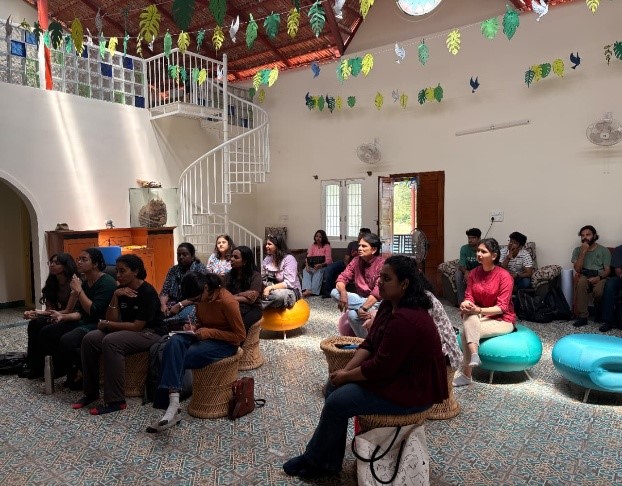
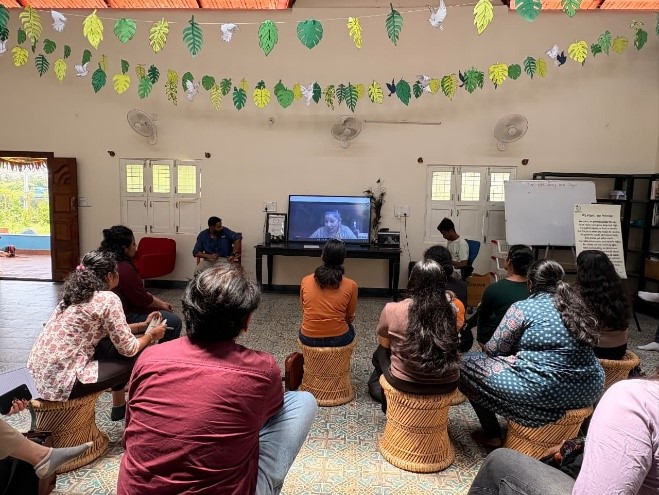
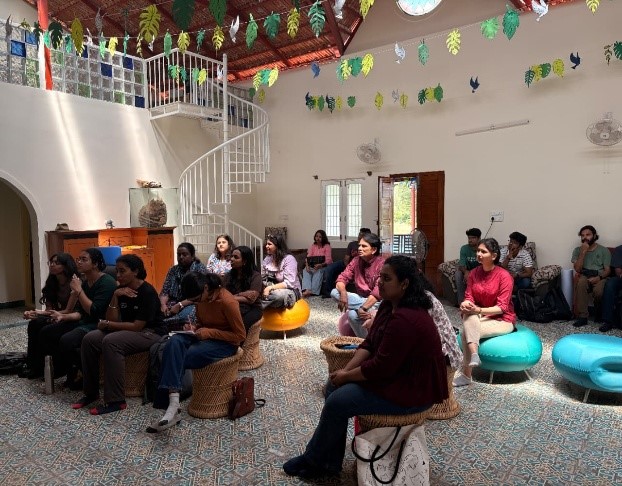
As part of the NIAS Climate Change, Civil Society and Peace (C3SP) initiative, the ‘Grass Roots’ Team, the NIAS Youth Network on Climate Change, visited Parikrma Oxygen on 18 June 2026. Developed by the Parikrma Foundation, the nature-based education and ecological restoration project provided participants with an opportunity to gain first-hand insights into environmental restoration, sustainable land management, biodiversity conservation, and nature-based education.
 |
 |
Founder-CEO, Parikrma Humanity Foundation
The Parikrama Oxygen Living School was established in response to growing concerns regarding the increasing disconnect between contemporary education, real-life experiences, and the natural environment. The initiative is founded on the belief that nature serves as an essential component of holistic learning and should be integrated into the educational process from an early age.
The programme recognizes that meaningful education extends beyond academic instruction and must equip students with life skills, environmental awareness, and a broader understanding of the world around them. Accordingly, the Oxygen Living School functions as a nature-based learning environment that encourages experiential
education and promotes a deeper relationship between children and the natural world. Parikrama works primarily with children from socio-economically disadvantaged backgrounds, including those residing in urban slum communities. The institution's educational model emphasizes personal development alongside academic achievement, enabling students to overcome the limitations imposed by their circumstances and broaden their aspirations.
A key principle underlying the programme is the recognition that physical and social environments significantly influence thought processes, creativity, and personal growth. To address the constraints experienced by many students in their daily lives, the Oxygen Living School provides open and stimulating spaces that encourage independent thinking, exploration, and ambition.
The initiative is not limited to Parikrama students. The facility is also accessible to children from government schools and other communities where opportunities for exposure to nature and experiential learning may be limited. Through this inclusive approach, the programme seeks to expand access to environmental education and foster greater awareness of sustainable living practices.
The development of the Oxygen Living School has been guided by educational and environmental experts to ensure that the campus remains both child-friendly and environmentally sustainable. The programme regularly engages naturalists and specialists in fields such as beekeeping, birdwatching, tree conservation, and wildlife awareness. These experts provide students with direct exposure to diverse ecological systems and environmental practices, which are integrated into the broader educational curriculum.
The initiative also seeks to reshape conventional perceptions of career success. While acknowledging the importance of traditional professions such as medicine and engineering, the programme encourages students to explore emerging fields related to conservation, ecological agriculture, environmental stewardship, and sustainable development. By exposing students to these alternative pathways, the programme aims to cultivate future leaders and responsible custodians of the planet.
Kaushik
Outdoor Educator and Naturalist, Parikrma Oxygen
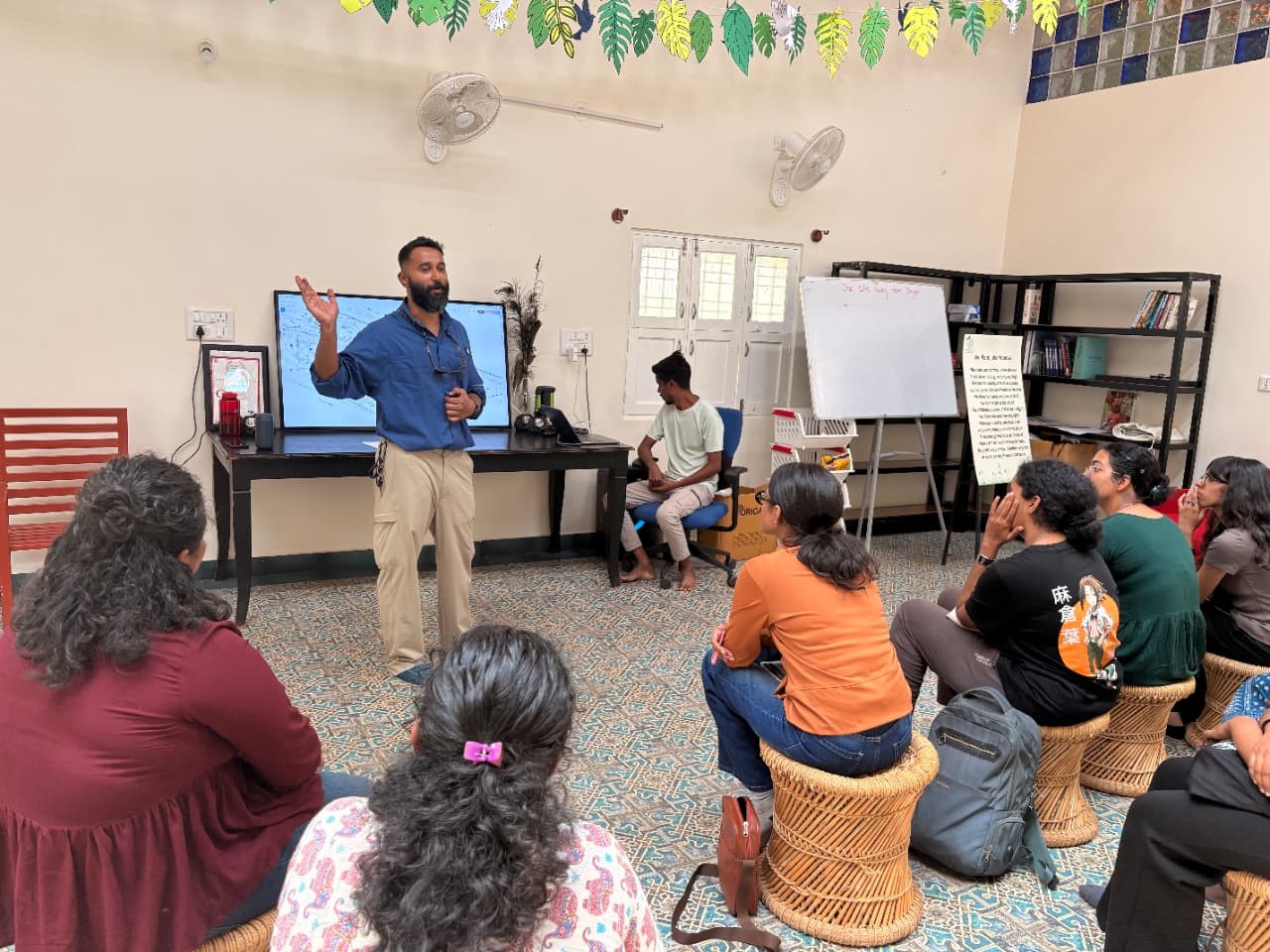
Parikrama Oxygen is an environmental education and ecological restoration initiative developed on a large tract of previously degraded land. The project was established to create opportunities for children, particularly those from underprivileged backgrounds, to engage directly with nature through experiential learning. While outdoor education is often perceived as a privilege accessible to a limited segment of society, the initiative seeks to democratize access to high-quality nature-based learning experiences.
A distinguishing feature of the project is its integration of environmental education with landscape restoration. Prior to its development, the site had undergone significant ecological degradation. Natural landforms, including undulating terrain, seasonal streams, and water channels, had been altered or flattened, resulting in reduced biodiversity and disruption of ecological processes. Restoration efforts have therefore focused on rehabilitating these ecological functions while simultaneously creating a living learning environment for students.
The project is situated within a landscape facing multiple environmental challenges. Surrounding hills exhibit signs of degradation and limited vegetation cover, reflecting broader ecological pressures across the region. The restoration strategy aims to re-establish ecological characteristics representative of the native landscape while maintaining a safe and engaging educational setting. The site functions as an outdoor classroom where participants can explore subjects such as soil ecology, biodiversity conservation, climate change, watershed management, and ecosystem resilience.
The property encompasses a variety of microhabitats and landscape features. A degraded eucalyptus plantation with sparse undergrowth and limited wildlife habitat lies to the south. A lake borders the northern boundary, while agricultural lands managed by local farmers are located to the east and west. Although restoration activities are currently concentrated within the project site, long-term ecological sustainability is expected to require collaboration with neighbouring landowners and relevant government agencies.
Educational programmes are delivered through both day visits and residential camps. Participants engage in hands-on conservation activities, including mulching, invasive species removal, installation of bird baths, biodiversity documentation, and environmental monitoring. Additional experiences such as guided night walks, wildlife observation, camping skills, first aid training, and outdoor safety instruction are incorporated to strengthen ecological awareness, self-confidence, and environmental stewardship.
Water conservation represents a foundational component of the restoration strategy. The region receives approximately 400 millimetres of annual rainfall, often concentrated in short-duration, high-intensity events, while simultaneously experiencing periods of water scarcity. To address these challenges, contour trenches have been constructed throughout the property to capture rainwater, reduce runoff, and minimise soil erosion. These interventions enhance groundwater recharge, improve soil moisture retention, and support the formation of diverse microhabitats.
At the lowest elevation of the site, a water storage lake has been developed to capture surface runoff and groundwater flows originating from higher elevations. Early observations indicate successful water accumulation during rainy periods. Additional infrastructure, including percolation pits and stormwater drainage systems, has been incorporated to improve water storage capacity and strengthen flood mitigation measures.
Soil restoration efforts primarily rely on natural regeneration processes. The site has been protected through fencing and the strategic application of mulch, enabling native vegetation to re-establish with minimal intervention. Naturally regenerated plant material is subsequently reused as mulch, contributing to nutrient cycling, improved soil fertility, and enhanced moisture retention. Maintaining vegetation cover remains a critical strategy for reducing evaporation and supporting biodiversity in the region's dry climatic conditions.
Beyond ecological restoration, Parikrama Oxygen is envisioned as a centre for environmental learning, innovation, and community engagement. The initiative provides opportunities for children and their families to participate in sustainable livelihood and entrepreneurship activities. One such example is the production of bioenzymes and environmentally friendly cleaning products, which offer both educational value and potential income-generating opportunities.
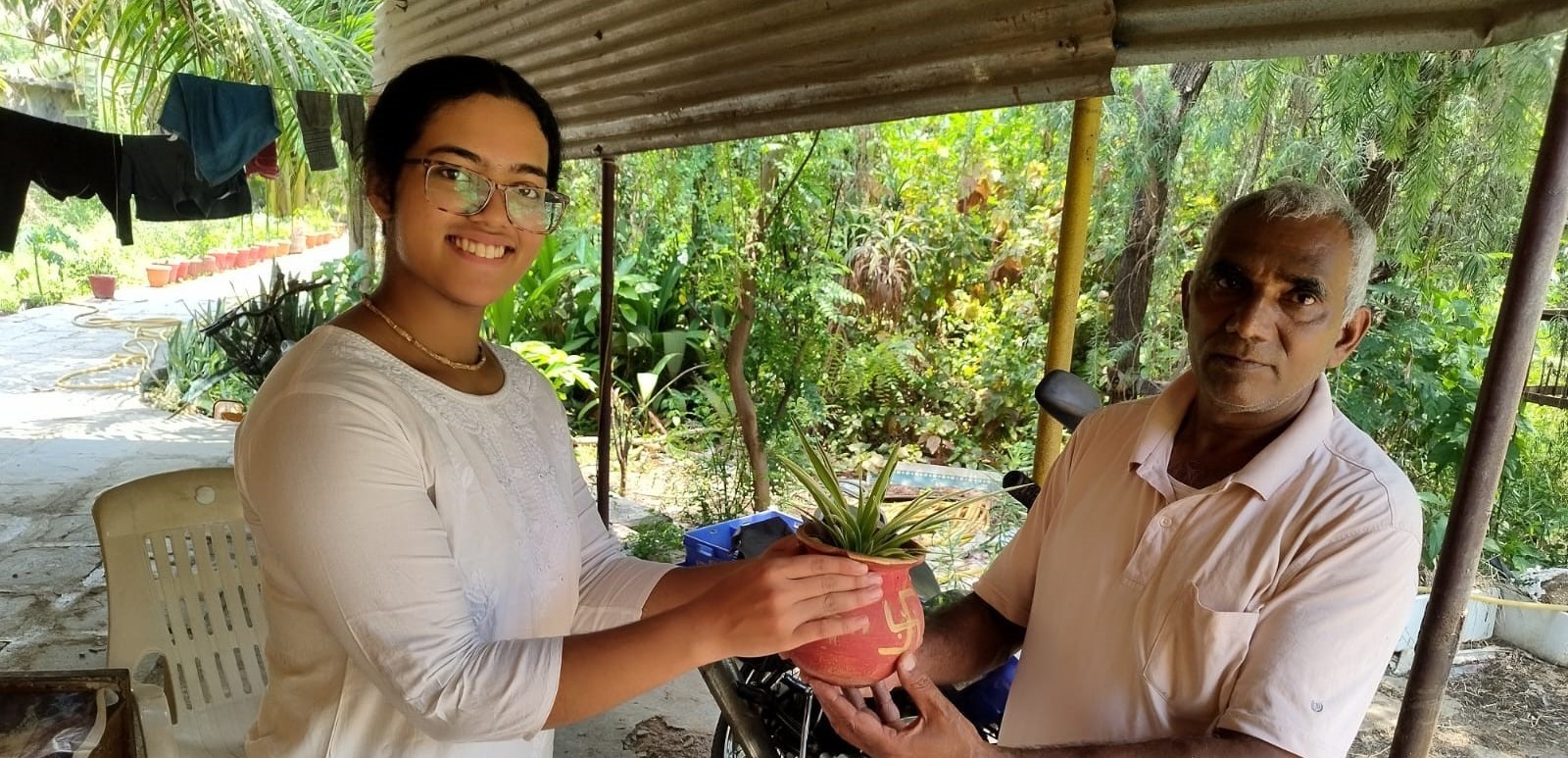
The site's infrastructure has been designed according to principles of environmental sustainability. Composting toilets facilitate the conversion of organic waste into usable manure, while greywater management systems support landscape irrigation. A large plant nursery contributes to on-site restoration activities and serves as a resource for future outreach programmes involving local farming communities. These efforts encourage the cultivation of native and fruit-bearing tree species that can simultaneously enhance biodiversity and support rural livelihoods.
Educational and recreational facilities have been integrated into the landscape through carefully planned infrastructure. The campus includes outdoor classrooms, nature trails, playgrounds, campsites, and garden spaces designed to support experiential learning. Pathways and access routes have been strategically located to minimise ecological disturbance, ensuring that the majority of the site remains dedicated to habitat conservation and restoration. The long-term restoration vision seeks to preserve and develop a mosaic of ecosystems, including dry forests, grasslands, orchards, and small evergreen groves. Although the surrounding landscape is naturally semi-arid, the selective introduction of evergreen species contributes to the creation of cooler microclimates and provides additional educational opportunities.
Inside Parikrma Oxygen
The Parikrama Oxygen site has undergone significant ecological restoration since its acquisition. At the time of development, the landscape contained only eight to ten mature trees, with limited vegetation cover. Most of the hedgerows, shade trees, and habitat features currently present on the property have been deliberately established through restoration efforts. At the same time, natural regeneration has been encouraged by protecting the land from disturbance, allowing pollinators and natural ecological processes to facilitate the emergence of native vegetation.
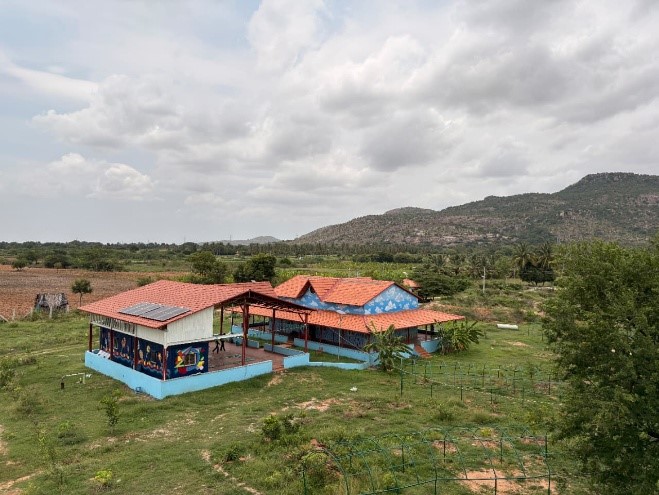
The site has been designed to incorporate multiple ecological features, including habitat islands within water bodies, native tree plantations, bamboo groves, grasslands, and restored stream corridors. Habitat islands are intended to support shade creation, improve aquatic ecosystem health, and provide refuge for amphibians and other small fauna. Native tree species have been selected to enhance biodiversity, improve habitat quality, and provide food resources for wildlife.
The restoration programme has already resulted in increased biodiversity. Large populations of frogs have been recorded, particularly during the monsoon season, indicating the successful establishment of aquatic and semi-aquatic habitats. Reptile diversity has also increased, with regular sightings of species such as checkered keelbacks and olive keelbacks in and around water bodies. Ongoing biodiversity documentation conducted by students contributes to species inventories and ecological monitoring.
Several keystone native species have also been prioritised within the restoration strategy. Ficus species, in particular, have been extensively planted because of their ecological significance in supporting birds, mammals, pollinating insects, and other wildlife. Bamboo has also been established along stream corridors, where favourable moisture conditions have supported rapid growth and habitat development. The restored stream system has been designed to support ecological diversity while maintaining safety considerations for educational activities. With an average depth of approximately 4.5 feet, the water bodies provide varied aquatic habitats capable of supporting multiple species occupying different ecological niches. Evidence of increasing wildlife activity suggests that these habitats are functioning effectively.
A key principle of the restoration approach is balancing active intervention with natural regeneration. While many trees have been planted, considerable emphasis has been placed on allowing the landscape to recover naturally. Restricting movement to designated pathways has reduced disturbance and enabled native species such as neem and scrub forest vegetation to regenerate independently. This approach allows ecological processes to determine the composition of future vegetation communities, resulting in more resilient and locally adapted ecosystems.
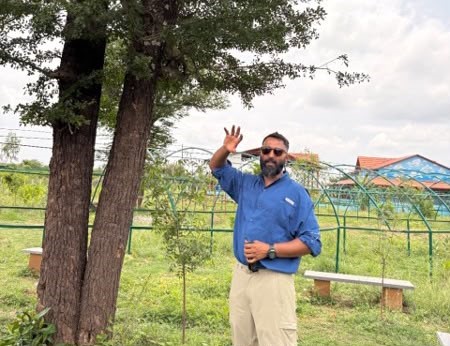 The site experiences significant seasonal moisture stress due to its semi-arid conditions. Despite periodic rainfall, soil moisture declines rapidly, leading to extensive ground cracking during summer months. To mitigate these impacts, vegetation cover is maintained across the landscape to reduce evaporation, stabilise soil structure, and protect microhabitats. Mulching and ground-cover management form important components of this strategy.
Native tree species remain a central focus of restoration efforts due to their ecological compatibility with local wildlife. Species such as silk cotton trees have been planted because they provide food resources, nesting material, and habitat for birds, mammals, and insects. Observations indicate that native vegetation supports significantly greater biodiversity than non-native or commercial plantation species.
The project site borders a large eucalyptus plantation, representing a monoculture ecosystem with relatively low biodiversity. Such plantations provide limited habitat complexity compared to native forest systems. The surrounding landscape highlights broader conservation challenges associated with commercial forestry practices, including reduced ecological diversity and habitat fragmentation. These observations form part of environmental education discussions conducted with students to encourage critical engagement with conservation and land-use issues. The restoration area also supports a variety of unique ecological features, including lichen communities that serve as indicators of environmental quality. During educational night walks, participants observe ecological phenomena such as fluorescence in lichens under ultraviolet light, providing opportunities to explore biodiversity and ecosystem processes in greater depth.
The surrounding scrub forest ecosystem supports a range of wildlife species, including bears, leopards, civet cats, chameleons, slender lorises, owls, bats, and numerous bird species. Native fruit-bearing trees contribute significantly to supporting these wildlife populations. Increasing observations of resident and visiting fauna indicate improving habitat conditions within and around the restoration site.
Water management remains a critical component of the project. Several water bodies have been created or restored to enhance habitat quality and improve water retention. Historical observations indicate that these wetlands supported large numbers of migratory and resident waterbirds, with records of more than 200–300 individuals during periods of higher water availability. However, reduced inflows and upstream interventions continue to affect water levels.
The site also contains designated camping and outdoor learning areas used for environmental education programmes. These facilities allow children to engage directly with ecological restoration activities and develop practical understanding of biodiversity conservation and sustainable land management.
The restoration strategy incorporates an extensive contour-trenching system designed to maximise rainwater harvesting and soil moisture retention. Trenches have been constructed along natural contour lines using topographical surveys to ensure effective water capture and infiltration. The objective is to retain rainfall on-site, reduce runoff, prevent soil erosion, and enhance groundwater recharge. Excess water is intended to be channelled through interconnected drainage pathways as the restoration infrastructure continues to develop.
The effectiveness of these interventions is evident in the substantial vegetation recovery observed across the site. Areas that were previously barren and heavily degraded now support diverse plant communities and improved soil conditions. Additional water-storage features, including percolation ponds and seasonal lakes, further contribute to hydrological restoration and ecosystem resilience.
The project is located within the Makalidurga hill range and forms part of a broader landscape influenced by agricultural activity, sand mining, and changing land-use patterns. These external factors continue to present challenges for long-term watershed conservation and ecological restoration.
Overall, Parikrama Oxygen demonstrates an integrated approach to ecological restoration, biodiversity conservation, water management, and environmental education. By combining scientific restoration techniques with experiential learning opportunities, the project has successfully transformed a degraded landscape into a functioning ecosystem and an outdoor learning environment for children and the wider community.
Interaction with the students of Parikrma Schools
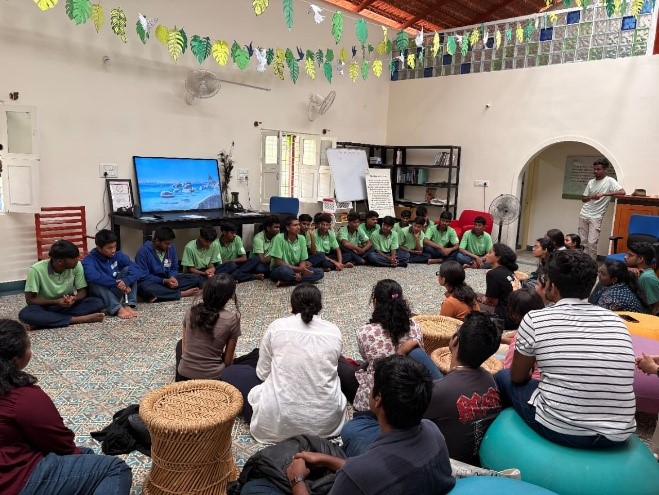
An interactive session was conducted between the interns, and research associates from the National Institute of Advanced Studies (NIAS) and students from various Parikrama schools at Parikrama Oxygen. The session provided a platform for everyone to reflect on their experiences and share key learnings from the visit. Students discussed their observations from the farmers' market, highlighting the diversity of agricultural produce and the different varieties of tomatoes they encountered, which enhanced their understanding of sustainable farming practices and local food systems.
The participants also shared their impressions of the natural environment at Parikrama Oxygen, expressing appreciation for the opportunity to engage with nature in a meaningful way. Many students spoke about the wildlife they had observed during the day, including birds, insects, amphibians, and other species that demonstrated the site's rich biodiversity. Discussions further explored expectations for the scheduled night walk, with students expressing enthusiasm about observing nocturnal wildlife and gaining a deeper understanding of ecosystem dynamics after dark.
Students reflected on the benefits of spending time away from electronic devices and social media, noting how the experience encouraged mindfulness, observation, and stronger connections with both nature and peers. Participants also discussed the lessons they intended to take back home, including water conservation, waste reduction, tree planting, responsible consumption, and greater appreciation for local biodiversity.
The session concluded with reflections on how the experiences at Parikrama Oxygen could inspire positive behavioural changes in daily life. Students identified several practices they hoped to incorporate into their routines, such as reducing screen time, spending more time outdoors, adopting environmentally responsible habits, and contributing to conservation efforts within their communities. The interaction highlighted the transformative role of experiential environmental education in fostering ecological awareness, sustainability, and responsible citizenship among young learners.
Policy recommendations by the NIAS ‘Grass Roots’ team based on the visit
1. Integrate nature-based learning into mainstream education
Educational institutions should incorporate experiential and nature-based learning into school curricula. Regular outdoor learning programmes, ecological field visits, biodiversity monitoring, and environmental stewardship activities can complement classroom-based instruction and strengthen students' understanding of sustainability, climate change, and conservation.
2. Expand access to outdoor education for marginalised communities
Government agencies, educational institutions, and non-governmental organisations should collaborate to establish nature-learning centres and environmental camps for children from socio-economically disadvantaged backgrounds. Such initiatives can reduce inequalities in access to environmental education while fostering leadership, confidence, and ecological awareness.
3. Strengthen Community-Based Conservation Models
Environmental restoration efforts should actively involve local communities, farmers, educational institutions, and civil society organisations. Participatory conservation models improve long-term sustainability, create local ownership, and facilitate knowledge-sharing between stakeholders.
4. Prioritise native species in afforestation and restoration programmes
Government afforestation programmes should prioritise native and ecologically appropriate species over monoculture plantations. Native vegetation supports greater biodiversity, improves ecosystem resilience, enhances wildlife habitats, and contributes to long-term ecological stability.
5. Review commercial plantation practices in forest landscapes
Forest management policies should reassess the ecological impacts of commercial monoculture plantations, particularly eucalyptus and other non-native species. Restoration of mixed native forests should be prioritised to improve biodiversity, watershed health, and ecosystem functioning.
6. Scale up watershed restoration and rainwater harvesting
Water conservation measures such as contour trenches, percolation pits, recharge structures, and wetland restoration should be integrated into rural development and climate adaptation policies. Such interventions improve groundwater recharge, reduce soil erosion, and enhance resilience to droughts and floods.
7. Establish biodiversity monitoring programmes in schools
Schools and educational institutions should be encouraged to maintain biodiversity inventories and citizen-science programmes. Student participation in monitoring birds, reptiles, amphibians, insects, and vegetation can generate valuable ecological data while strengthening environmental literacy.
8. Create demonstration sites for sustainable land management
Successful projects such as Parikrama Oxygen should be recognised as demonstration sites for ecological restoration, environmental education, and sustainable land management. Replicating similar models across regions can contribute to biodiversity conservation.
The above report was compiled by Sreemaya Nair.