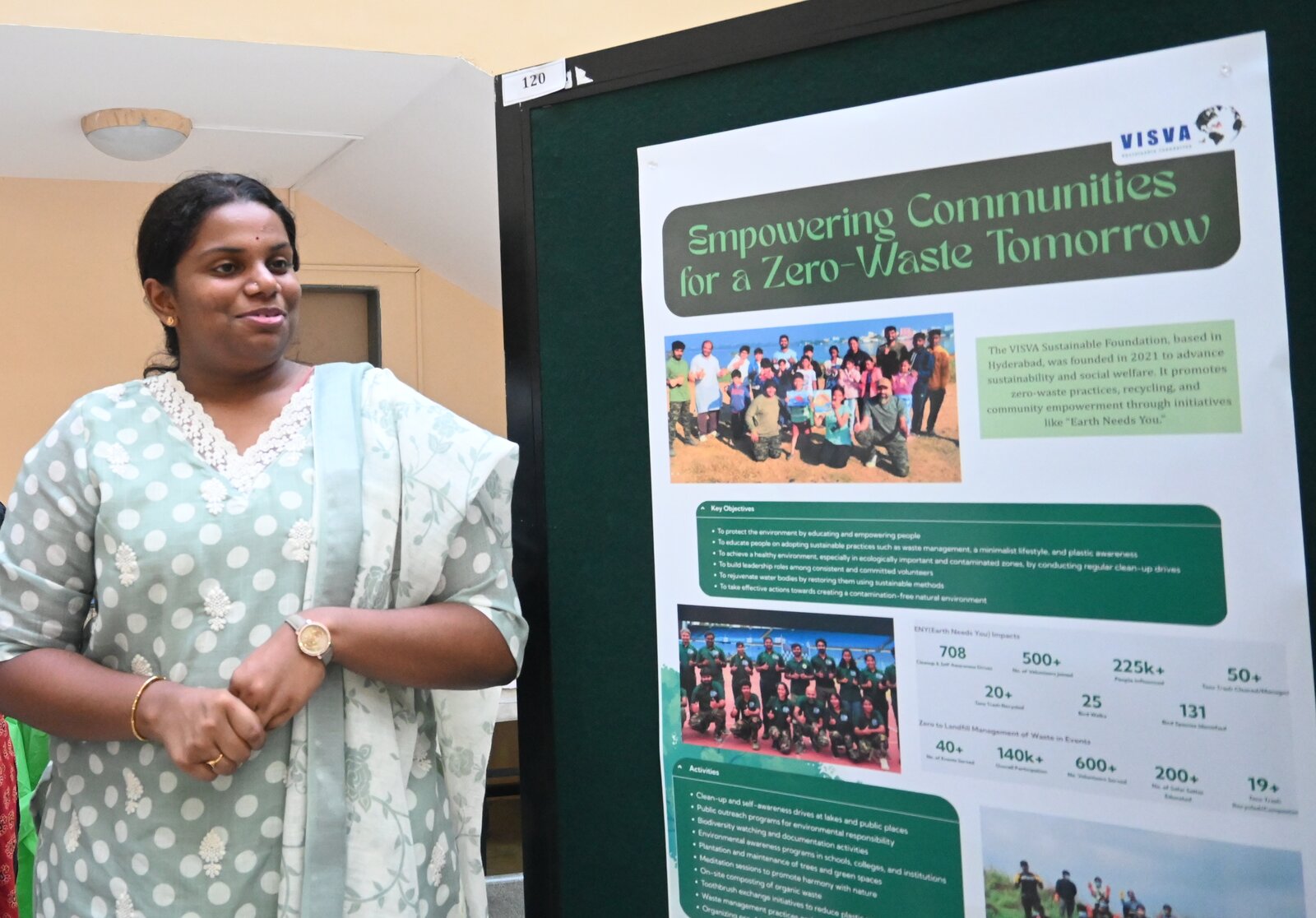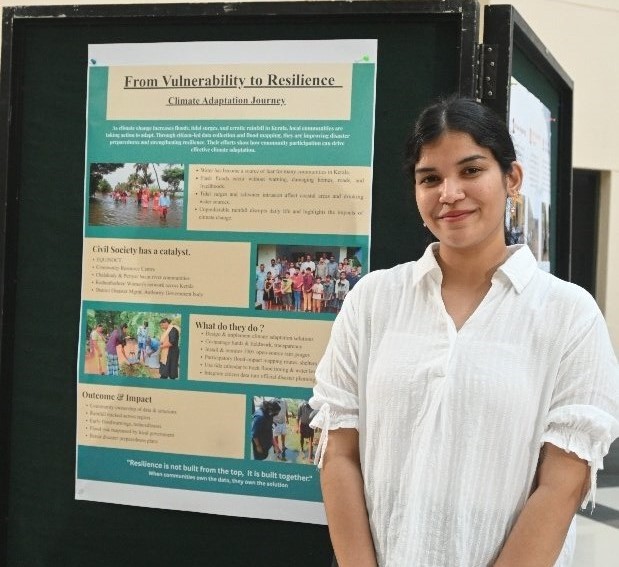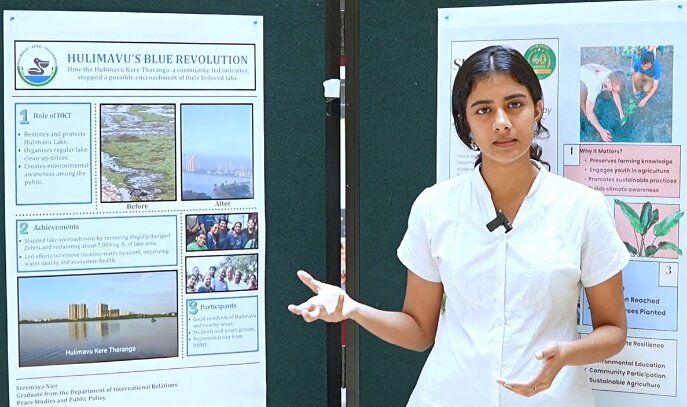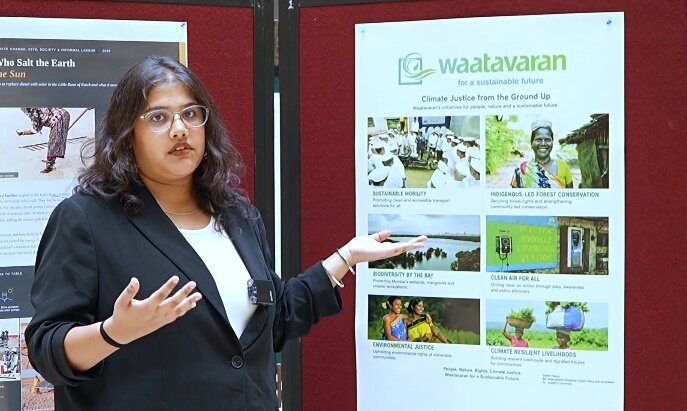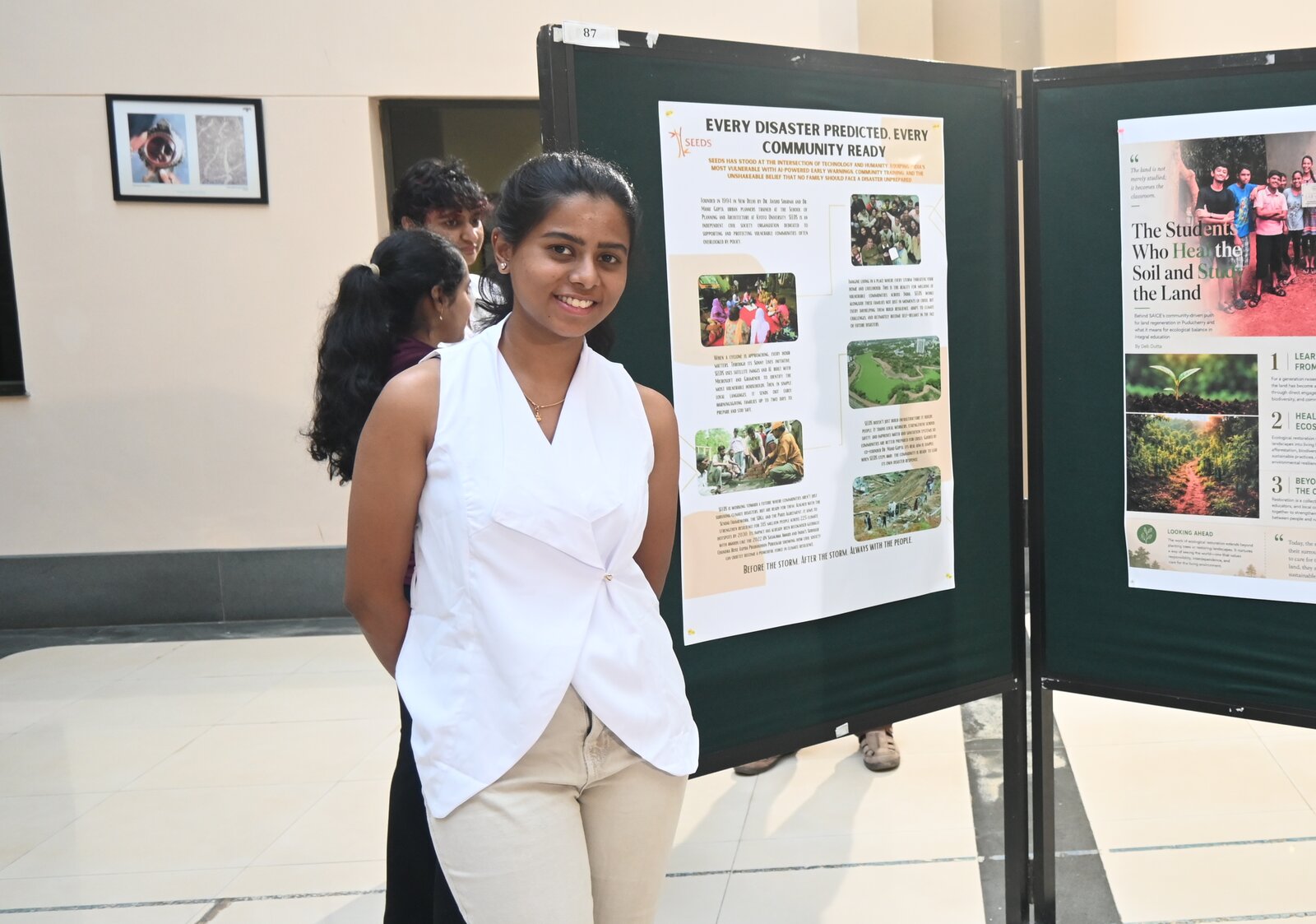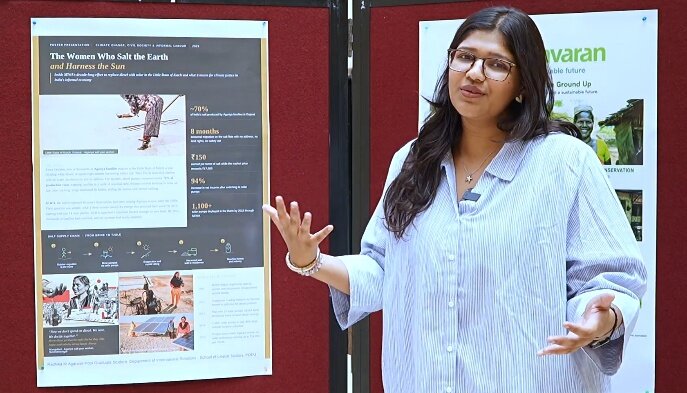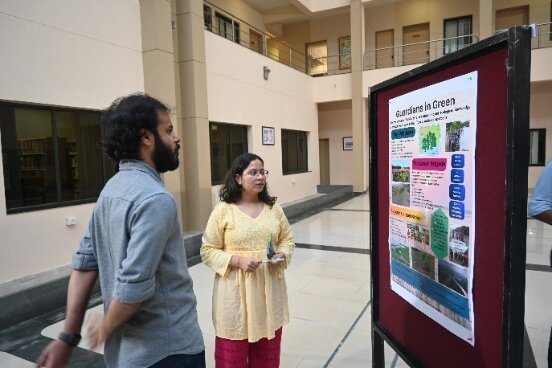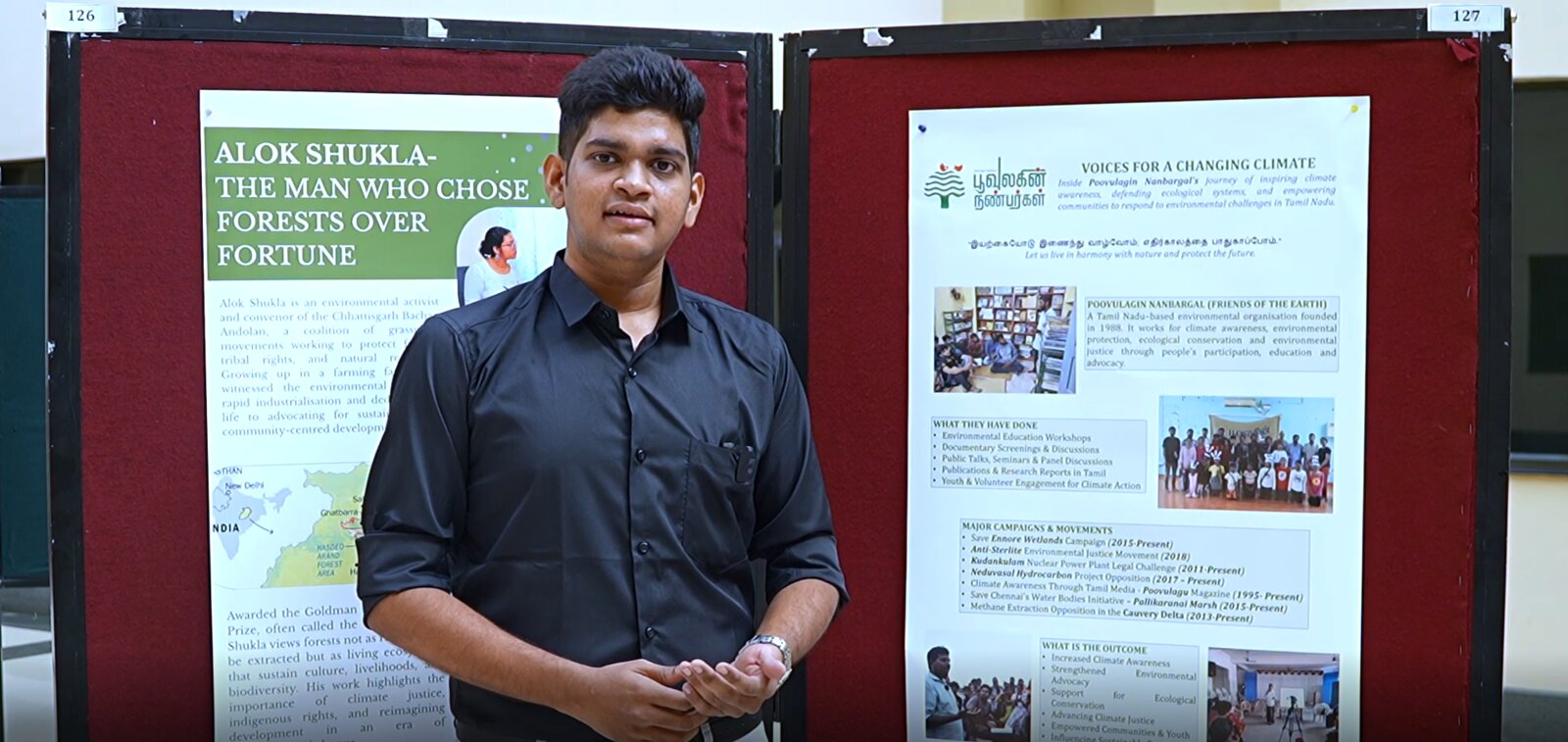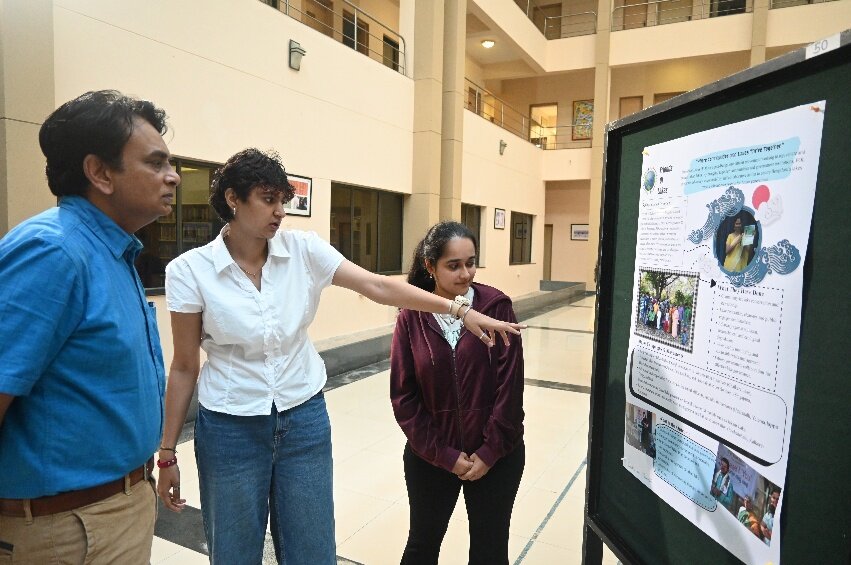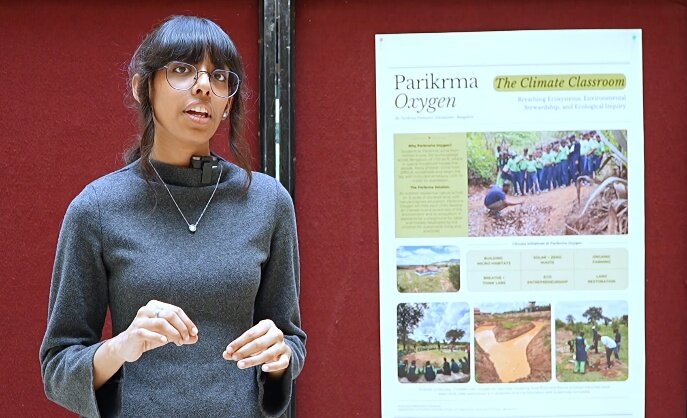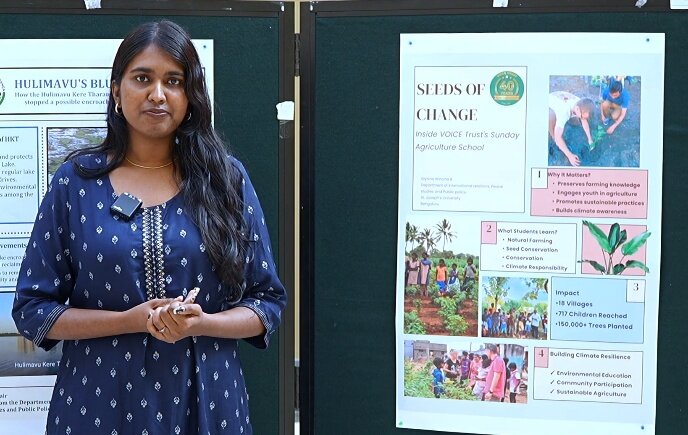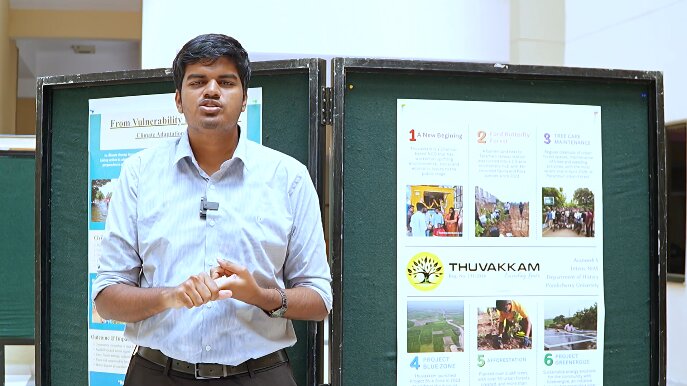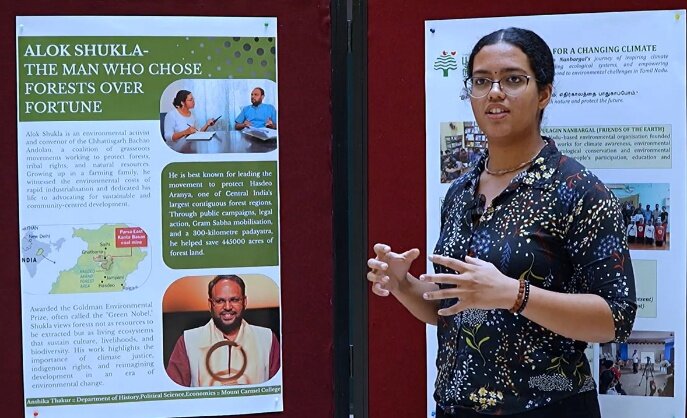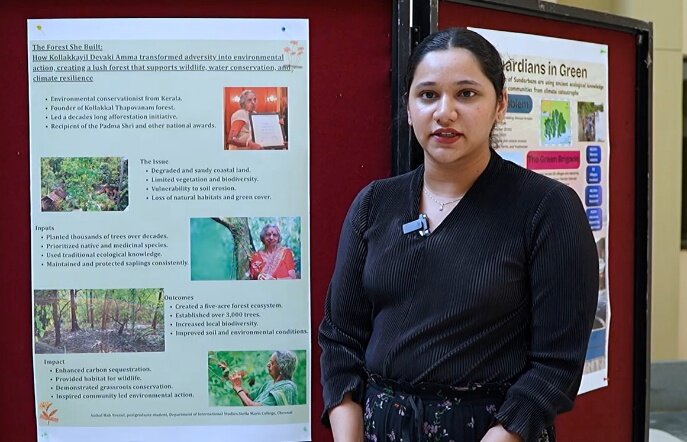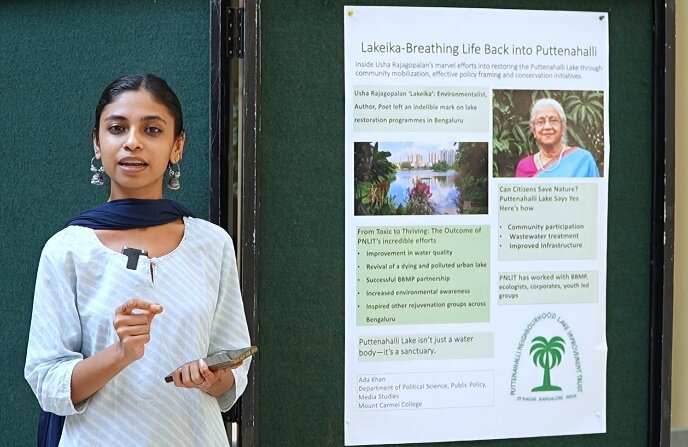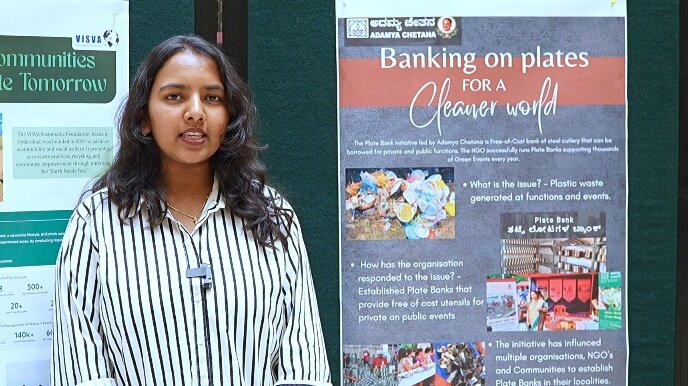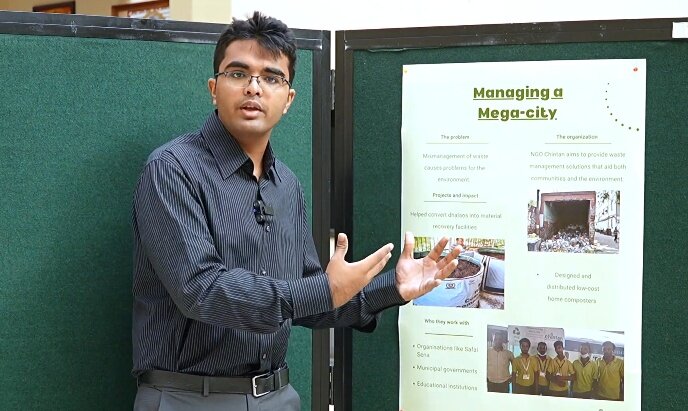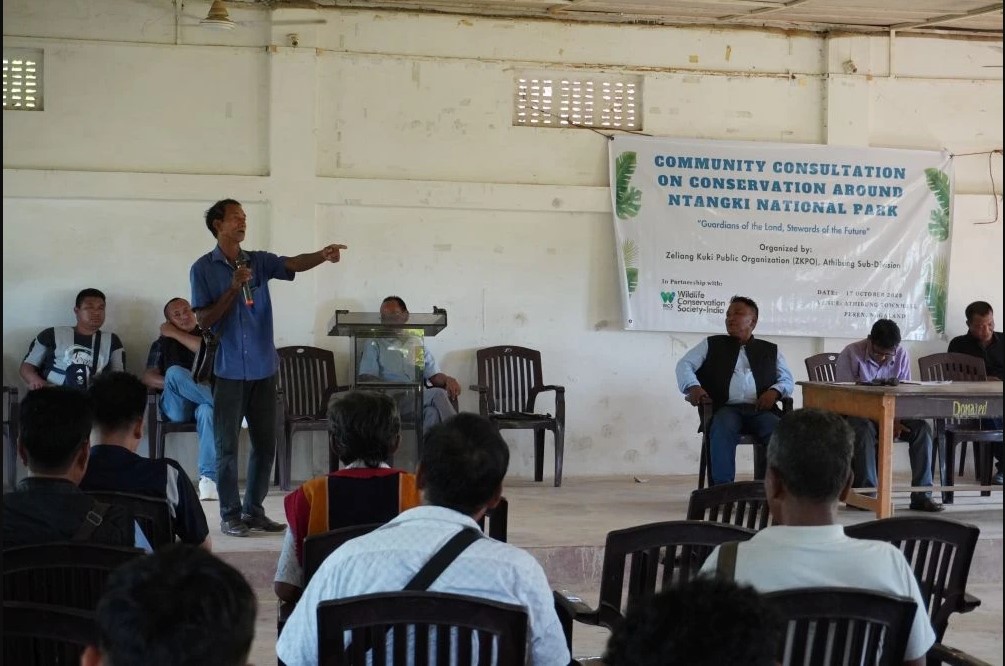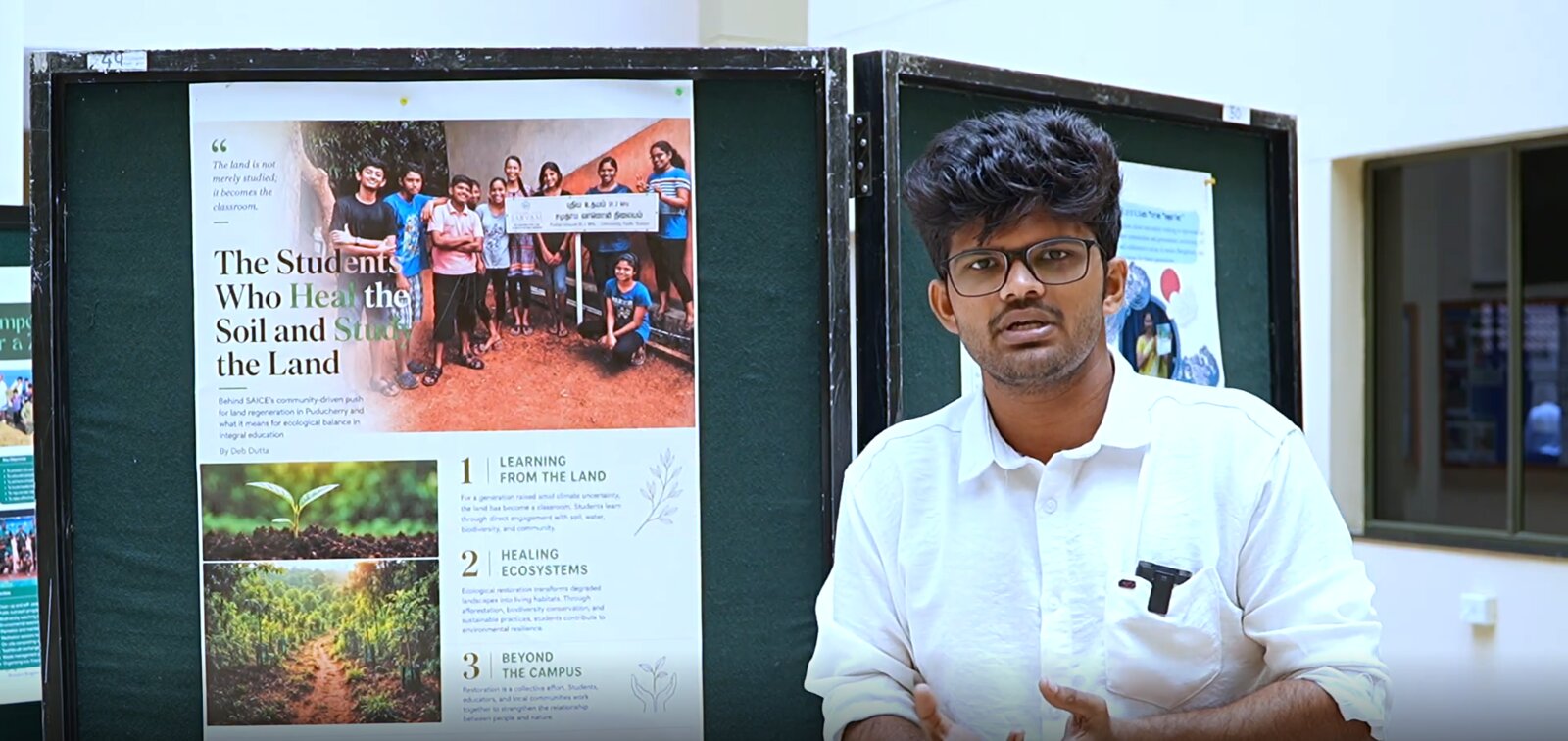
As part of the NIAS Climate Change, Civil Society and Peace (C3SP) initiative in collaboration with GPPAC South Asia, the inaugural workshop of 'The Grass Roots,' the NIAS Youth Network on Climate Change, Civil Society and Peace, was held on 03 June 2026 at the National Institute of Advanced Studies (NIAS), Bengaluru. During the workshop, young scholars from institutions across India examined diverse community-led responses to climate change through a poster presentation exercise. As part of this initiative, Deb Dutta, a graduate of the Department of Political Science at the Sri Aurobindo International Centre of Education (SAICE), Puducherry, documented SAICE's approach to environmental education and ecological restoration.
This note examines how SAICE integrates ecological restoration, environmental stewardship, and experiential learning into its philosophy of integral education. It highlights how engaging students in land regeneration, biodiversity observation, and sustainable agricultural practices cultivates environmental responsibility while strengthening ecological resilience and community participation.
Sri Aurobindo International Centre of Education, SAICE, follows the integral education approach. It aims to incorporate five dimensions of human beings: the physical, the vital, the mental, the psychic, and the spiritual. The school's purpose is to develop your entire being, with the motive of study being the joy of learning. A constant focus on progress is stressed through a holistic approach. Students are enrolled from kindergarten to college. At a young age, students are often taken out for learning through outdoor activities. Whether it's a mere bird-gazing or a stroll in one of the lands, learning from one's experience is vital. SAICE ensures its students are aware of and are responsible for acting on emerging global issues.
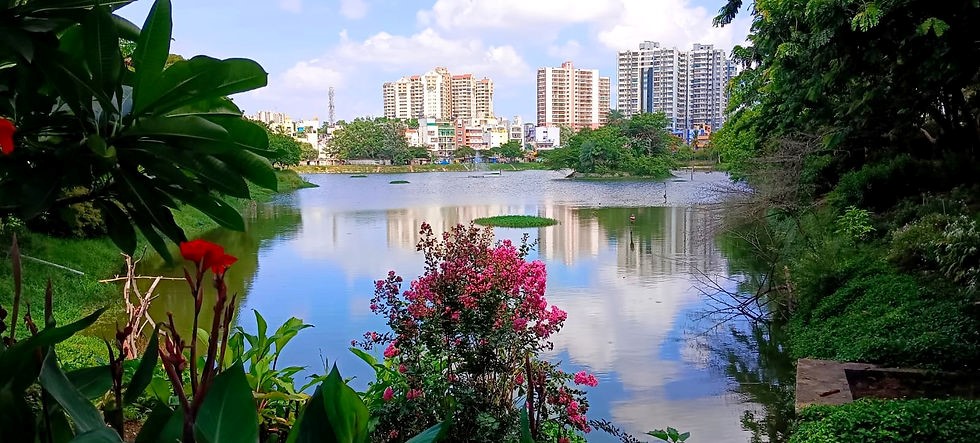
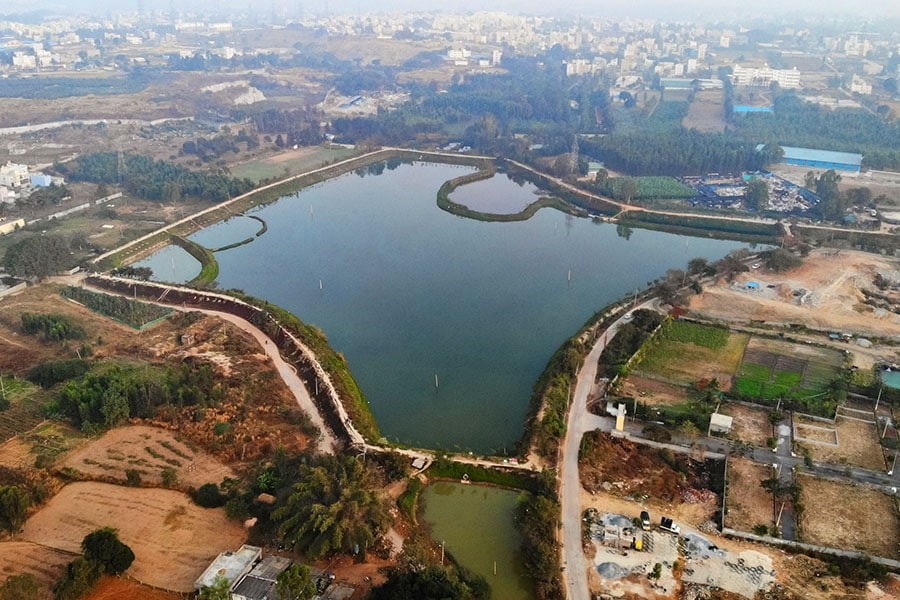
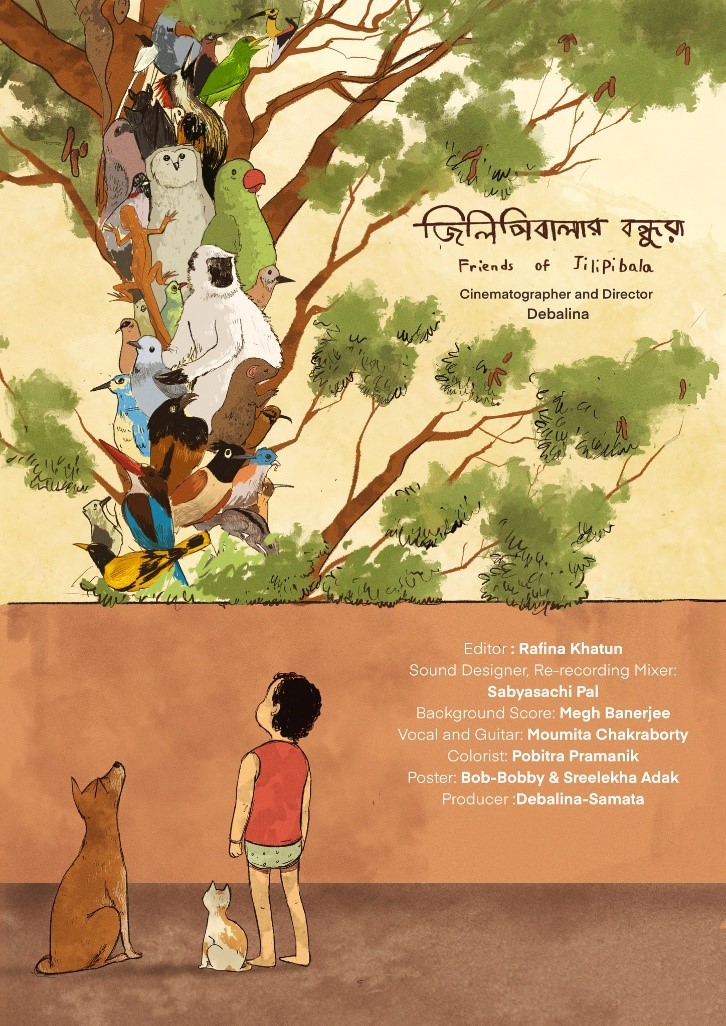
The land was not merely studied; it served as a classroom. Nature and the surrounding waters were actively observed, and through careful listening and observation, environmental changes began to be noticed, such as the absence of certain birds around the lakes during particular times of the year. The questioning process of asking 'why' gave birth to intense curiosity and an intense desire to know about the surrounding environment in general. At these lakes, we would make efforts to recognize the types of birds that are present there and study their scientific names. In other words, instead of learning through conventional methods, one can learn the beauty of nature.
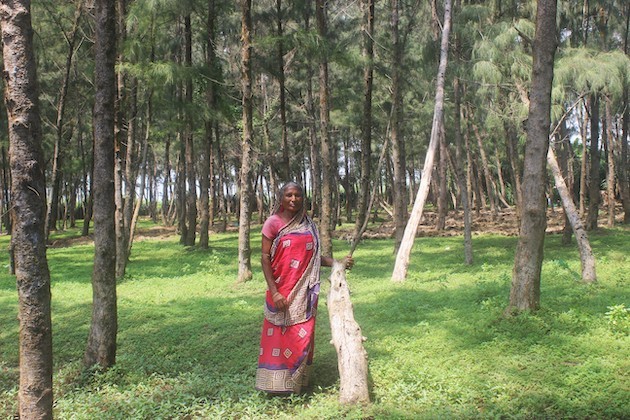
As one grows older, focus expands to healing ecosystems. We were incredibly lucky to understand the physical labor of the harvest. Whether it was groundnut harvesting, picking cashews, or even working with manure to enrich the soil, with direct participation.
Through these sustainable practices, one can experience the difficulties and the sheer hard work that people in the fields go through every day. Having experienced it for themselves, they attain the ability to appreciate their work much more. In helping to restore the land, one gains a deeper understanding of ecological restoration in that it is not just about knowledge but also about putting into practice what one knows in order to change the degraded landscape. Once out of campus, restoration takes on a new meaning and is practiced collectively. As students grow older and reach the college level, they have the opportunity to study these environmental systems in depth and conduct detailed case studies about them.
However, what is even more important is that they become leaders and coordinate the whole process of harvesting. The older children pass on the experience that they gained in previous years to the new children, leading them into the fields in the same way as they had been led previously. This is a wonderful collaboration between students, teachers, and the SAICE community. Ecological restoration is more than just planting trees because there is so much more than what meets the eye, as it teaches a holistic approach to life based on interdependence, responsibilities, and nurturing of our environment. Remarkably, the same curious students who once observed nature are now learning how to take care of it.