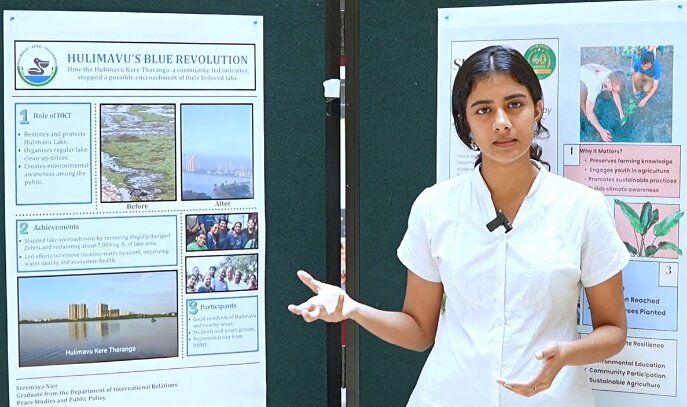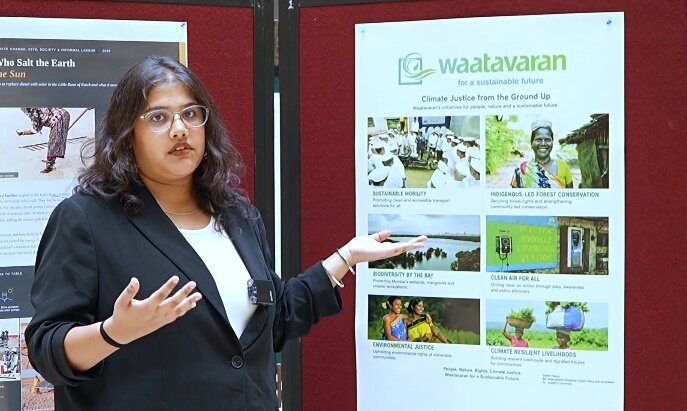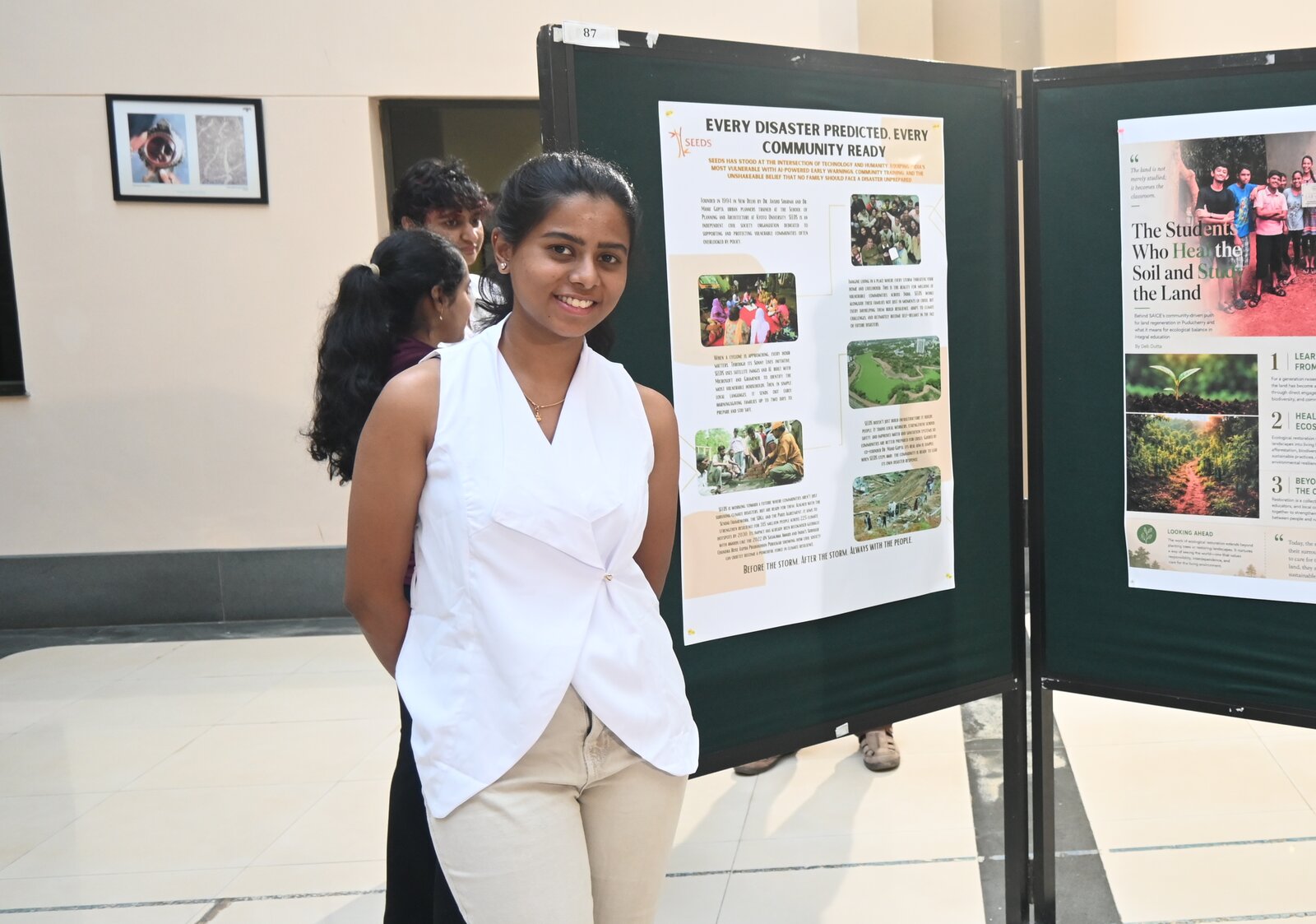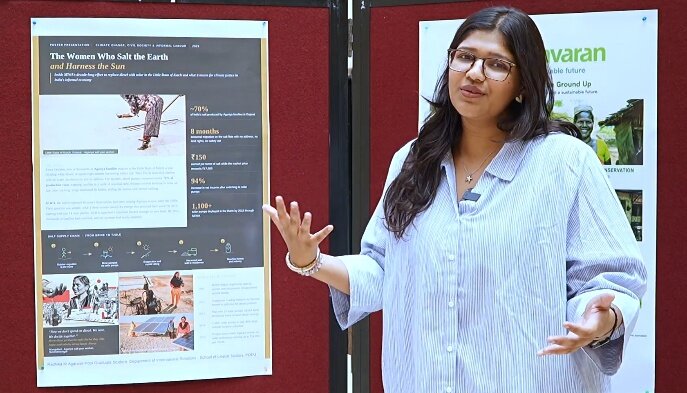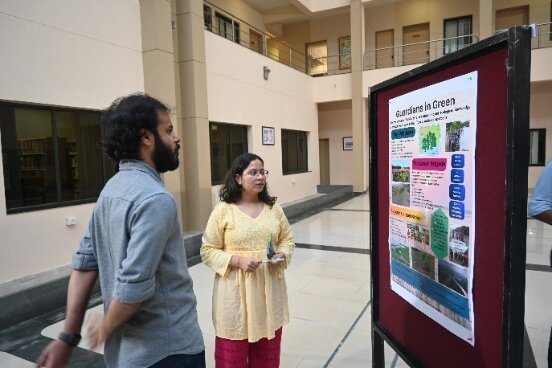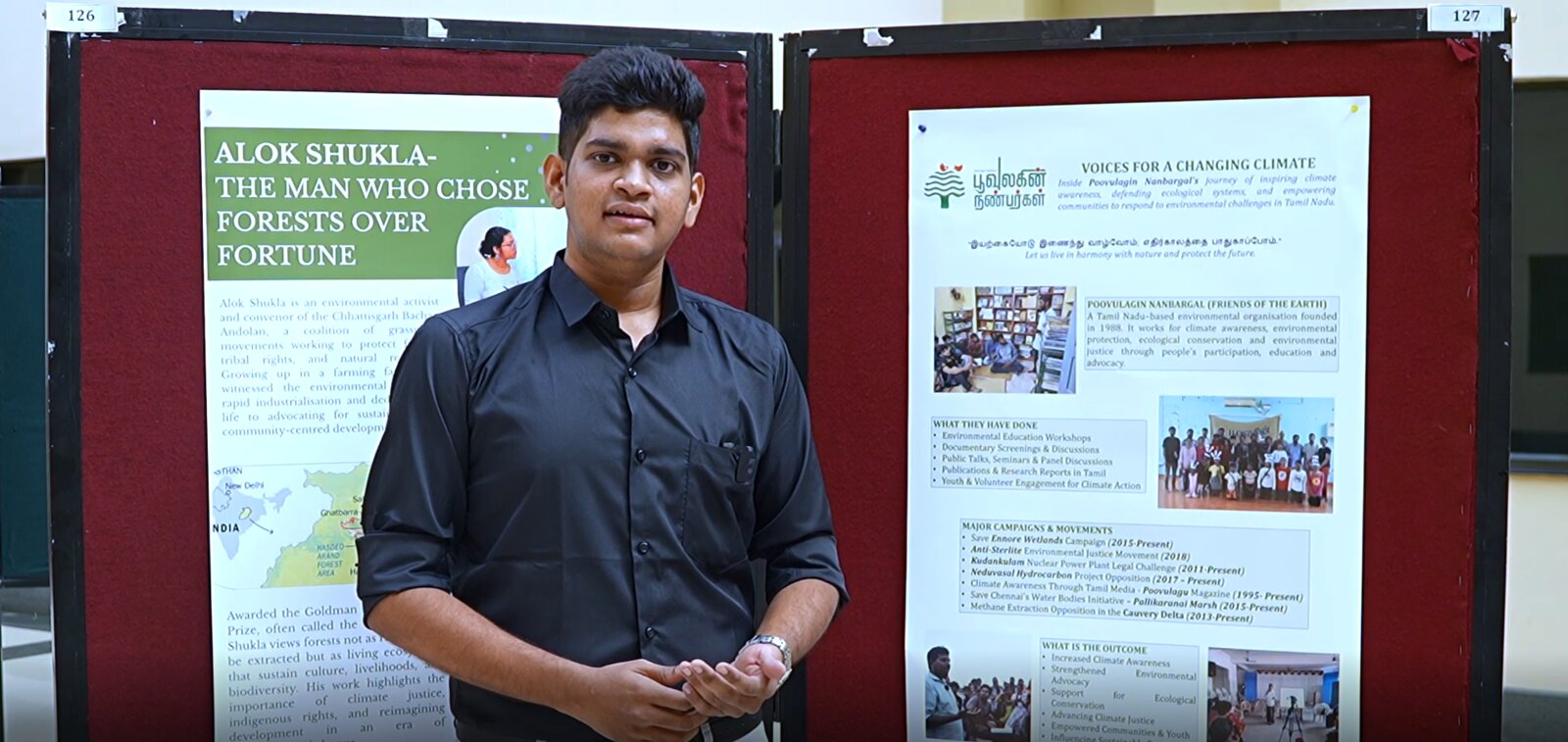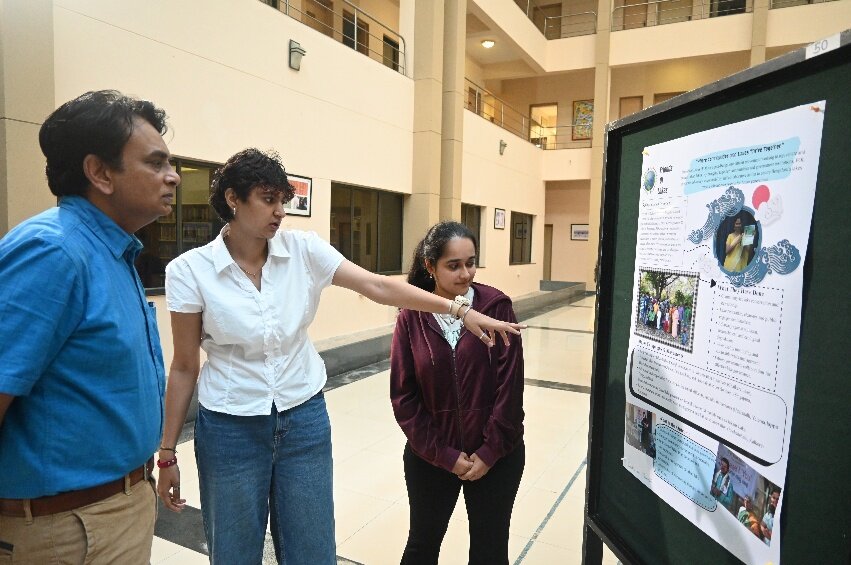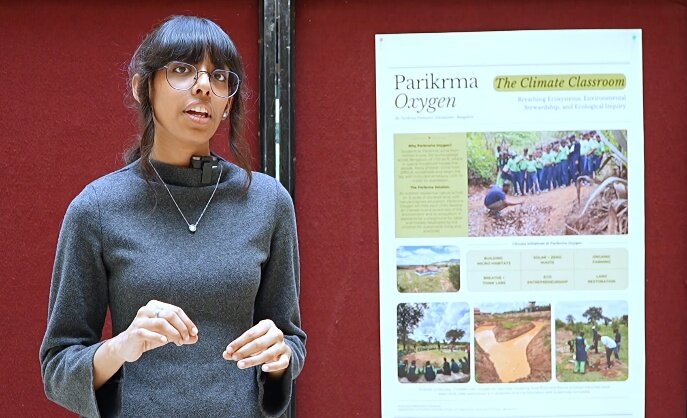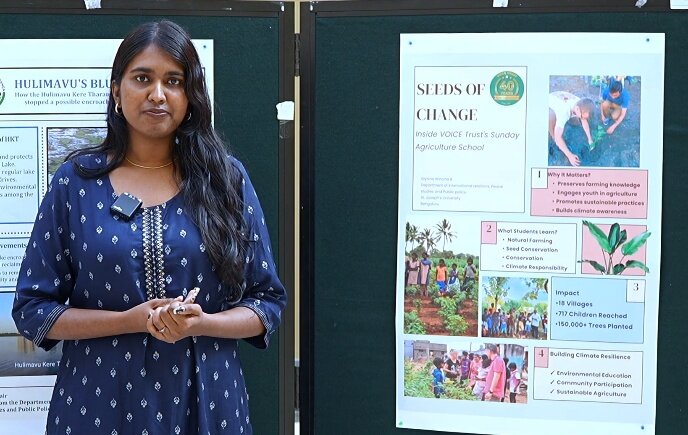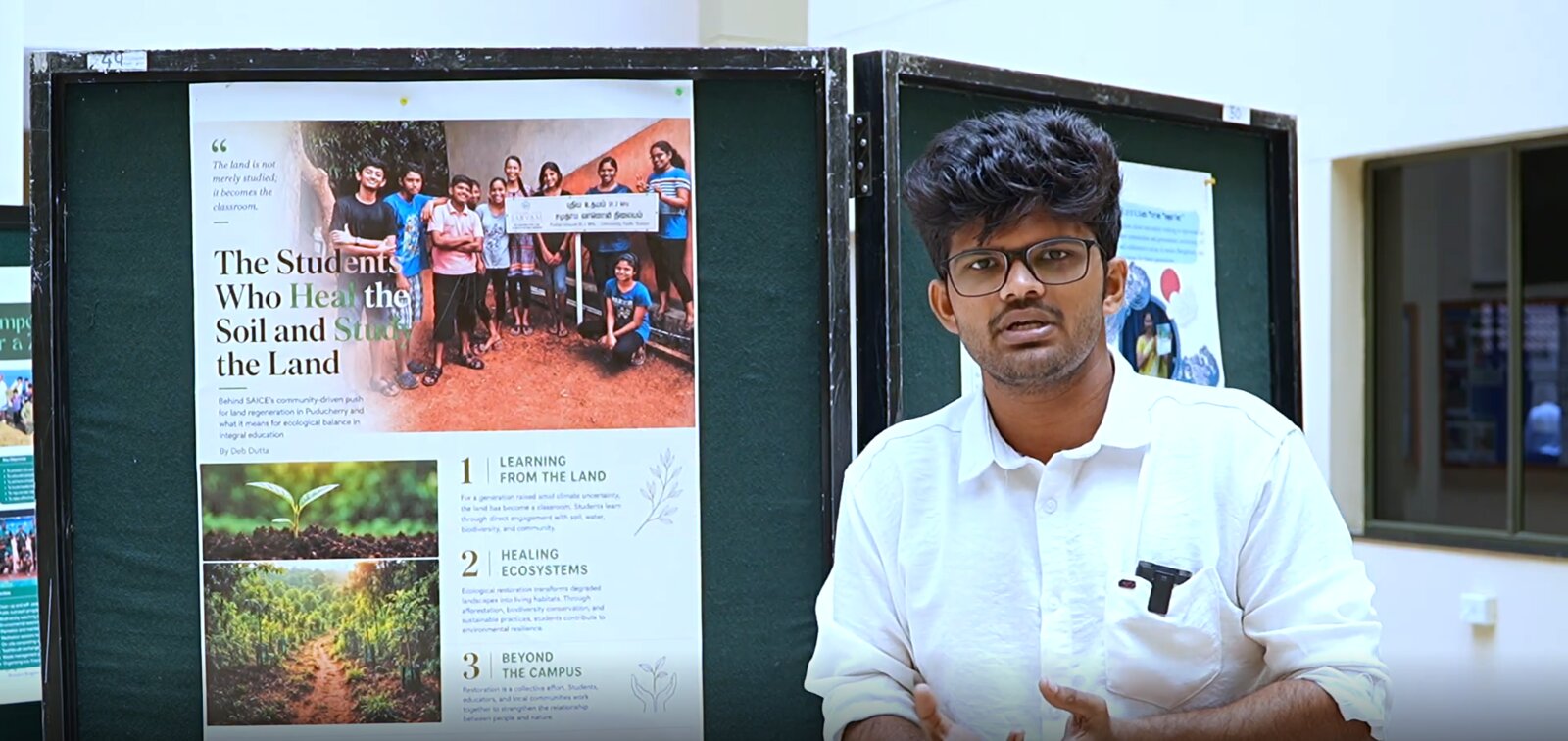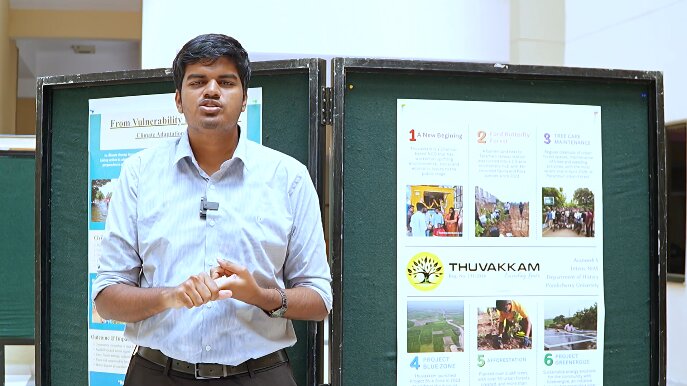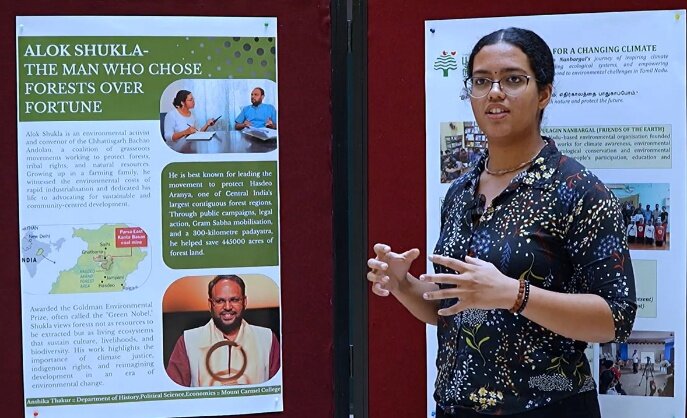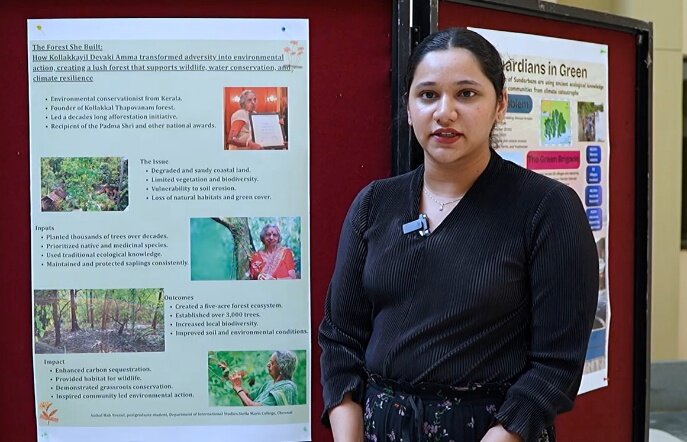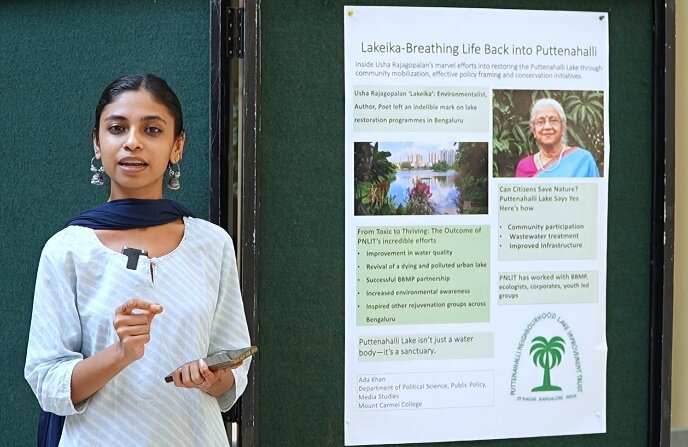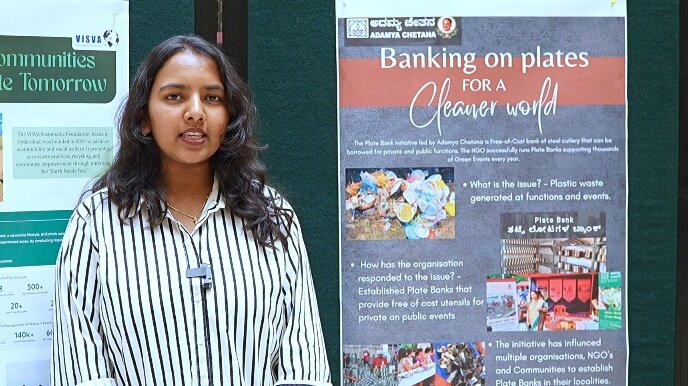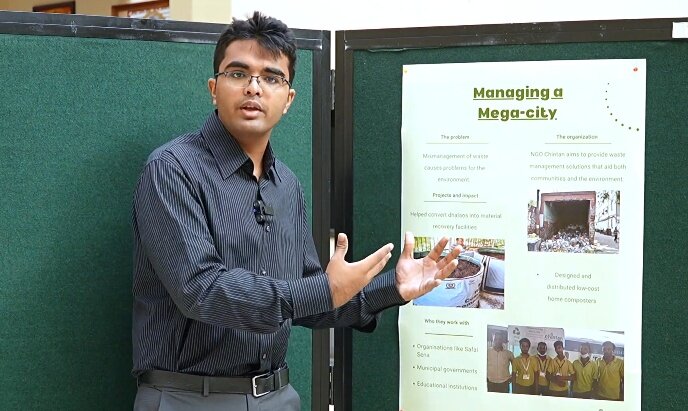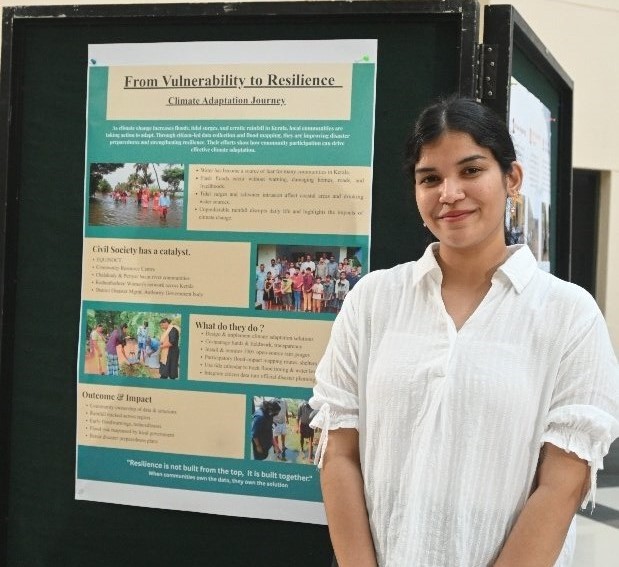
As part of the NIAS Climate Change, Civil Society and Peace (C3SP) initiative in collaboration with GPPAC South Asia, the inaugural workshop of 'The Grass Roots,' the NIAS Youth Network on Climate Change, Civil Society and Peace, was held on 03 June 2026 at the National Institute of Advanced Studies (NIAS), Bengaluru. During the workshop, young scholars from institutions across India examined the role of civil society organisations (CSOs) in responding to climate change through a poster presentation exercise. As part of this initiative, Urja K, a postgraduate student in the Department of Public Policy at Ramaiah University of Applied Sciences, Bengaluru, documented community-led climate adaptation initiatives facilitated by EQUINOCT in Kerala.
This note examines how communities in Kerala are strengthening climate resilience through citizen science, participatory flood mapping, and locally driven environmental monitoring. It highlights how collaboration between civil society organisations, local governments, and community members is improving disaster preparedness, strengthening climate adaptation, and enabling vulnerable communities to respond more effectively to increasing flood risks and environmental change.
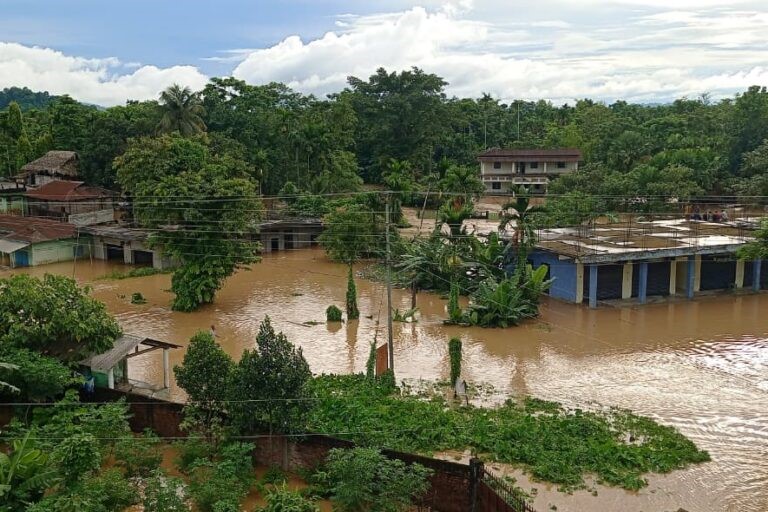
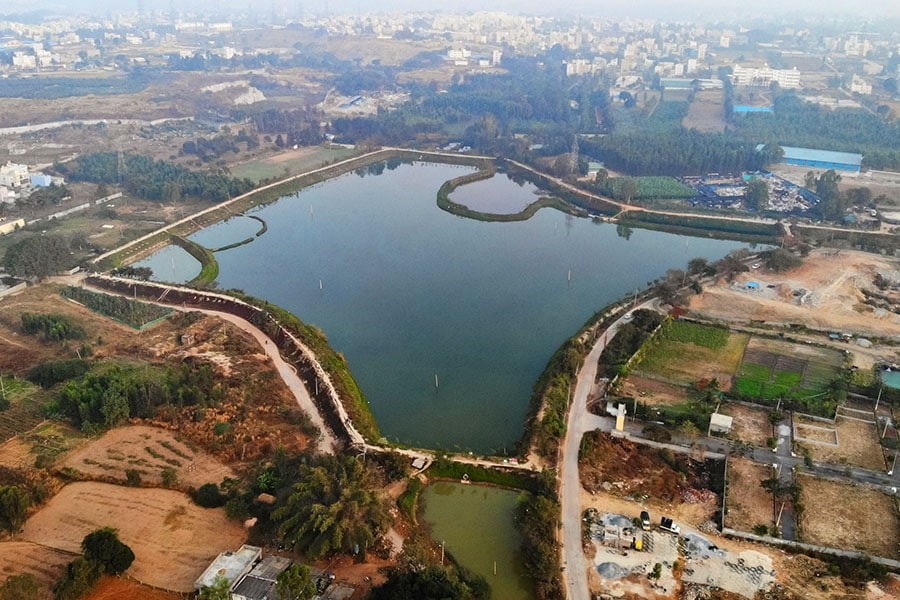
Kerala is no stranger to water's dual role as a source of life and destruction. Kerala is lush green state know for it rivers and coastline in southern India. From flash floods and tidal surges to saline intrusion and erratic rainfall, the states communities face mounting risk from climate change. Citizens reflect to this climate change by transformative idea like community led data collection and participatory flood impact mapping, proving that when communities own data. they own the solution.
In recent years water began bringing fear, flash flood without warning, tidal surges swallowed roads, saltwater entering the wells and unpredictable rainfall. This made the community realise that climate change has now become part of their everyday reality. Instead of waiting for outside help from people from Chalakudy and Periyar river basins and from coastal panchayats in Kerala, India decided to act on their own. The students, farmers, and fisher folk are using low cost, open source rain gauge to track rainfall across the region and are placed in school and public area, about 100 such device has been installed.
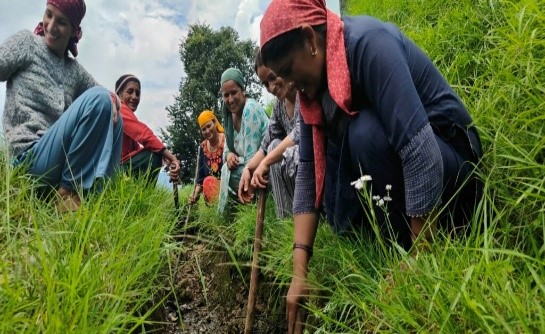
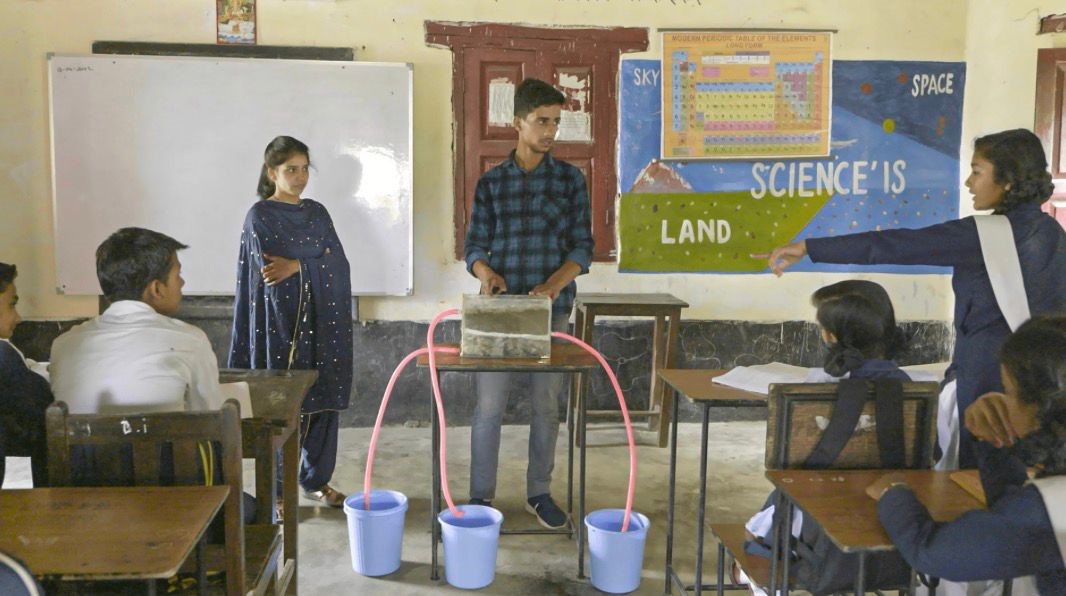
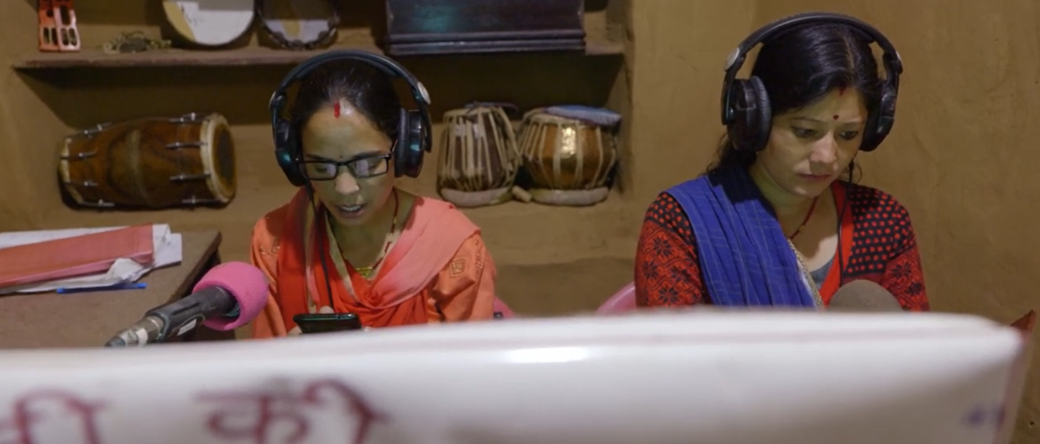
The community interprets trends, maps flood risk and work with local governments to prepare together. This leads to tangible result like better disaster preparedness, reduced loses. The civil society organization EQUINOCT works closely with the civil society and at as a catalyst at every step helping to design and implement solution also organizations like the Community Resource Centre in Puthenvelikkara co-manage funds and fieldwork ensuring transparency, accountability, and local ownership. District disaster management authorities integrate citizen data into planning. The communities along the coastal villages started participatory flood impact mapping, documenting blocked access routes, vulnerable household, at risk culverts, canals and shelter, they also developed tide calendar which is used by 10,000 household to track flood timing and water level. Based on these mapping the local self-government is upgrading on lived experience rather than guesswork. This also shows how data collected by the community reshapes the government response, embedding inclusion, transparency. Women from Kudumbashree groups led awareness campaigns and monitoring activities, while students learned scientific skills as citizen scientists. Even people with disabilities participated in data collection and tool design, ensuring that adaptation efforts remained inclusive and community-oriented. This community science model is now being piloted in the Chalakudy and Periyar basins and is set to expand across the Western Ghats and into India's coastal states, where floods and tidal surges increasingly threaten lives and livelihoods.
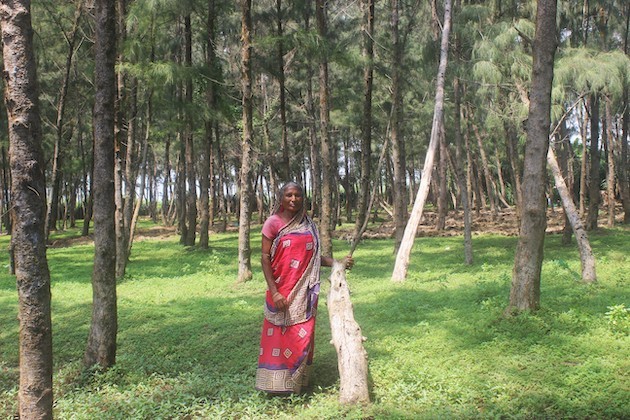
Kerala's community's shows that resilience is not built from the top but it is built together, also it's not only about adapting to climate change but reshaping the institution for the future. By turning ordinary citizens/ community into climate responders, Kerala's communities are proving that resilience is strongest when people themselves own the data, the decisions, and the solutions.