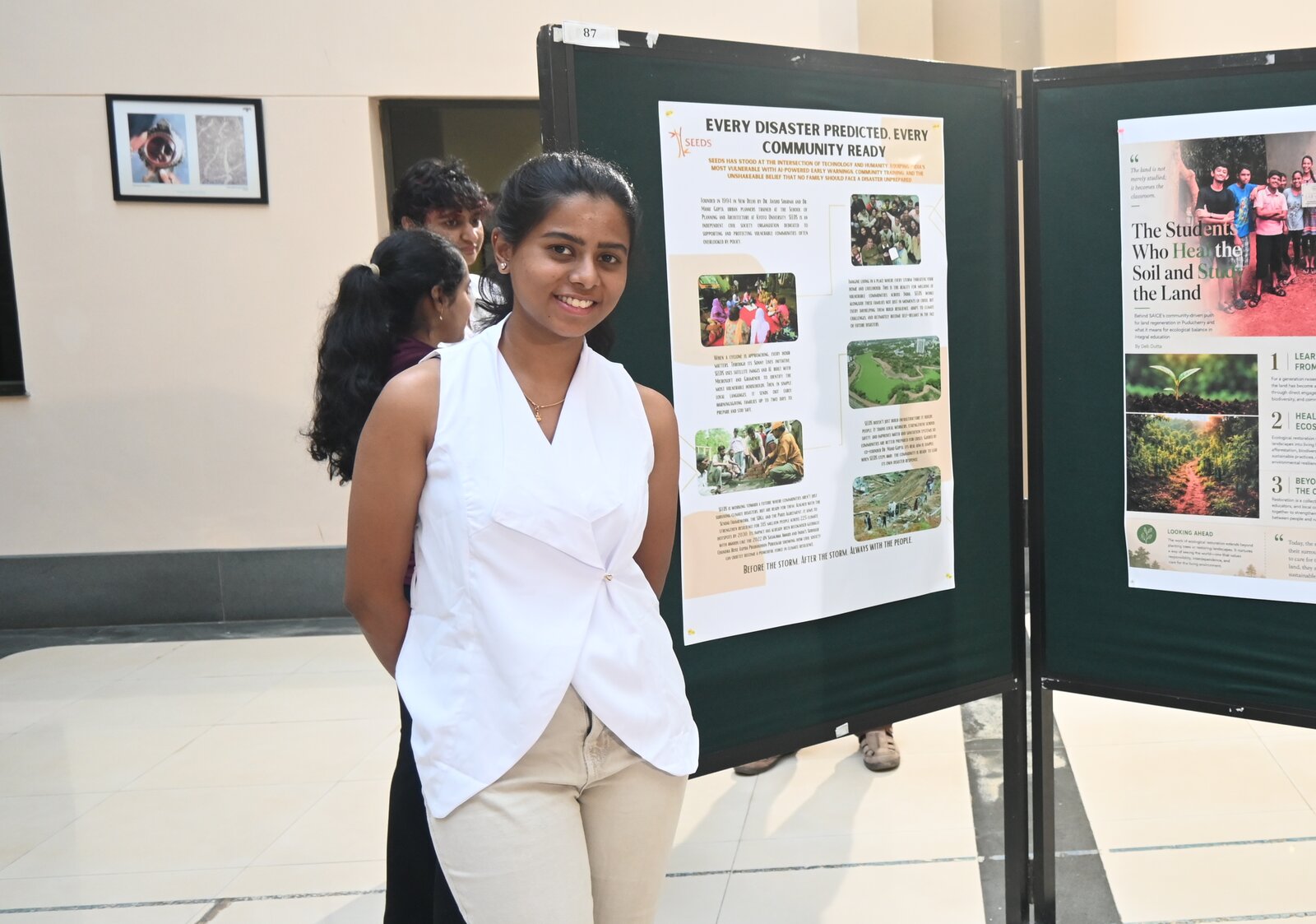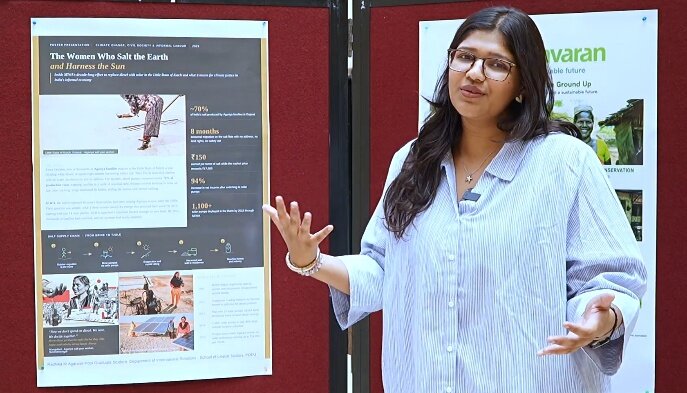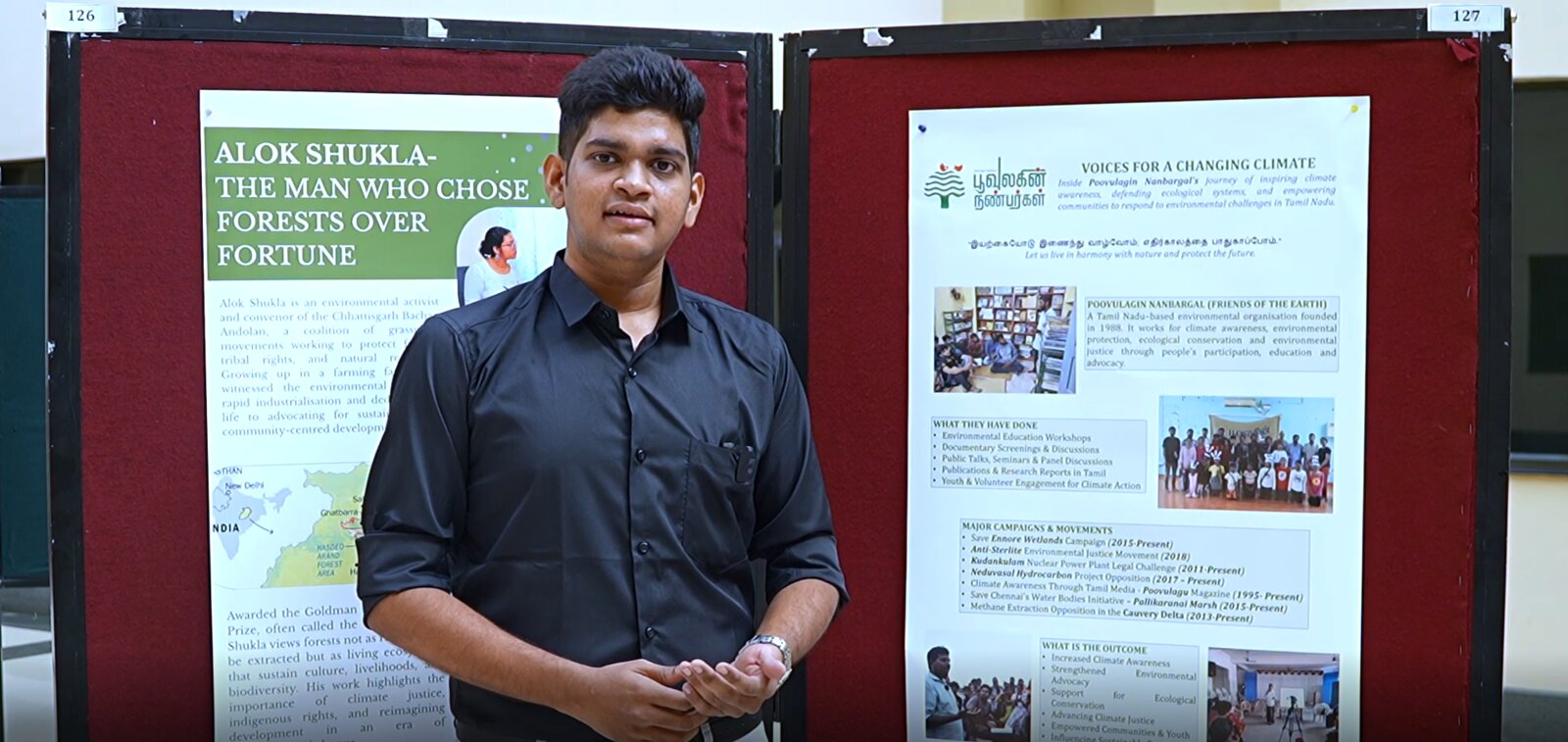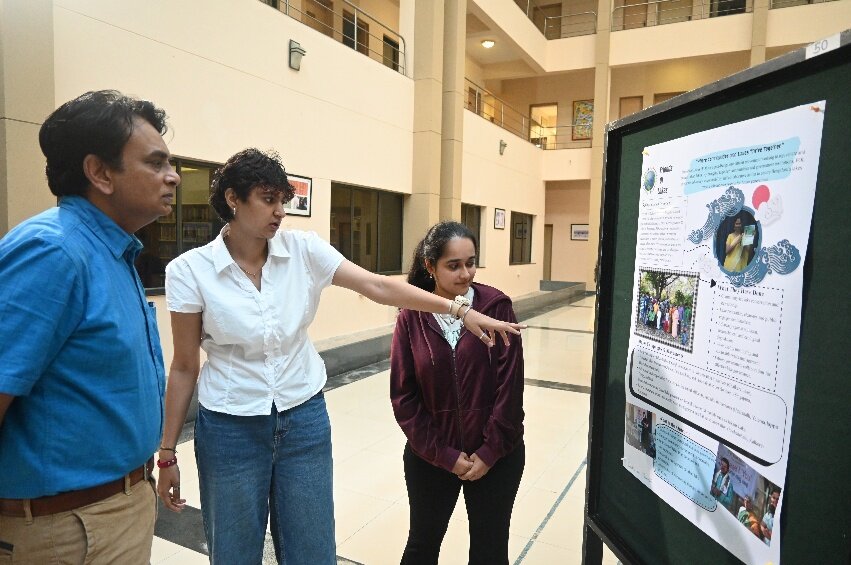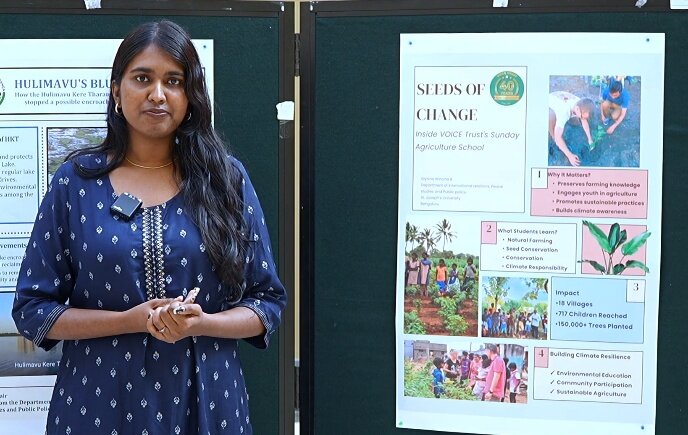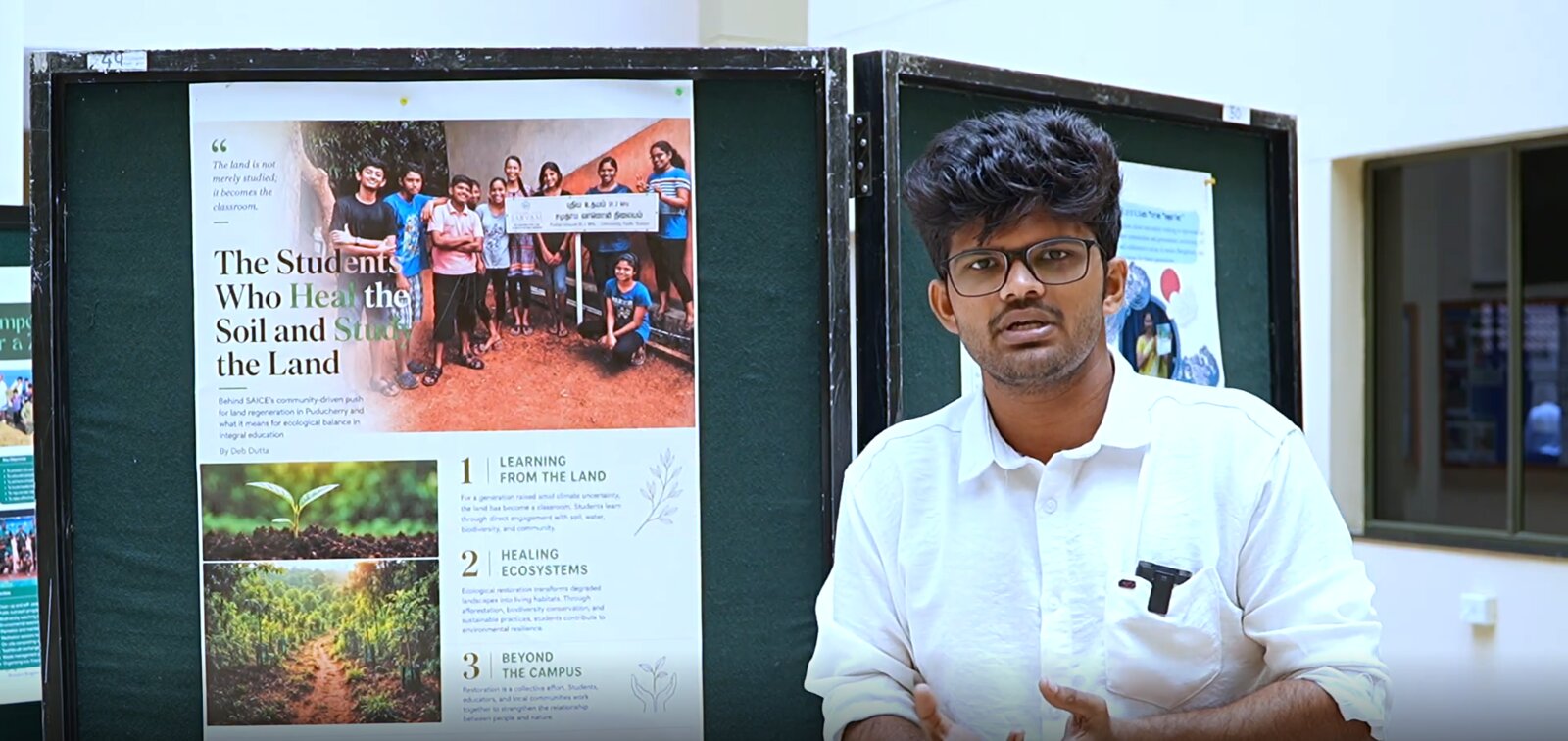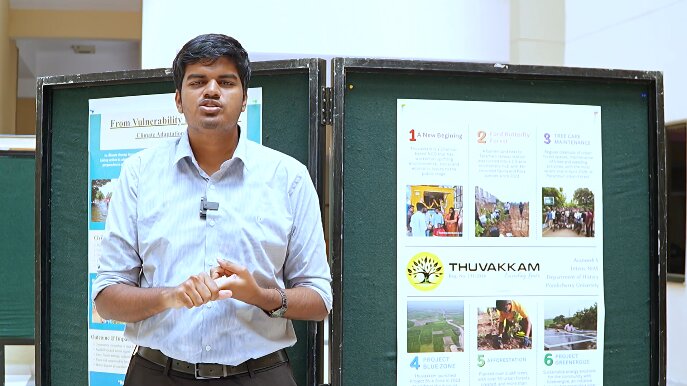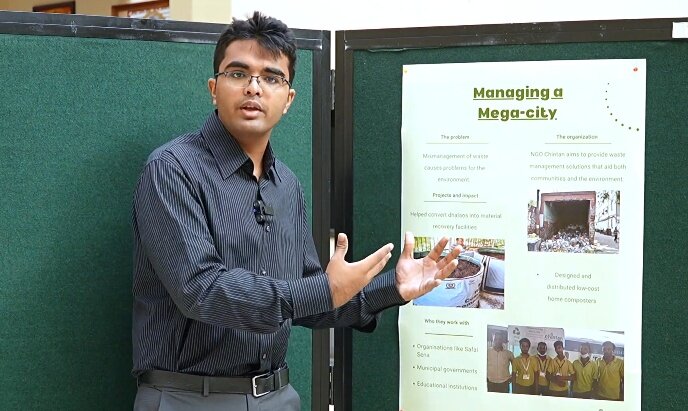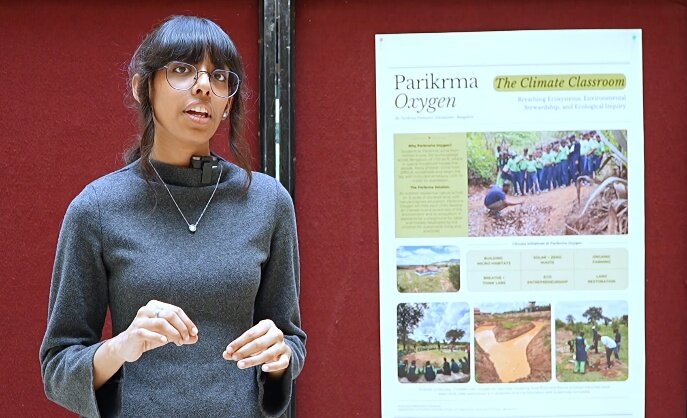
Madhura Meenakshi Tanikella As part of the NIAS Climate Change, Civil Society and Peace (C3SP) initiative in collaboration with GPPAC South Asia, the inaugural workshop of 'The Grass Roots,' the NIAS Youth Network on Climate Change, Civil Society and Peace, was held on 03 June 2026 at the National Institute of Advanced Studies (NIAS), Bengaluru. During the workshop, young scholars from institutions across India examined the role of civil society organisations (CSOs) in responding to climate change through a poster presentation exercise. As part of this initiative, Madhura Meenakshi Tanikella, an undergraduate student in the Department of Political Science at Alliance University, Bengaluru, documented the work of the Parikrma Humanity Foundation and its nature-based learning initiative, Parikrma Oxygen.
This note examines how Parikrma Oxygen is reimagining environmental education by integrating climate literacy, ecological restoration, and experiential learning into the school curriculum for children from underserved urban communities. It highlights how nature-based education can foster environmental stewardship, strengthen climate awareness, and equip young people with the knowledge and skills to become active participants in building a more sustainable future.
Parikrma Humanity Foundation is an organisation founded in Bengaluru that runs four schools and a junior college, providing free, English-medium education to more than 1500 students from over 94 urban slums across the city. The schools have one of the highest attendance rates in the country, with a drop-out rate of less than one per cent. The mission Parikrma embodies is "unleash the potential of under-served children, which will provide them with equal opportunities and make them valuable contributing members of our society" -- one vertical of this mission is the ambitious project: Parikrma Oxygen.
The students attending Parikrma are children of daily-wage workers earning less than INR 12,000 a month while supporting families of around five people in 100 square feet of living space. These areas often lack running water and sanitation. Many children come from difficult family circumstances that affect their emotional stability. At school, they lack quality infrastructure and open space, as Parikrma schools operate from rented buildings close to the slums where students live. Parikrma Oxygen stands at the intersection of these challenges and the climate crisis.
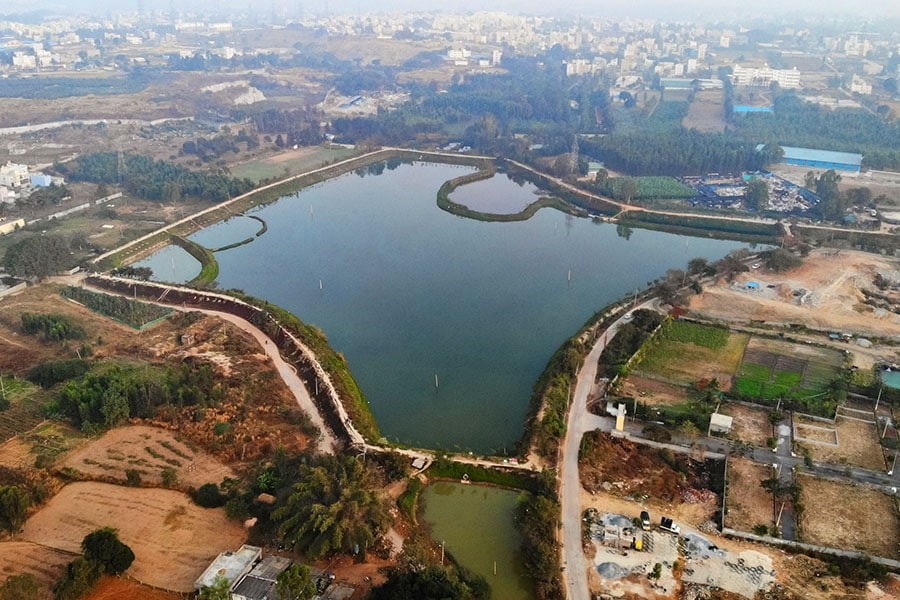
Parikrma Oxygen is a school on 11.5 acres of donated land in Doddaballapur, on the outskirts of Bengaluru. It is India's first outdoor and nature-based school for children from underserved backgrounds. The school acts as a rotating residential school, where one cohort at a time comes for nature-based learning, outdoor activities, and environmental enquiry. The campus is designed to be solar-powered, zero-waste, and self-sustaining, with a food farm already underway.
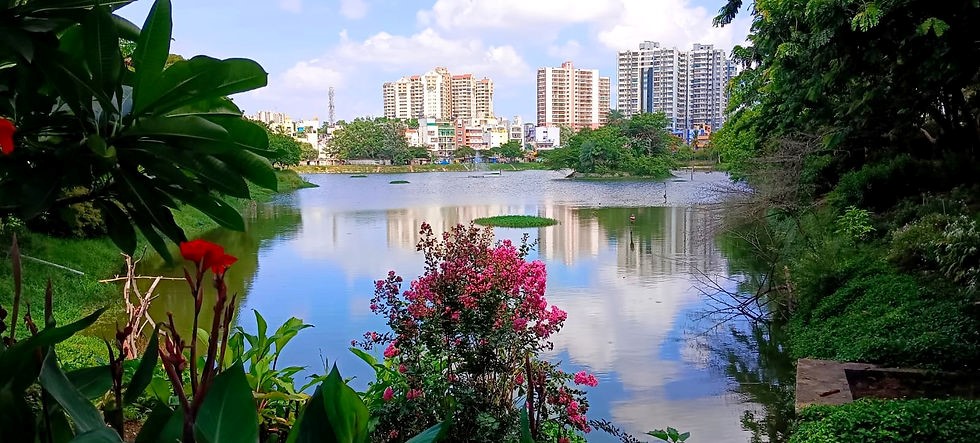
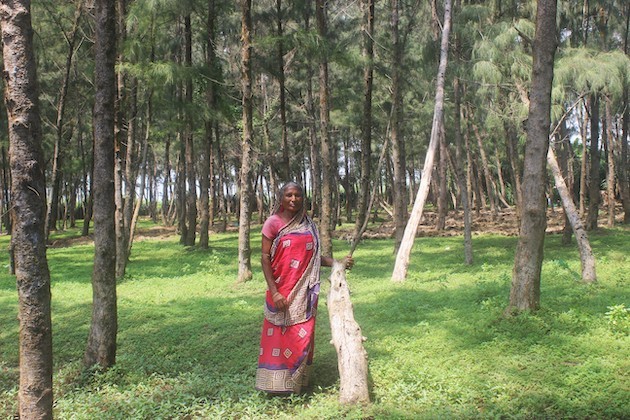
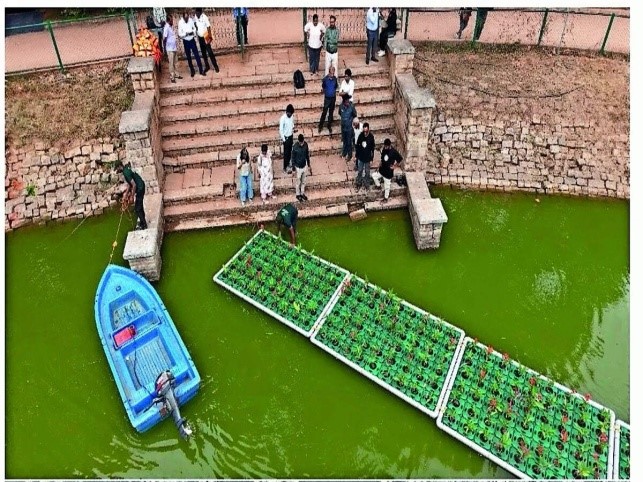
The curriculum follows the government-prescribed state syllabus through fieldwork, experimentation, and hands-on projects; students build tent shelters, study flora and fauna, tend organic farms, and participate in ecological restoration. Oxygen also has specialised labs for environmental learning -- the Breathe Lab for environmental ideation, the Think Lab for research on climate change and native species, and the Do Lab for pottery, bee farming, skill development and eco-entrepreneurship. More than 1000 native trees have been planted, contour trenches excavated, and lake restoration is underway.
The vision for Oxygen extends well beyond what has already been created. Ambitions for the future include creating a forest and dotting the land with micro-habitats, constructing classrooms under trees, building treehouses for birdwatching, establishing a small plastic recycling plant, creating a library of books and films on the environment, and building a campsite. In addition, a comprehensive environmental curriculum is being developed for children aged 5 to 18.
"Nature is the best teacher," "taking them back to the soil," and "to expand the notion of school" are just a few of the things that the founder and CEO of Parikrma Humanity Foundation said about the vision behind Oxygen. The aspiration to engage students not as passive recipients of environmental events and messaging, but as active researchers, stakeholders, and land stewards, reframes the relationship between underserved children, the climate crisis, and education.