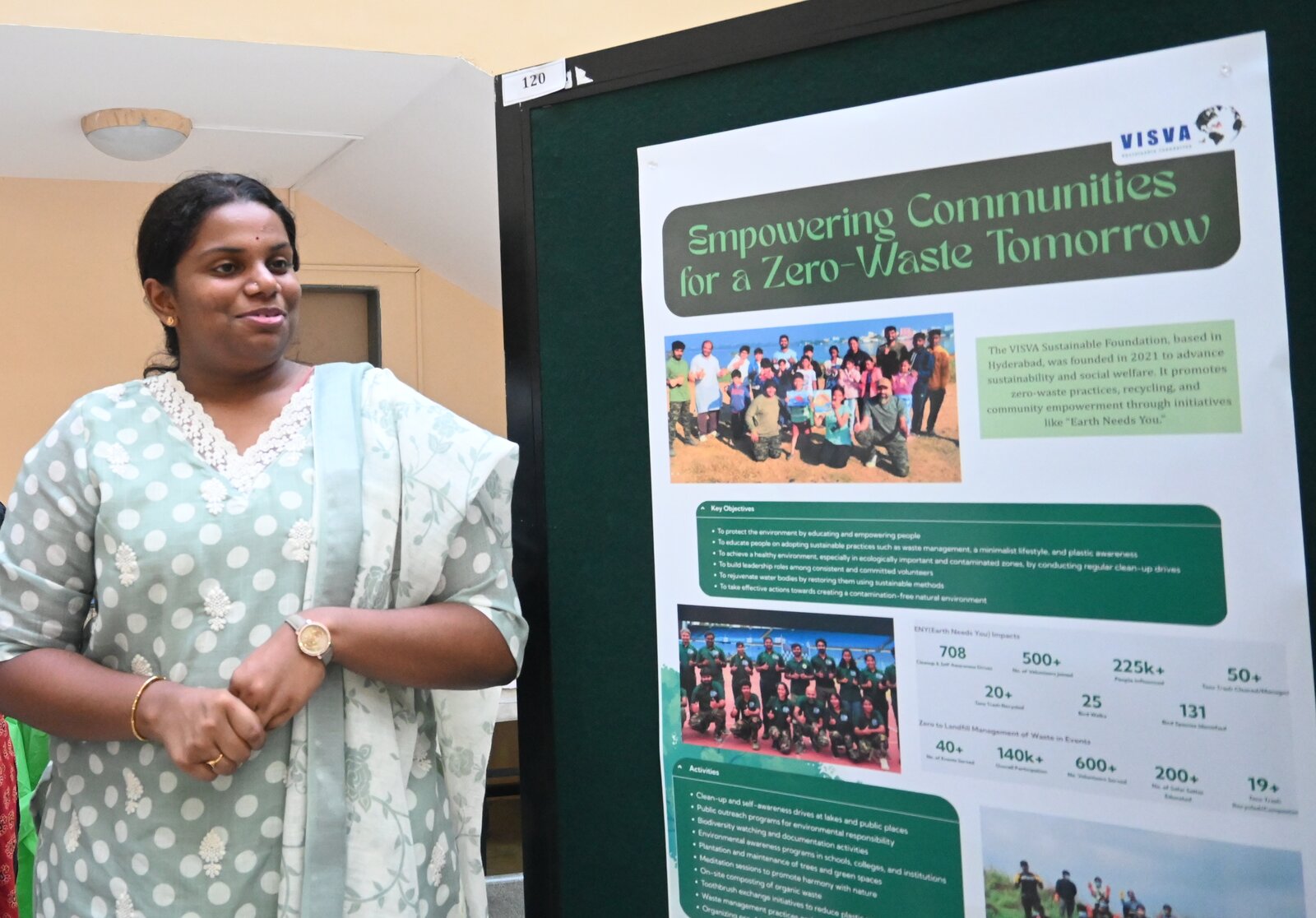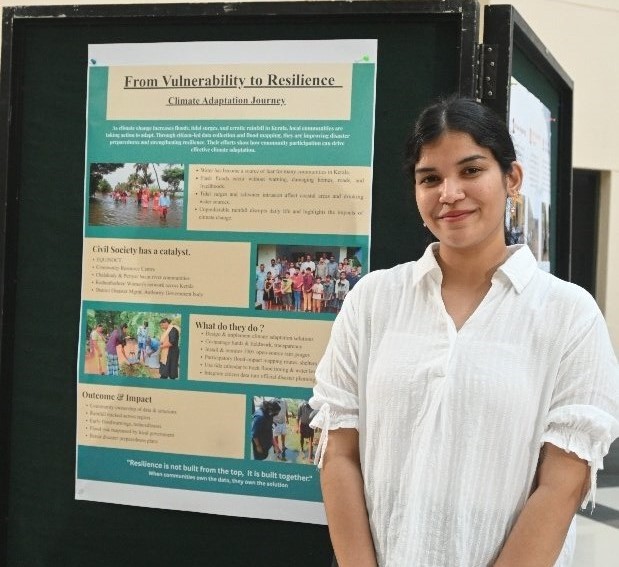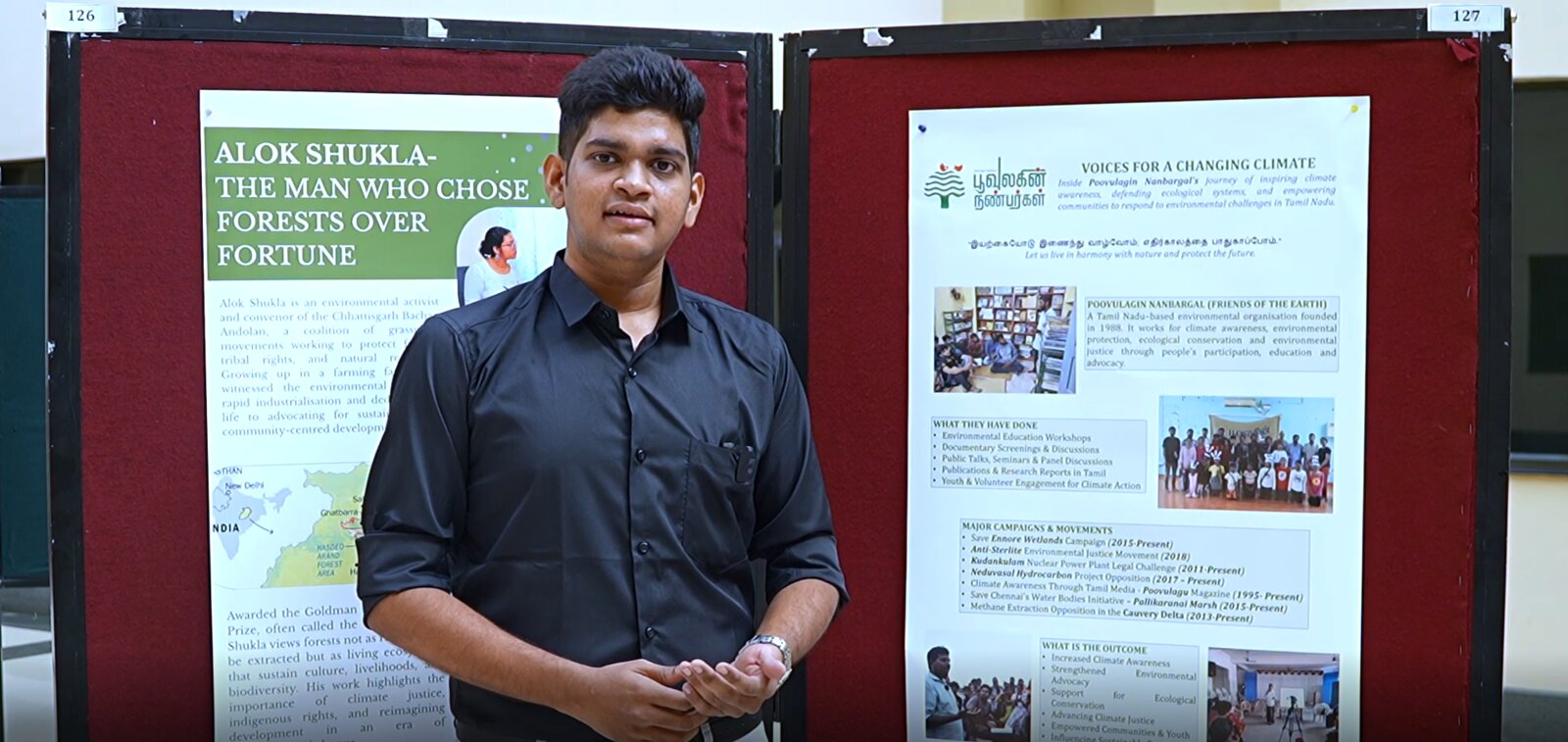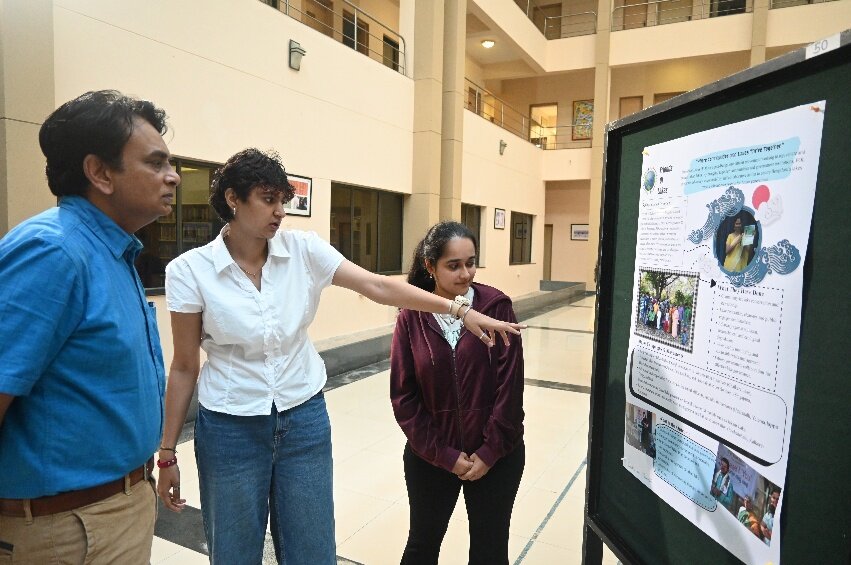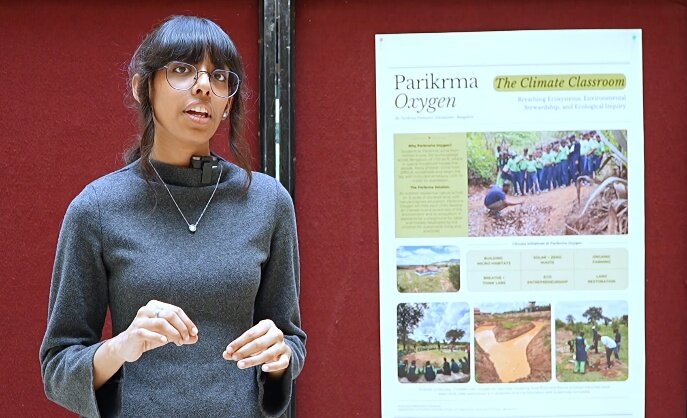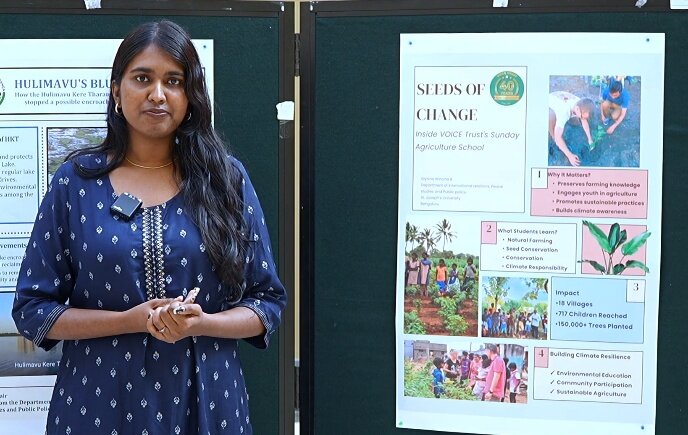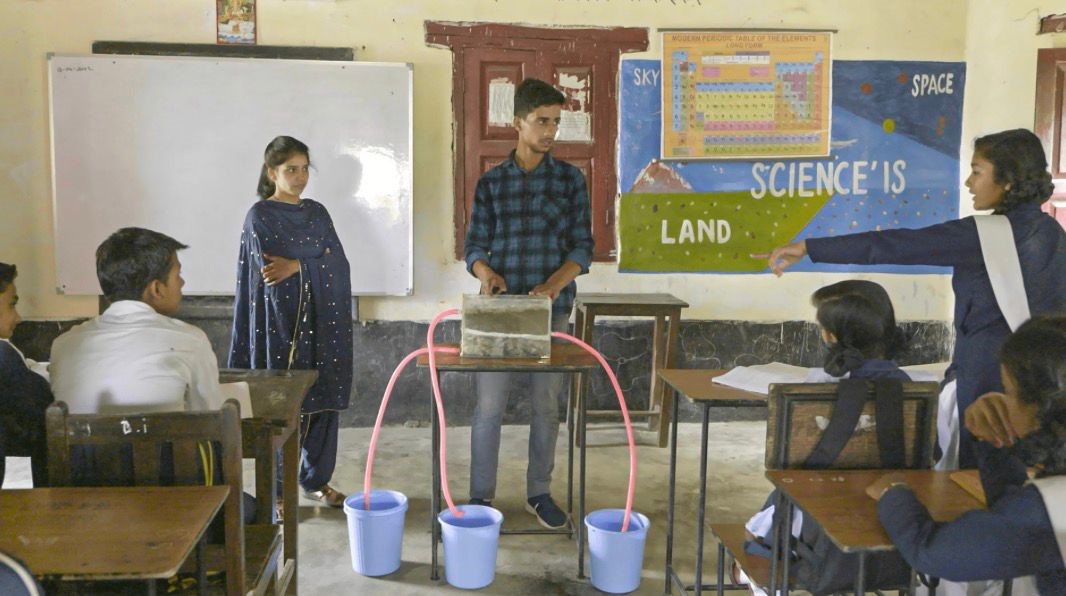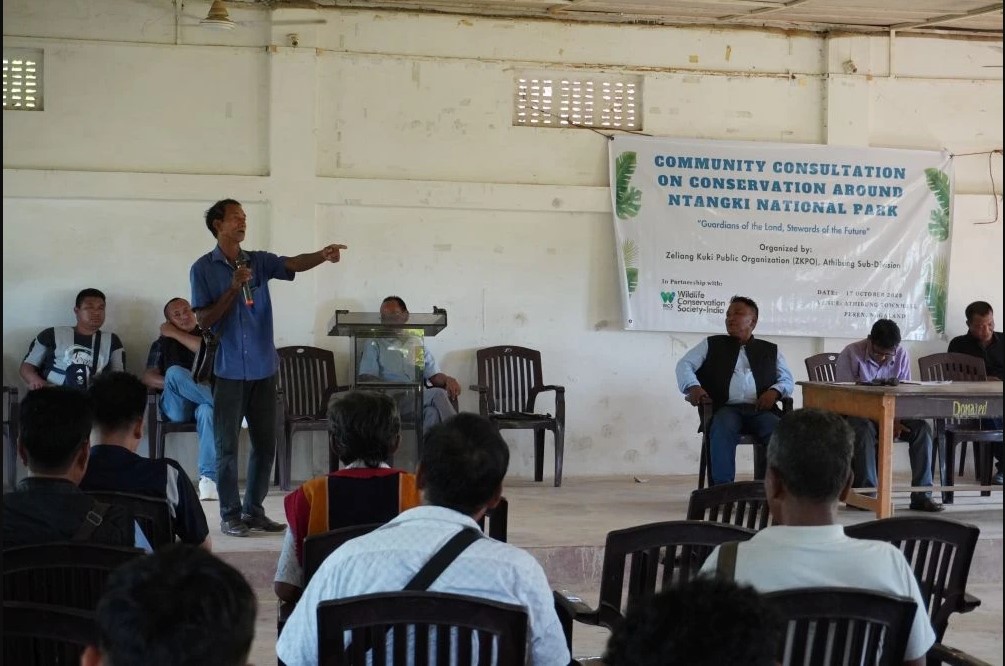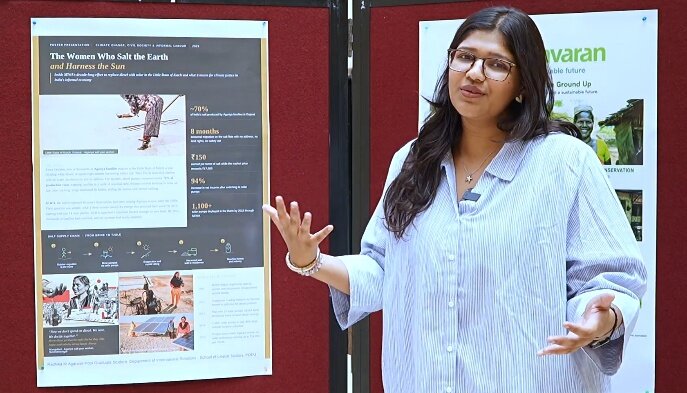
As part of the NIAS Climate Change, Civil Society and Peace (C3SP) initiative in collaboration with GPPAC South Asia, the inaugural workshop of 'The Grass Roots,' the NIAS Youth Network on Climate Change, Civil Society and Peace, was held on 03 June 2026 at the National Institute of Advanced Studies (NIAS), Bengaluru. During the workshop, young scholars from institutions across India examined the role of civil society organisations (CSOs) in responding to climate change through a poster presentation exercise. As part of this initiative, Radhika M. Agarwal, a postgraduate student in the Department of Politics and International Relations at Pandit Deendayal Energy University, Gandhinagar, documented the work of the Self-Employed Women's Association (SEWA) among salt workers in the Little Rann of Kutch, Gujarat.
This note examines how SEWA has strengthened the livelihoods and climate resilience of Agariya salt workers by facilitating the transition from diesel-powered salt production to solar energy. It highlights how clean energy, women's collective action, and community-based financial models have reduced production costs, improved livelihood security, and advanced climate justice for one of India's most marginalised informal worker communities.
Next time you reach for the salt shaker, pause. Those fine white crystals may have begun their journey in one of the harshest places on earth, the Little Rann of Kutch, a vast, blinding salt desert in western Gujarat, where the ground cracks like old porcelain and the sun shows no mercy. This is where the Agariyas live and work.
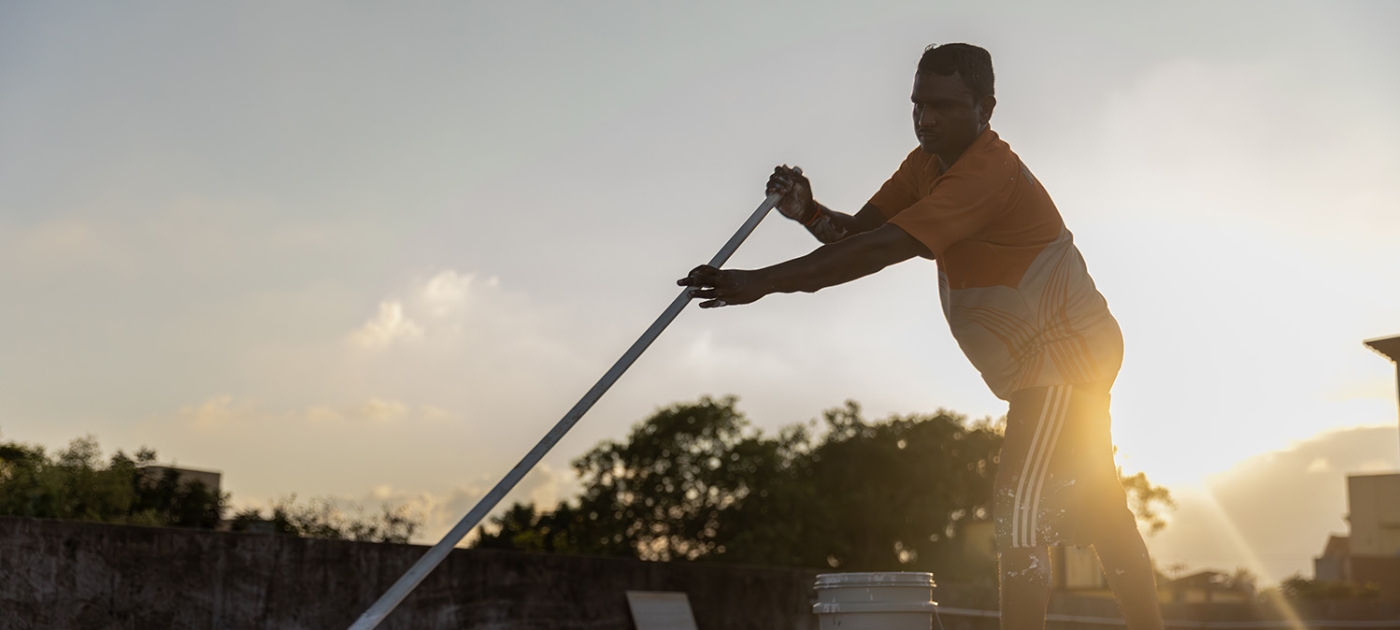
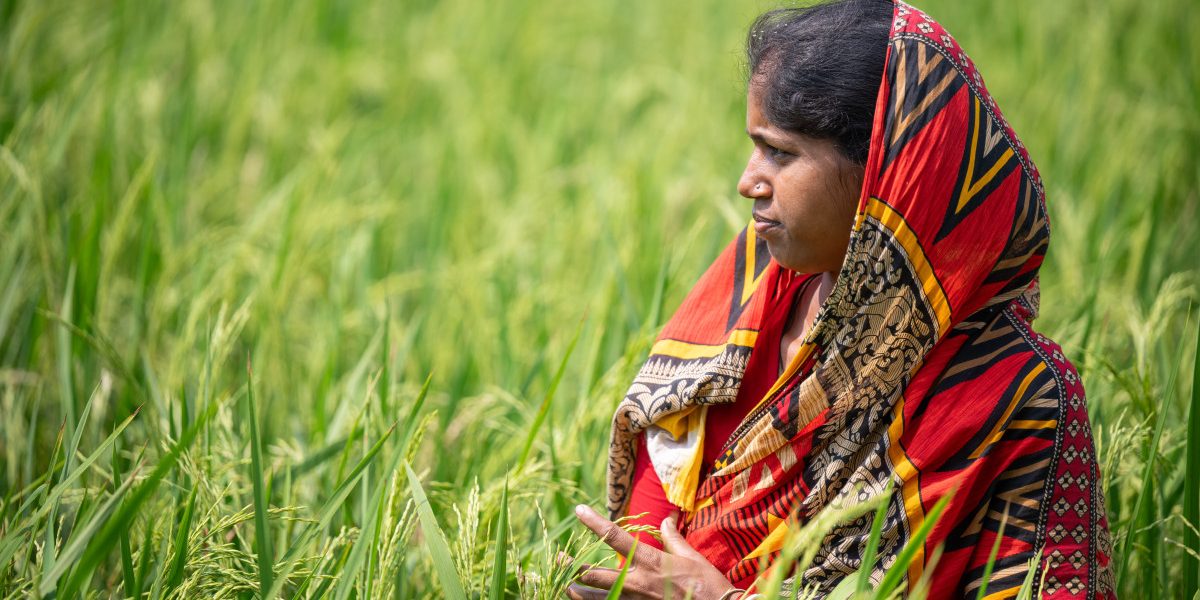
Every October, tens of thousands of agariya families pack what little they own and migrate to the Rann, where they will spend the next eight months harvesting India's salt. There is no running water, no electricity, no school for the children, no address to speak of. The women wake before dawn, eat a Bajri roti and wade straight into the brine, raking, tamping, monitoring, repairing until the stars come out. India produces roughly 30 million tonnes of salt a year, and Gujarat accounts for nearly 70 per cent of it. The agariyas are behind every grain, and largely remain unknown to the world outside. For decades, what made this truly crushing was not just the heat or the isolation: it was diesel.The pumps that drew brackish water from underground wells ran on diesel. Fuel costs ate up nearly 70 per cent of what it cost to produce salt. After eight months of labour skin cracked, lungs blackened by fumes, children raised on open flats, a family would clear perhaps around rupees 35,000 to 40,000. Then came the repayment of the advance loan they had taken at the season's start. What remained was barely enough to survive the summer. The next October, they would borrow again.
Into this cycle stepped SEWA-the Self-Employed Women's Association. Founded in 1972 by Lt. Ela Bhatt, on the belief that women in India's informal economy deserved a life of dignity and a seat at the table. SEWA saw them all as workers and not charity cases. By 1990s, SEWA organizers were sitting with the Agariya women on salt flats and what they heard was not just poverty but a story of invisible labour propping up a very visible industry. SEWA spent years documenting these lives, giving the Agariyas a paper existence. In 2012, they formed the Grassroots Trading Network for women to tackle the diesel problem. Their question was: What if these women owned the energy that powered their work.
In 2013, they started with just 14 solar pumps, which then turned into a fully blown financing model, inviting NABARD, Bank of Baroda and engineers from MIT refining the pump design for desert conditions. What began as a pilot became a movement, and by 2022 thousands of families made the switch. The Agariyas still live on the salt flats. The conditions are still hard. But for the first time in generations, the sun is not just something to endure. It is something they own.