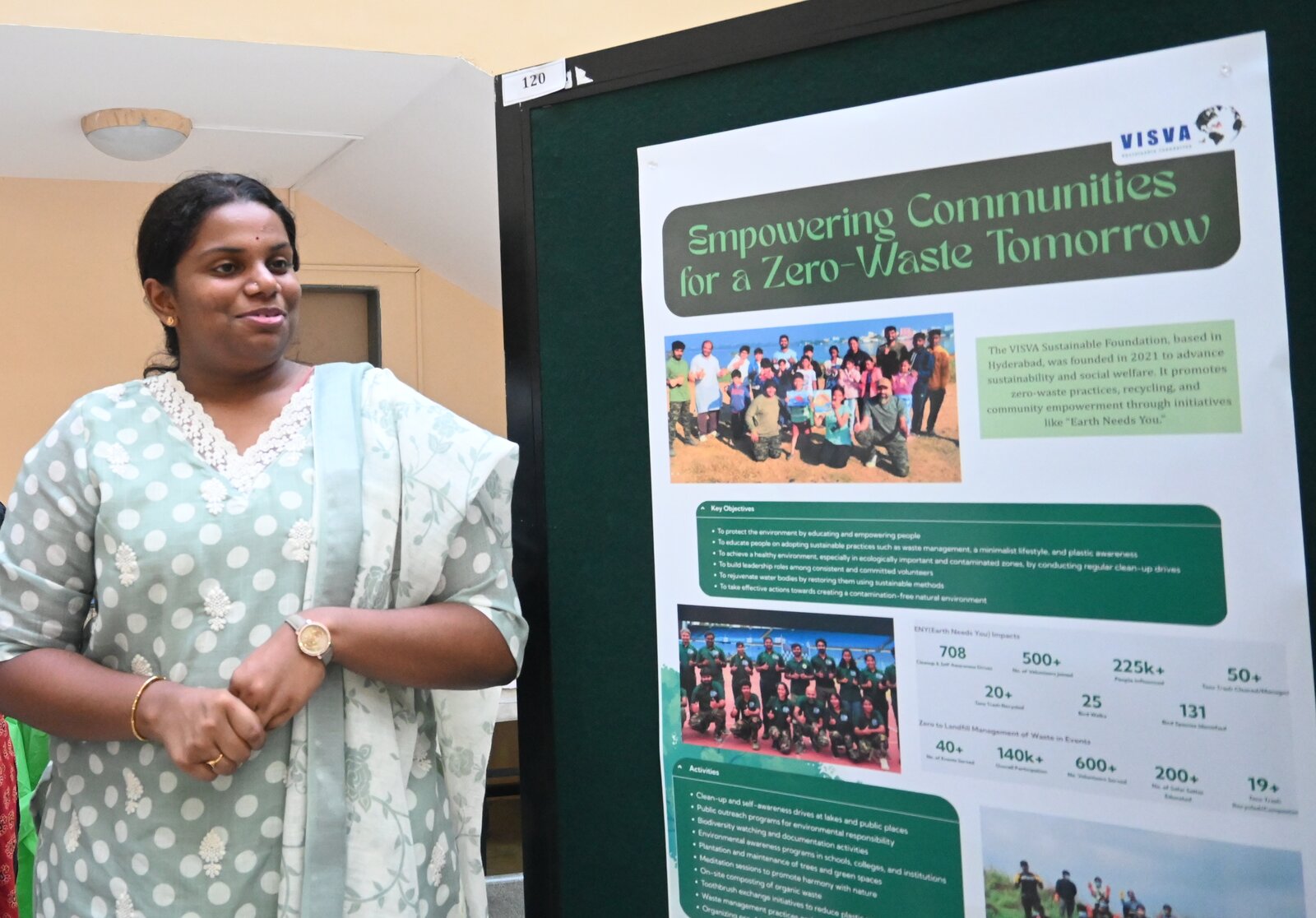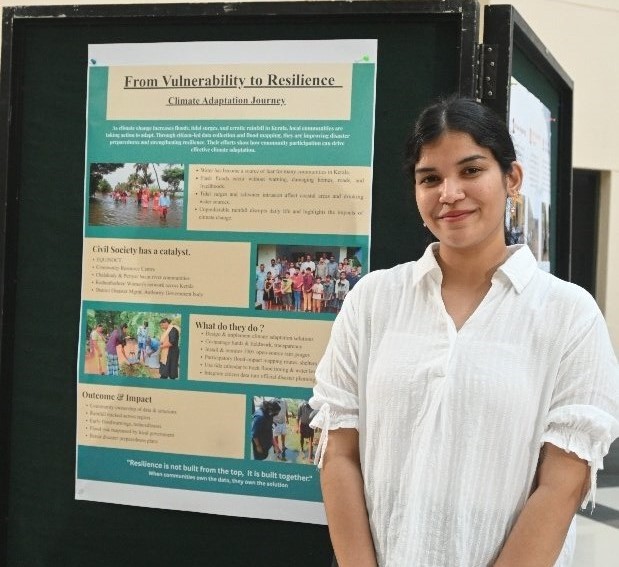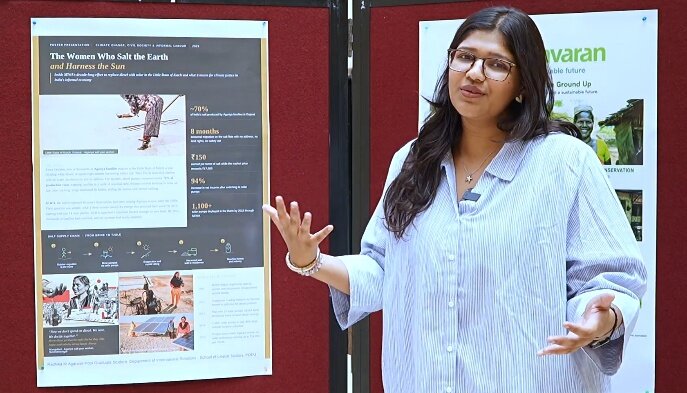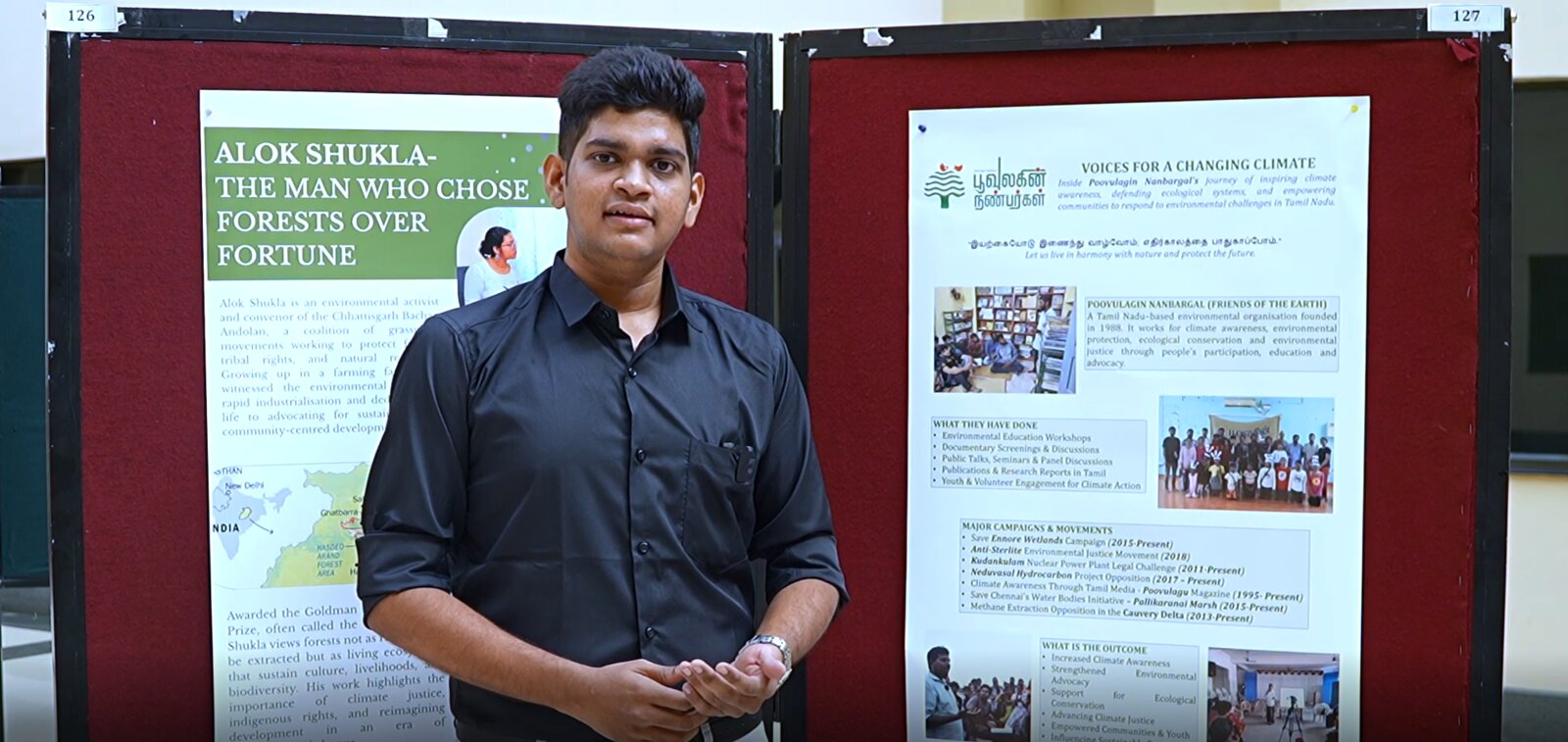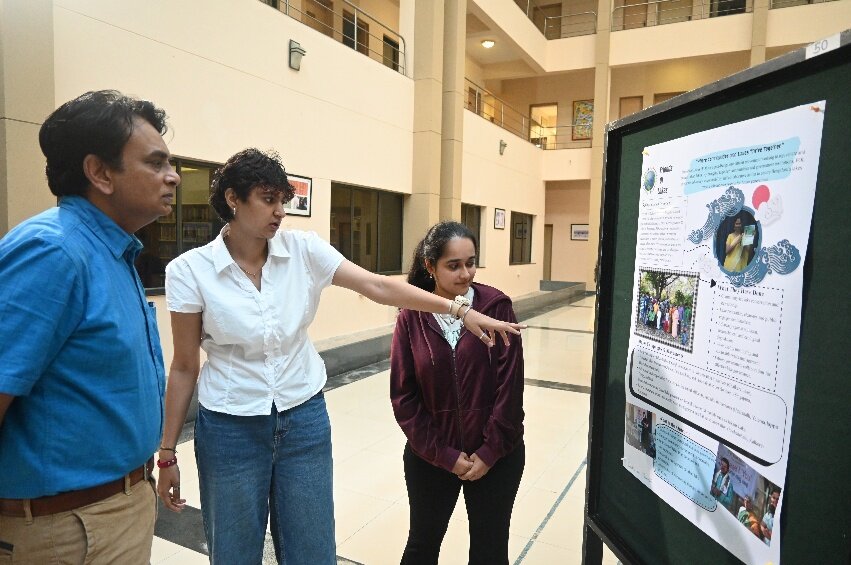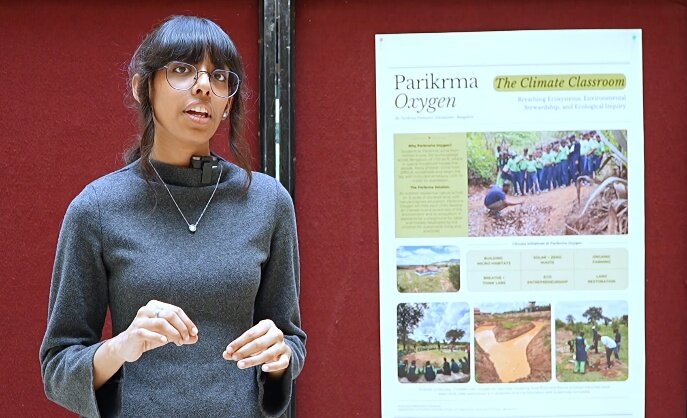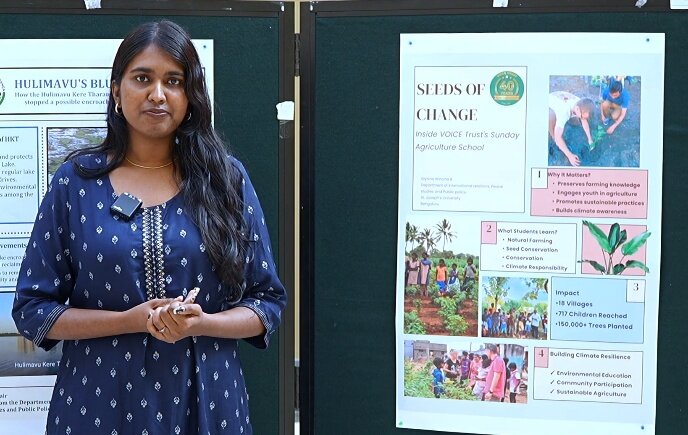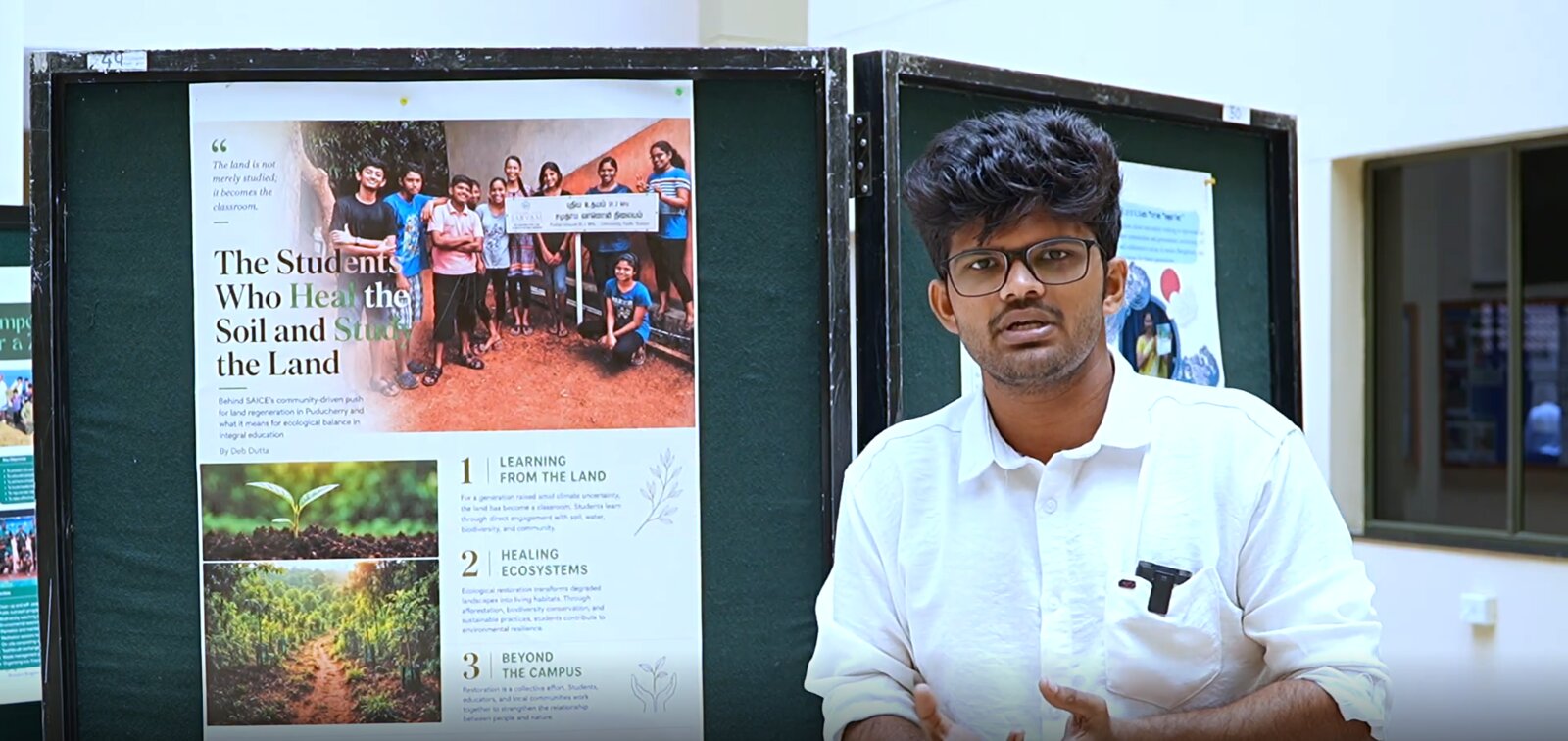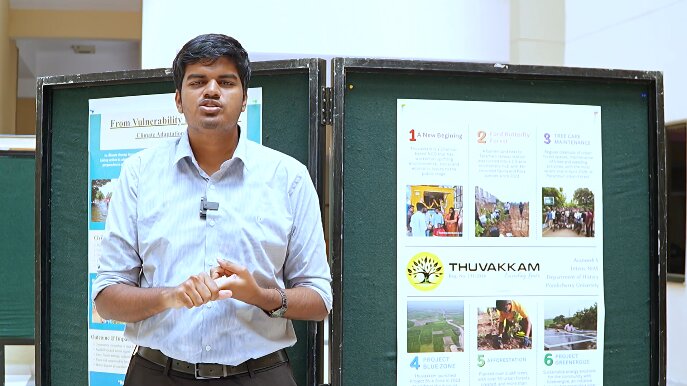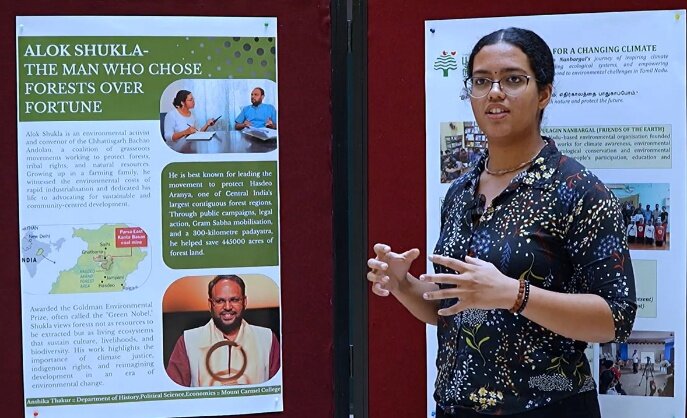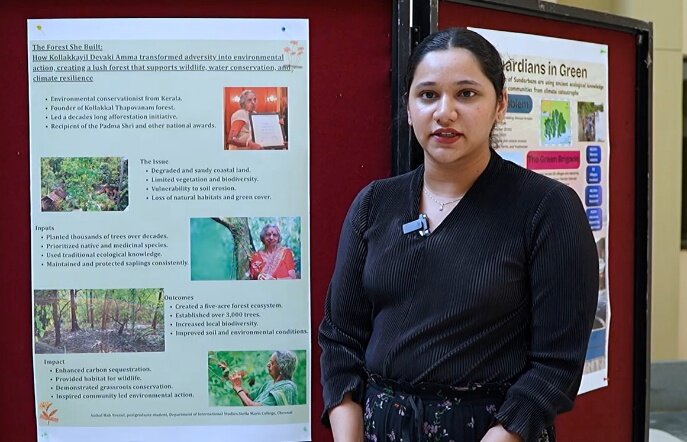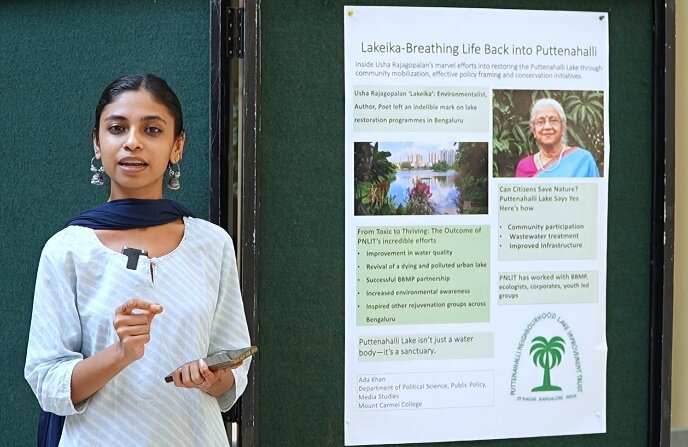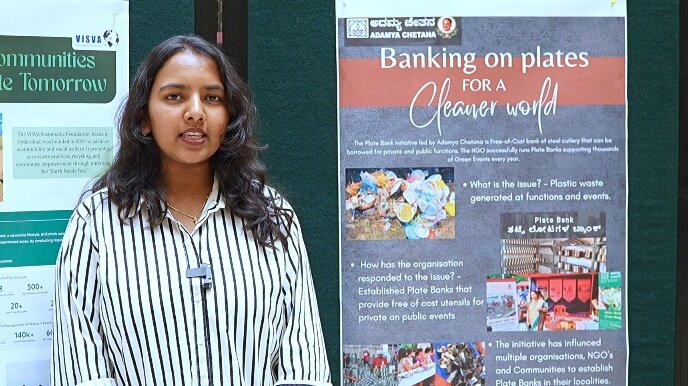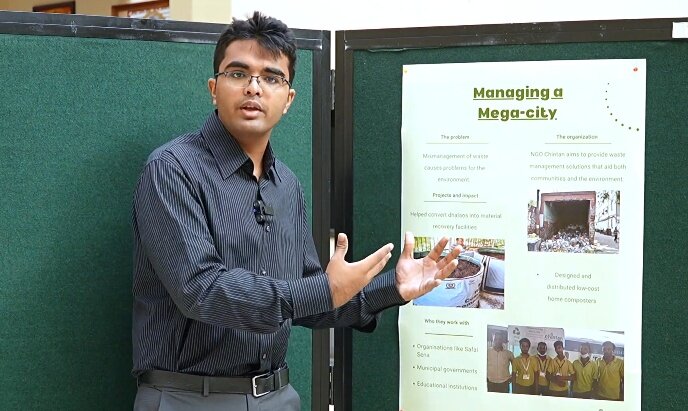
As part of the NIAS Climate Change, Civil Society and Peace (C3SP) initiative in collaboration with GPPAC South Asia, the inaugural workshop of 'The Grass Roots,' the NIAS Youth Network on Climate Change, Civil Society and Peace, was held on 03 June 2026 at the National Institute of Advanced Studies (NIAS), Bengaluru. During the workshop, young scholars from institutions across India examined the role of civil society organisations (CSOs) in responding to climate change through a poster presentation exercise. As part of this initiative, Siddhi Halyur, an undergraduate student in the Department of International Relations, Peace Studies and Public Policy at St. Joseph's University, Bengaluru, documented the work of Waatavaran, a Mumbai-based environmental organisation.
This note examines how Waatavaran is advancing climate justice by strengthening climate-resilient livelihoods, protecting biodiversity, improving air quality, and supporting community-led environmental governance. It highlights how addressing climate change requires integrating ecological conservation with social equity, ensuring that communities most vulnerable to environmental change are central to climate adaptation and sustainable development.
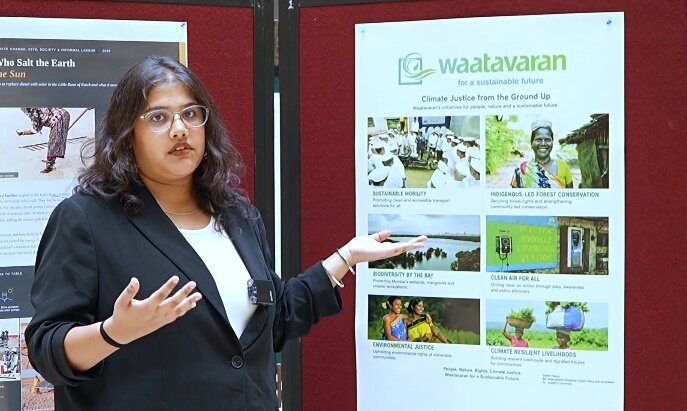
Waatavaran is a Mumbai based environmental organisation that works towards climate justice, environmental protection and community-based climate action. Their main idea is that climate change does not impact everyone equally. Some communities bear the brunt of climate change due to disparities in income, location and in social hierarchy. Majority of these communities have their life dependant on land, forest and water. Their life is directly connected to nature which makes them incredibly susceptible to changes happening around them. Through the interview Shravani Mangeshkar, the Biodiversity and Documentation Coordinator at Waatavaran, we can see that the organisation works at both community and policy levels. The organisation works with communities such as Kathkari and Thakar communities who often face problems like unstable income, daily wage dependency and migration. Since 2018, Waatavaran has worked with 15 villages.
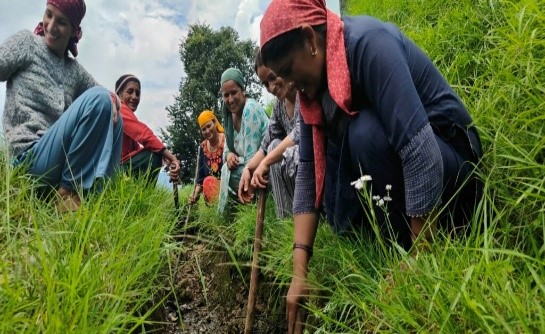
In one tribal village, migration has reduced to zero because of the organization's support. Earlier, around 15 to 20 families from that village used to migrate to states like Karnataka, Andhra Pradesh, or Telangana for sugarcane cutting and daily wage work. They would leave their village for almost 8 to 9 months and return only during the rainy season to cultivate rice. Now, they are able to stay in their village, grow crops, collect forest produce, and earn locally. This connects to Waatavaran's initiative called Climate Resilient Livelihoods. Through this initiative, Waatavaran helps communities build stable and dignified livelihoods. Instead of depending only on migration and uncertain daily wages, people are supported through natural farming, kitchen gardens, forest produce collection, and local income generation. The communities have also established 60 vermicompost pits, which have become an additional source of income. Another major focus is Clean Air for All. Waatavaran has used air quality monitoring machines in different parts of cities and collected air pollution data for several years. The organization has also worked with institutions such as the Maharashtra Pollution Control Board, the Climate Action Cell, and the State Transport Commissioner. One powerful campaign was the lung billboard campaign, where a billboard changed color over time to show how pollution affects human lungs. Waatavaran also focuses on Biodiversity by the Bay, which protects Mumbai's wetlands, mangroves, coastlines, urban forests, and coastal ecosystems. These spaces are important because they reduce flooding, support biodiversity, absorb carbon, and protect ecological balance. The organization has also completed three Community Biodiversity Registers, documenting traditional knowledge, native crops, wild vegetables, and local biodiversity practices. Overall, Waatavaran's work shows that climate action is not only about planting trees or reducing pollution. It is also about people, livelihoods, health, rights, dignity, biodiversity, and justice. Its work proves that real climate justice must begin from the ground up, by supporting the communities most affected by environmental change.