← Back to Stories
The HEAL Movement

The HEAL Movement

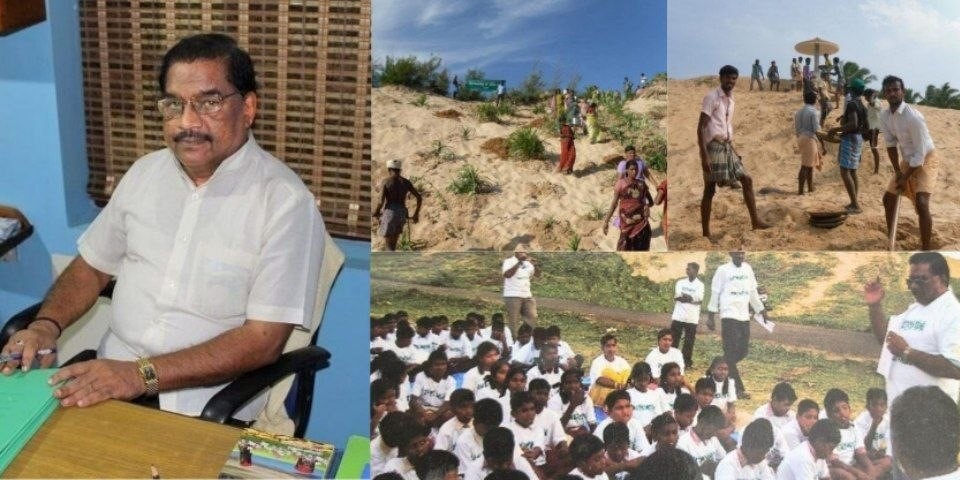
In 1984, The Health Education Action for Liberation (HEAL) Movement, founded by Y Siluvai Vasthian. It has been one of the important grassroots organisations working among the coastal communities of Kanyakumari district. While the organisation initially focused on community welfare and social empowerment, its environmental work gained greater importance after the 2004 Indian Ocean tsunami. 


Image Source: heal.org.in

After the tsunami, Siluvai Vasthian observed an important pattern along the coast. Areas where natural sand dunes remained intact experienced comparatively less destruction. Meanwhile, villages without sand dunes suffered severe damage from the waves. This made him realise that sand dunes were natural protective barriers that could reduce the impact of disasters such as tsunamis, cyclones, and coastal erosion. From this understanding emerged a strong mission to create awareness among coastal communities about the importance of protecting sand dunes.

One of the major challenges HEAL initially faced was the local practice of removing and selling coastal sand. In several villages, people collected and sold sand for very small amounts such as five or ten rupees. The sand was widely used for coconut cultivation. Sand was also used for construction activities including church buildings, playgrounds, and other local infrastructure works. For many villagers, removing sand was seen as a normal economic activity and not as an environmental threat.

Instead of approaching the issue through confrontation alone, Siluvai Vasthian focused on awareness-building and community participation. He believed that long-term environmental protection could happen only if people themselves understood the value of sand dunes. The first group he chose to involve was children. He introduced the concept of “Ecological Child Rights,” arguing that children have a right to live in a safe and protected environment. Through evening activity centres established in coastal villages, children were educated about coastal ecology, climate change, biodiversity, and environmental protection. These centres gradually became spaces where children learned the importance of conserving their natural surroundings.

HEAL’s environmental initiatives expanded across the entire coastal belt of Kanyakumari district, although regions such as Periyakadu, Mandaikadu, Chothavilai, Rajakkamangalam and Keezhamanakudy became important examples of the movement’s work. The organisation conducted awareness campaigns, public meetings, street plays, and village programmes to discourage sand removal. Through continuous engagement, HEAL attempted to change people’s perception of sand dunes from “wasteland” into “nature’s protective wall.”

At the same time, the organisation also considered the livelihoods of local communities. In these coastal regions, many families depended on seashell-related work. Shells collected from the coast were processed into lime, which was used for food preparation, whitewashing houses, and fertilisers. Siluvai Vasthian recognised that protecting sand dunes and coastal ecosystems was also important for sustaining the livelihoods connected to marine resources. 

One of HEAL’s major contributions was its success in reducing public acceptance of uncontrolled sand extraction. Through sustained awareness programmes and community mobilisation, the organisation discouraged people from looting coastal sand for construction and commercial purposes. Children who participated in ecological activity centres often carried environmental messages back to their families, slowly influencing community attitudes. Over time, greater awareness emerged regarding the importance of sand dunes in protecting villages from sea erosion and climate-related disasters.

Despite these efforts, several challenges remained. Coastal erosion, climate uncertainty, development pressures, and continuing demand for sand still threatened coastal ecosystems. Financial constraints and the difficulty of changing long-standing social practices also posed obstacles to the movement. 

References
R Arivanantham, “Save natural sand dunes in Rajakkamangalam,” The Hindu, 28 January 2015
https://www.thehindu.com/news/national/tamil-nadu/save-natural-sand-dunes-in-rajakkamangalam/article6828454.ece

V. Sundararaju, “How to save a coastal dune,” Down to Earth, 02 May 2018
https://www.downtoearth.org.in/wildlife-biodiversity/how-to-save-a-coastal-dune--60390

“Tamil Nadu: How to save coastal dune,” International Collective in Support of Fishworkers
https://icsf.net/newss/tamil-nadu-how-to-save-a-coastal-dune/

About the author
Lekshmi MK is a Research Assistant at the National Institute of Advanced Studies (NIAS).
All Stories
Empowering Communities for a Zero-Waste Tomorrow
30 June 2026 I Grass Roots Chronicle #24
Empowering Communities for a Zero-Waste Tomorrow
Read more →
From Vulnerability to Resilience: A Climate Adaptation Journey
30 June 2026 I Grass Roots Chronicle #23
From Vulnerability to Resilience: A Climate Adaptation Journey
Read more →
Hulimavu's Blue Revolution
30 June 2026 I Grass Roots Chronicle #22
Hulimavu's Blue Revolution
Read more →
Climate Justice from the Ground Up
30 June 2026 I Grass Roots Chronicle #21
Climate Justice from the Ground Up
Read more →
Every Disaster Predicted, Every Community Ready
30 June 2026 I Grass Roots Chronicle #20
Every Disaster Predicted, Every Community Ready
Read more →
The Women Who Salt the Earth and Harness the Sun
30 June 2026 I Grass Roots Chronicle #19
The Women Who Salt the Earth and Harness the Sun
Read more →
Guardians in Green
30 June 2026 I Grass Roots Chronicle #18
Guardians in Green
Read more →
Voices for a Changing Climate
30 June 2026 I Grass Roots Chronicle #17
Voices for a Changing Climate
Read more →
Friends of Lakes
30 June 2026 I Grass Roots Chronicle #16
Friends of Lakes
Read more →
The Climate Classroom
30 June 2026 I Grass Roots Chronicle #15
The Climate Classroom
Read more →
The Seeds of Change
30 June 2026 I Grass Roots Chronicle #14
The Seeds of Change
Read more →
The Students Who Heal the Soil and Study the Land
30 June 2026 I Grass Roots Chronicle #13
The Students Who Heal the Soil and Study the Land
Read more →
Roots, Rain & Renewal
30 June 2026 I Grass Roots Chronicle #12
Roots, Rain & Renewal
Read more →
The Forests That Refused to Fall
30 June 2026 I Grass Roots Chronicle #11
The Forests That Refused to Fall
Read more →
The Forest She Built
30 June 2026 I Grass Roots Chronicle #10
The Forest She Built
Read more →
Lakeika: Breathing Life Back into Puttenahalli
30 June 2026 I Grass Roots Chronicle #09
Lakeika: Breathing Life Back into Puttenahalli
Read more →
Banking on Plates for a Clean World
30 June 2026 I Grass Roots Chronicle #08
Banking on Plates for a Clean World
Read more →
Chintan Environmental Research and Action Group
30 June 2026 I Grass Roots Chronicle #07
Chintan Environmental Research and Action Group
Read more →
The Lakeika of India
27 May 2026 I Grass Roots Chronicle #06
The Lakeika of India
Read more →
The Lake Man of India
27 May 2026 I Grass Roots Chronicle #05
The Lake Man of India
Read more →
Every forest needs a Bengalata
27 May 2026 I Grass Roots Chronicle #04
Every forest needs a Bengalata
Read more →
The Spring Keepers of Uttarakhand
27 May 2026 I Grass Roots Chronicle #03
The Spring Keepers of Uttarakhand
Read more →
The Voice of Garhwal at 90.8 FM
27 May 2026 I Grass Roots Chronicle #02
The Voice of Garhwal at 90.8 FM
Read more →
The HEAL Movement
27 May 2026 I Grass Roots Chronicle #01
The HEAL Movement
You are here
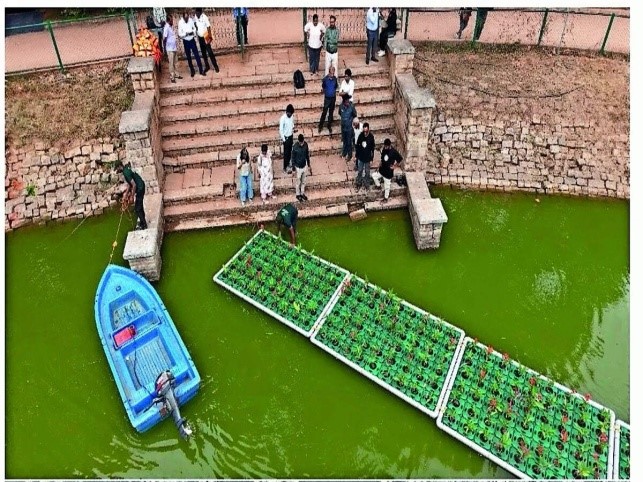
India: Engineer Gurunandan Rao's science-led effort to revive Bengaluru's Lalbagh Lake
Feb 26, 2026
India: Engineer Gurunandan Rao's science-led effort to revive Bengaluru's Lalbagh Lake
Read more →
India: Supriya Sahu highlights Tamil Nadu's expansion of reserved forests to strengthen climate resilience
Feb 20, 2026
India: Supriya Sahu highlights Tamil Nadu's expansion of reserved forests to strengthen climate resilience
Read more →
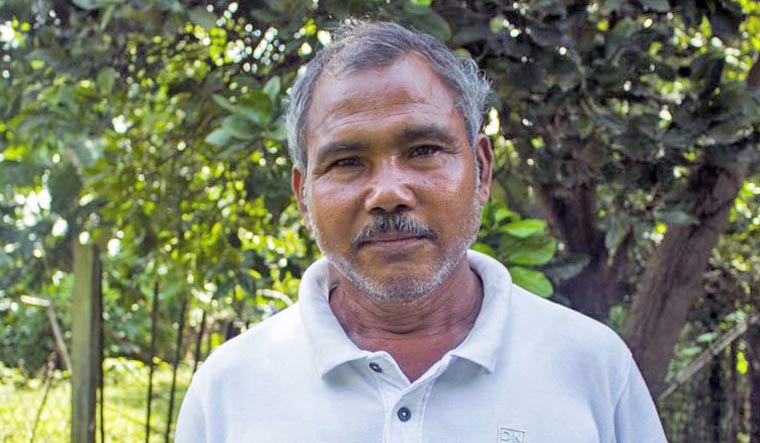
Jadav Payeng, often called the "Forest Man of India," spent roughly four decades planting trees on a barren sandbar along the Brahmaputra River in Assam
Feb 15, 2026
Jadav Payeng, often called the "Forest Man of India," spent roughly four decades planting trees on a barren sandbar along the Brahmaputra River in Assam
Read more →
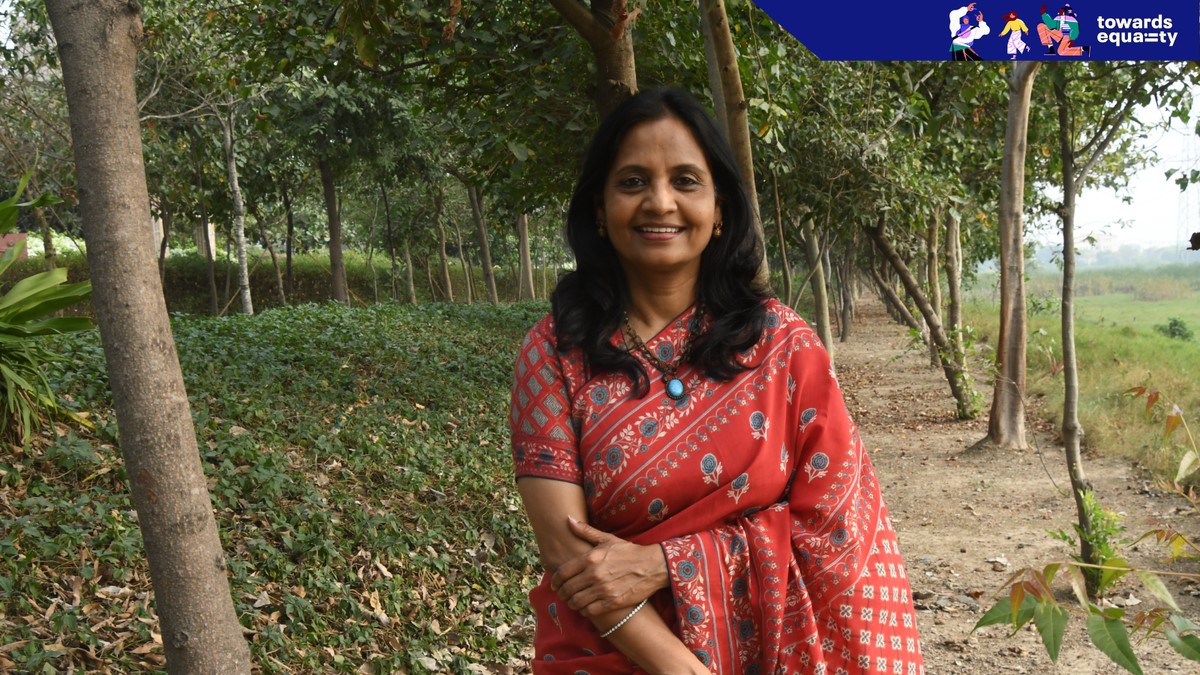
They Called Her "Just A Maami In A Saree". She Proved She Was A Force Of Nature
Feb 10, 2026
They Called Her "Just A Maami In A Saree". She Proved She Was A Force Of Nature
Read more →
How a Kolkata Neighborhood Saved its 70-Year-Old Tamarind Tree through Cultural Resistance
Jan 15, 2026
How a Kolkata Neighborhood Saved its 70-Year-Old Tamarind Tree through Cultural Resistance
Read more →
How Tree Lovers Rescued a Kolkata Neighbourhood
Dec 15, 2025
How Tree Lovers Rescued a Kolkata Neighbourhood
Read more →
The Indian Public Servant Helping Disadvantaged Communities Adapt To Rising Heat
Dec 10, 2025
The Indian Public Servant Helping Disadvantaged Communities Adapt To Rising Heat
Read more →
Meet the Lake Man Reviving 1000+ Drought-Hit South Indian Villages
Oct 20, 2025
Meet the Lake Man Reviving 1000+ Drought-Hit South Indian Villages
Read more →
37 Villages Resolve To Protect Ntangki National Park At Athibung Consultation
Oct 17, 2025
37 Villages Resolve To Protect Ntangki National Park At Athibung Consultation
Read more →
How Women Farmers in the Sundarban Are Reviving Indigenous Rice Varieties
May 15, 2025
How Women Farmers in the Sundarban Are Reviving Indigenous Rice Varieties
Read more →