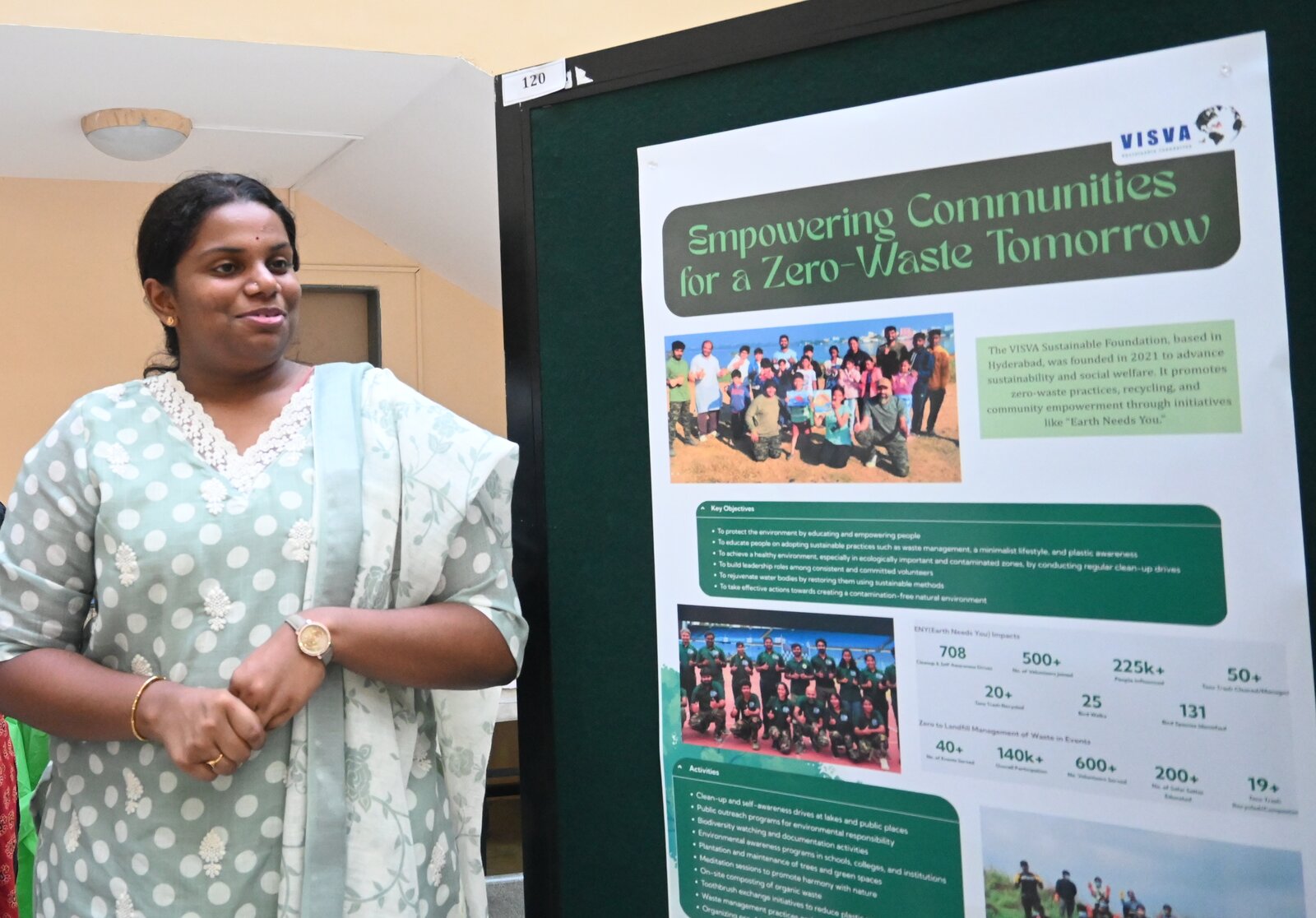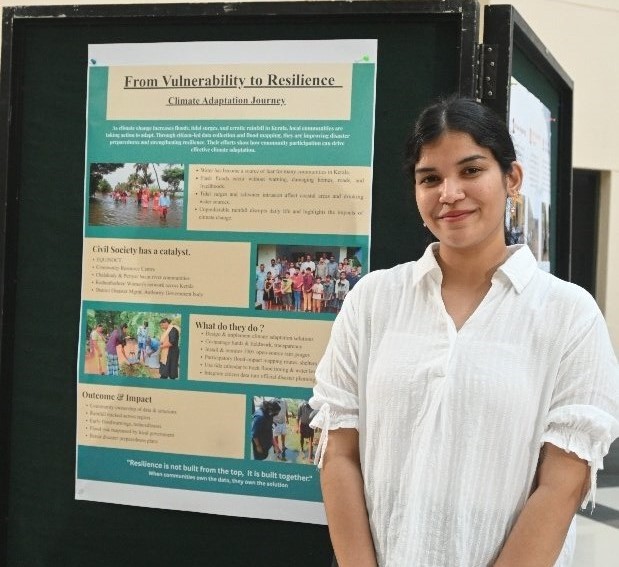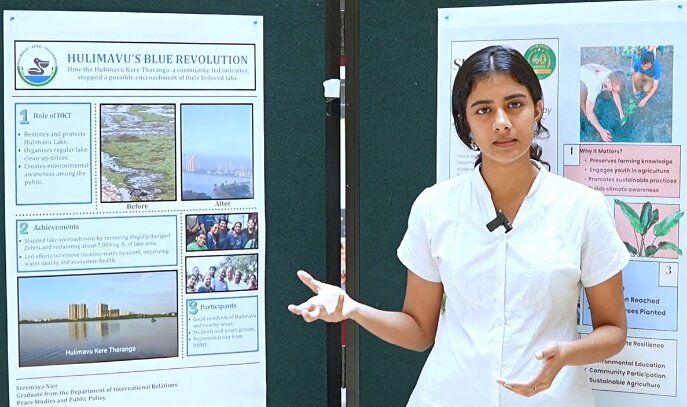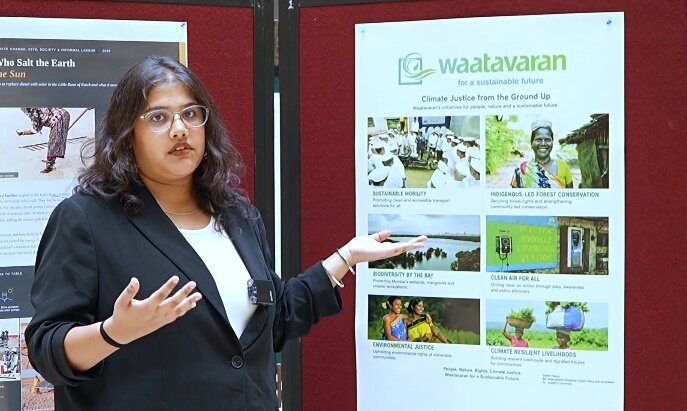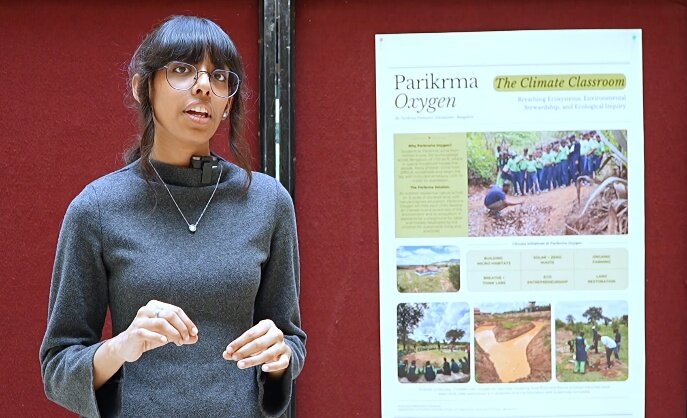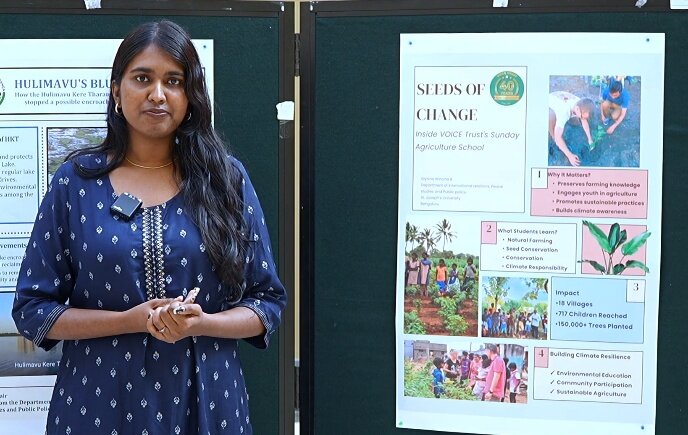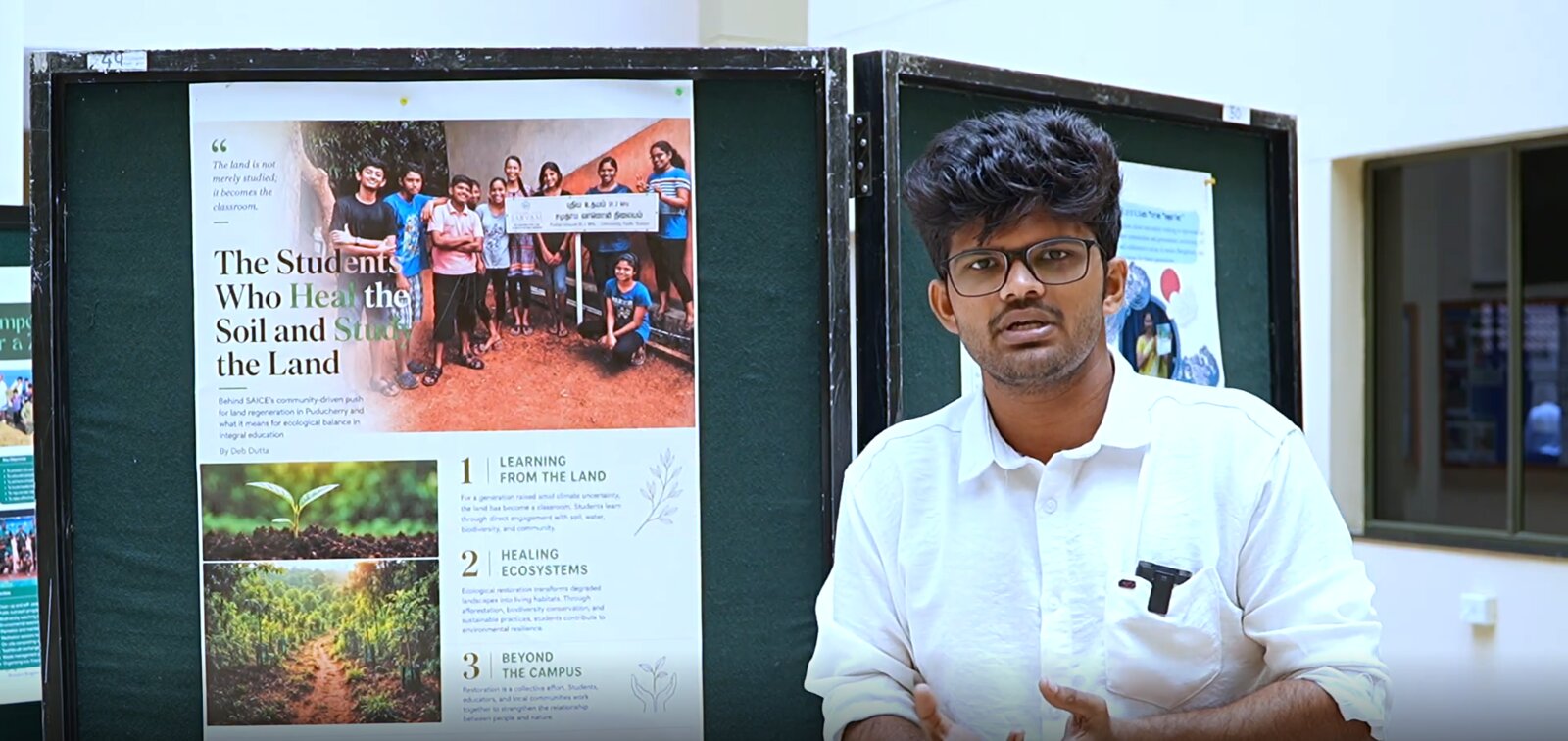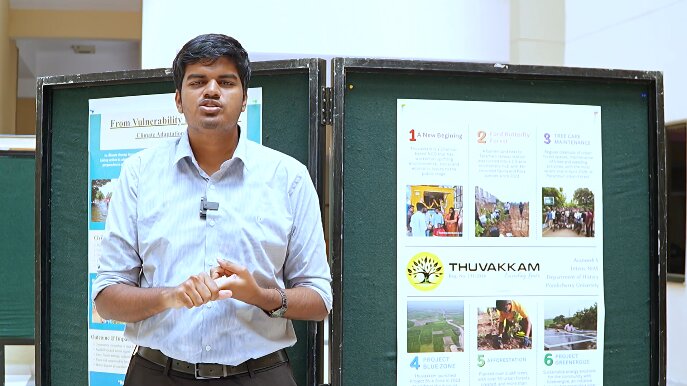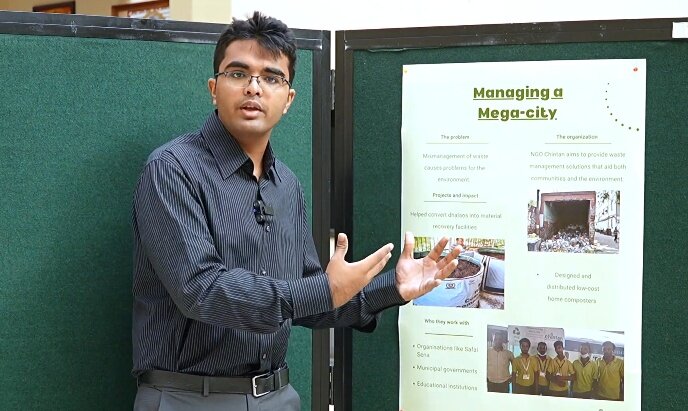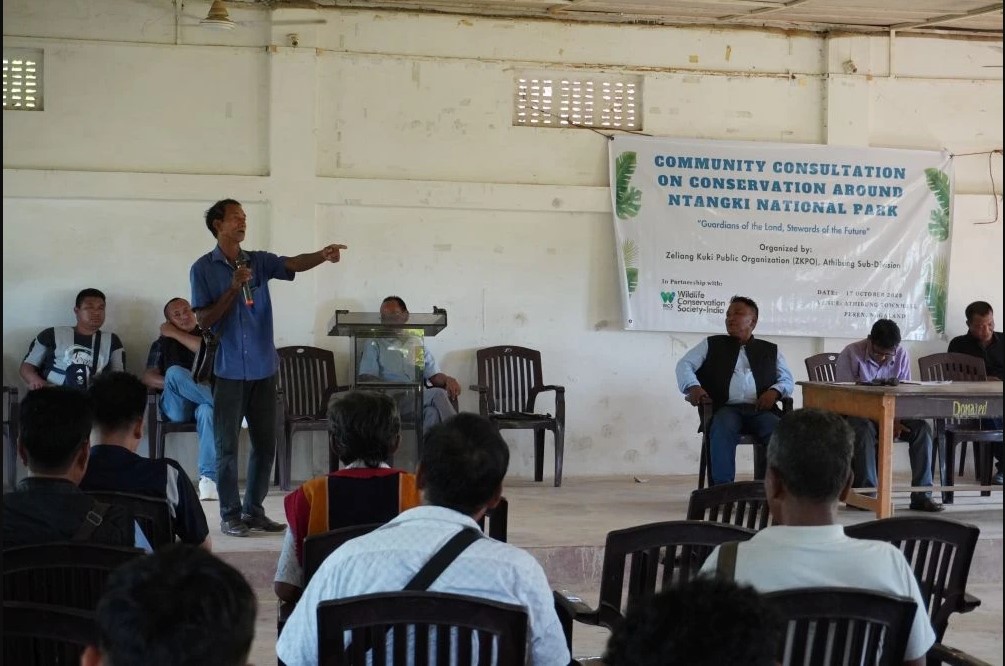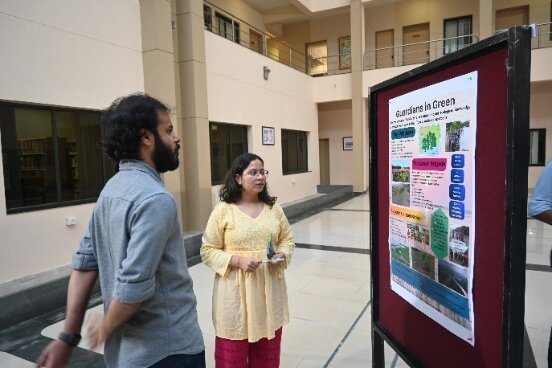
As part of the NIAS Climate Change, Civil Society and Peace (C3SP) initiative in collaboration with GPPAC South Asia, the inaugural workshop of 'The Grass Roots,' the NIAS Youth Network on Climate Change, Civil Society and Peace, was held on 03 June 2026 at the National Institute of Advanced Studies (NIAS), Bengaluru. During the workshop, young scholars from institutions across India examined the role of civil society organisations (CSOs) in responding to climate change through a poster presentation exercise. As part of this initiative, Priyanka Makhijani, a postgraduate student in the Department of Public Policy at Ramaiah University of Applied Sciences, Bengaluru, documented the community-led mangrove restoration efforts of the Nature Environment and Wildlife Society (NEWS) in the Sundarbans.
This note examines how women-led community groups in the Sundarbans are restoring mangrove ecosystems to strengthen climate resilience, protect vulnerable coastal communities, and support sustainable livelihoods. It highlights how indigenous ecological knowledge, collective action, and participatory conservation have transformed local communities from climate-vulnerable populations into active custodians of one of the world's most fragile coastal ecosystems.
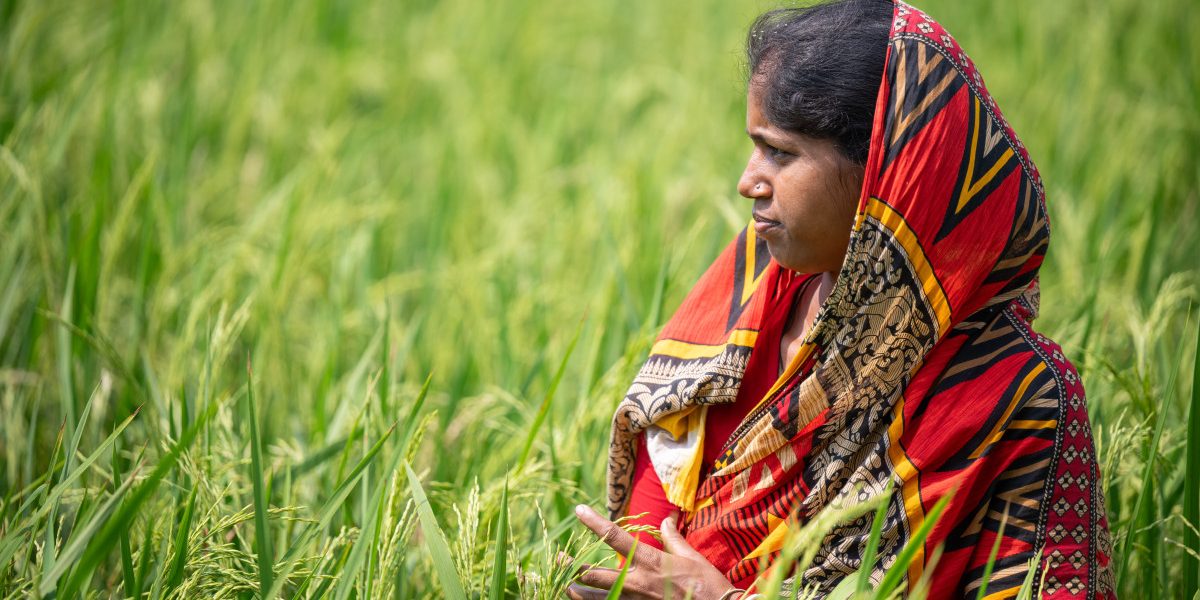
In the Cyclone Capital of India, Sundarbans of West Bengal, where rising seas, tidal surges, and extreme weather events are increasingly threatening the lives and livelihood, a remarkable story of resilience is unfolding. The place has witnessed devastating disasters such as Cyclone Aila (2009), Amphan (2020) and Yaas (2021). These events destroyed their homes, damaged farmlands, contaminated freshwater sources, and pushed vulnerable communities deeper into poverty. Despite these challenges, thousands of women have emerged as leaders in climate adaptation and environmental restoration.
More than 18000 women across 50 villages are organised into Badabon Farmer Interest
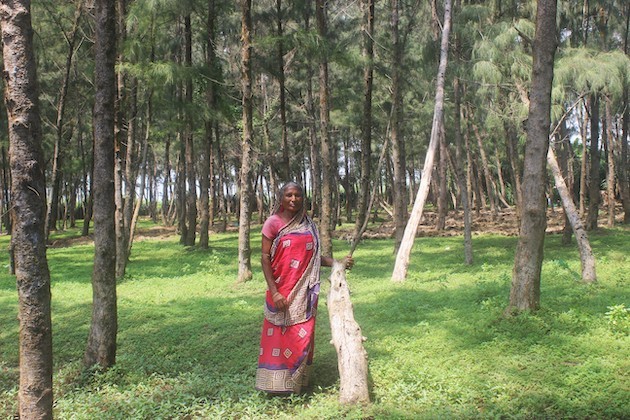
Groups (BFIGs), supported by Nature Environment and Wildlife Society (NEWS) have restored over 46000 hectares of degraded coastline and riverbanks. Many of them are widows, landless laborers, or from marginalised communities. Once considered as primary victims of climate disaster and today they are recognised as guardian of the Sundarbans ecosystem. These are women in "green saree," known as "Green Brigade." They collect seeds, raise
nurseries, plant saplings, and monitor and protect the mangroves. These women know
precisely where mangroves will take root, which species thrives in which soils, and how to care for them through tidal cycles. They are using this local ecological knowledge to restore the mangroves. The uniform, green saree has now become an emblem of collective strength across the delta.
The impact of this can be seen during the cyclones Amphan and Yaas, where mangroves were restored, and the embankments remained intact. But in a nearby village without the green shield suffered devastating breaches. What started as only tree planting is now a living, community- built defense system which is protecting both people and the biodiversity. Furthermore, every village has its own Mangrove Monitoring Committee, who ensures participatory decision making and budgeting. Also, from this they are having new income source from crab farming, honey production and nursery work. The success of this model has inspired the Government of West Bengal. They have adopted this model in large scale mangrove restoration, covering over 4200 hectares across 217 sites using the model first developed by NEWS and the women of the Sundarbans.
In the recent update from NEWS, Banadebi Badabon Interest Group (BFIG) is strengthening mangrove recovery with the support of @SNFGIndiaCredit programme. They have planted 12000 saplings in 2 hectares and replantation led to survival improving from 51per cent to 134per cent which also includes natural regeneration. They have a monthly monitoring going on which monitors ecological risks. NEWS aims at expanding this to more than 25000 women and scale up this model of community- driven restoration and climate adaptation. For the women of Sundarbans, the work is personal. Madhumita Bag from Buraburir Tat village said that "If we plant, protect, and care for these mangroves together, we'll have an umbrella shielding us all."