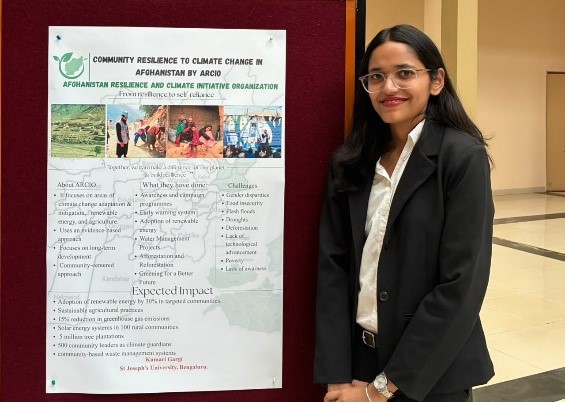
Afghanistan Resilience and Climate Initiative ARCIO is a civil society organisation based in Kabul, Afghanistan. It was not founded by one entity; rather, it emerged from local people connected to their community. It focuses on climate change adaptation & mitigation, water conservation and management, renewable energy, agriculture, and others. It aims to mitigate the effects of climate change and make Afghan rural communities resilient to its impacts. Through campaigns and programmes in schools and colleges, it advocates climate change awareness, adaptation, and mitigation in vulnerable local communities. ACRIO works with institutions and local communities to provide early warnings for climate triggers. This helps communities to take preventive measures.
ARCIO helps people understand how climate change affects the day-to-day lives of communities in Afghanistan. It not only focuses on climate change but also on the well-being and growth of Afghan communities. How climate change has severely affected vulnerable groups like women and children, and it tries to empower them through different initiatives. These initiatives highlight the interconnections between climate change, food security, agriculture, water security, and the well-being of Afghan communities. It uses a bottom-up approach to climate resilience. It focuses on vulnerable communities that don’t have access to scientific knowledge and institutional resources for climate change at the grassroots level. Its main objective is to manage climate-related challenges more effectively by empowering communities and building them to be resilient and sustainable.
One of the projects by ARCIO was “promoting renewable energy sources and building community awareness on eco-friendly challenges in southwestern regions”. It was 1 year project aimed to achieving: adopt renewable energy sources in targeted communities, increasing adoption by 30 per cent; implement sustainable agricultural practices and community-based waste management systems, 500 community leaders as climate guardians; plant 5 million trees in the region; and install solar-powered infrastructure in remote areas and others. Furthermore, a community-centric approach and an evidence-based approach are major pillars of the organisation's work. Through various steps, it connects local communities, schools, colleges, volunteers, and many more. To raise awareness of climate change and its impacts, it combines an evidence-based approach and traditional knowledge among local communities on environmental issues. Through various initiatives, campaigns, and programmes, it has made a significant contribution to addressing climate change and improving the lives of Afghan local communities. It has helped people move from “resilience to self-reliance” in the long term rather than the short term, and make them independent for upcoming climate challenges.
About the author
Kumari Gargi is an undergraduate student in the Department of International Relations, Peace Studies, and Public Policy at St. Joseph's University, Bengaluru.