← Back to Stories
Nepal’s H.E.L.P. Initiative

Nepal’s H.E.L.P. Initiative

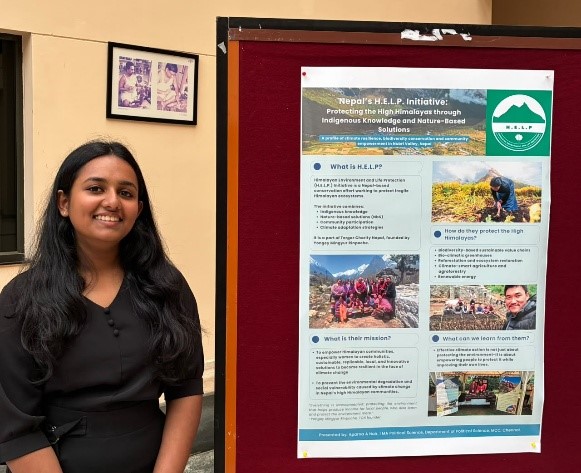
What is H.E.L.P?

Himalayan Environment and Life Protection is a Nepal-based non-profit organisation that aims to protect the Himalayan environment. It helps communities adapt to climate change and improve human and animal welfare. It was founded by Yongey Mingyur Rinpoche in March 2023 as a special unit of the continued and expanded environmental and community development work of Tergar Charity Nepal.The organisation's work focuses on Samagaun and Samdo villages in the Nubri Valley, Nepal, near Mount Manaslu. These are remote villages, and they traditionally depend on farming, livestock rearing, forests, and seasonal trade.

HELP is not only an environmental organisation. It adopts an approach that connects ecological protection with food security, women’s empowerment, education, sustainable livelihoods, and biodiversity conservation. The major principle behind this integrated approach is that the environment will be better protected when environmental action improves everyday lives.

 What is their mission?

The primary vision of H.E.L.P is to empower Himalayan communities to develop local, sustainable, innovative, and replicable solutions to climate change. The expected outcomes include economic prosperity, social harmony, community well-being, and preservation of cultural identity.

 They believe that climate change is not only an environmental problem but also a social and economic problem. They integrate indigenous knowledge about ecosystems, agriculture, and seasonal change into conservation projects. The broader vision is that human welfare and environmental protection must be pursued together. They prioritise human-nature interdependence over individual profit. It is actualised through reforestation, agroecology, organic farming, climate-smart agriculture, biodiversity-based businesses, renewable energy, etc.

 How do they protect the High Himalayas?

Combining indigenous knowledge and modern technology

Indigenous communities have long understood local weather patterns, grazing systems, medicinal plants, forests, soil conditions, and the behaviour of livestock. H.E.L.P. does not seek to replace this knowledge with outside models. Instead, it uses it as the foundation for new solutions. Drone-assisted reforestation, solar greenhouses, agricultural methods, and renewable energy equipment improve the effectiveness of local conservation. This is an example of technology employed for practical strengthening of local resilience.

 Reforestation and agroforestry

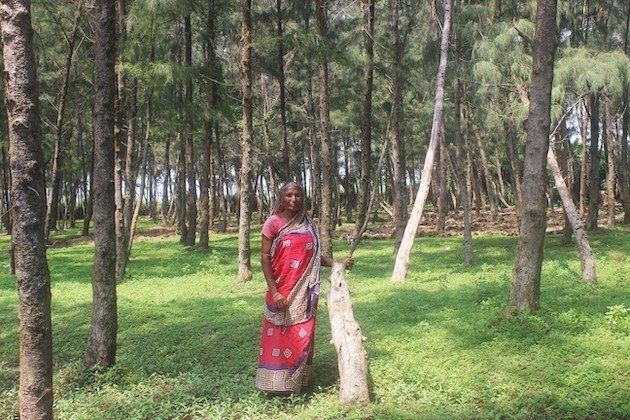
Deforestation is a problem in Nubri Valley, which is located in the Manasly Conservation Area. Climate change and demand for firewood have increased deforestation. They aim to restore 20 hectares of forest around the villages. H.E.L.P supports these village nurseries and the collection and cultivation of local tree species. This community-led forest restoration has restored around 20 hectares of forest and cultivates more than 50,000 seedlings. Agroforestry is another technique through which reforestation is promoted. Crops and livestock are integrated with trees to stabilise soil, reduce erosion and support biodiversity.

 Climate-smart food production

High Himalayas are characterised by fragile ecosystems due to climate vulnerability. The ecosystem is threatened by rising temperatures, changing snowfall and rainfall patterns, crop diseases, etc. A response to these challenges is bioclimatic greenhouses. These passive solar structures trap and retain heat, allowing villagers to grow vegetables in extremely cold and high-altitude conditions. Currently, there are sixty-two such installations where the villagers grow tomatoes, zucchini, beans, cucumber, chillies, spinach, etc. This also creates opportunities for small-scale income generation.

 Biodiversity-based livelihoods

Conservation is more durable when communities receive economic benefits from protecting ecosystems. H.E.L.P promotes it by developing sustainable value chains based on local biodiversity. One example is the organisation’s Rosa macrophylla rose-hip value chain. The profits from the rosehip cultivation are returned to the community and benefit hundreds of households. Other products include medicinal herbs, essential oils, wild garlic, yak cheese, and yak-wool handicrafts.

 Apart from these activities, the organisation supports women’s literacy, entrepreneurship, youth-led green businesses, eco-tourism, and animal welfare. These activities underline that environmental protection depends on healthy, educated, and economically secure communities.

 What can we learn from them?

Firstly, conservation must be community-led. H.E.L.P understands local needs, consults villages, proposes solutions and adapts projects according to feedback. Communities are more likely to maintain forests and biodiversity when doing so also supports food security and income.

 Second, coexistence of Indigenous knowledge and modern science. The challenges of the High Himalayas cannot be addressed through a single universal model. Traditional ecological knowledge identifies suitable species, farming practices, and local risks. Modern technology takes it a step further through forest monitoring, greenhouse production, and reforestation.

About the Author
Aparna A Nair is a Postgraduate Student at the Department of Political Science, Madras Christian College, Chennai.
All Stories
Nepal’s Thame After the 2024 Glacial Flood
26 October 2026 I Grass Roots Chronicle #36
Nepal’s Thame After the 2024 Glacial Flood
Read more →
Maldives Resilient Reefs
26 October 2026 I Grass Roots Chronicle #35
Maldives Resilient Reefs
Read more →
Women Driving Climate Resilience in Bangladesh
26 October 2026 I Grass Roots Chronicle #34
Women Driving Climate Resilience in Bangladesh
Read more →
The Pearl Protectors of Sri Lanka
26 October 2026 I Grass Roots Chronicle #33
The Pearl Protectors of Sri Lanka
Read more →
Nepal’s H.E.L.P. Initiative
26 October 2026 I Grass Roots Chronicle #32
Nepal’s H.E.L.P. Initiative
You are here
Climate Guardians
26 October 2026 I Grass Roots Chronicle #31
Climate Guardians
Read more →
Restoring the Dry Zone
26 October 2026 I Grass Roots Chronicle #30
Restoring the Dry Zone
Read more →
From Climate Vulnerability to Self-Reliance
26 October 2026 I Grass Roots Chronicle #29
From Climate Vulnerability to Self-Reliance
Read more →
The Heroes of Bhutan
26 October 2026 I Grass Roots Chronicle #28
The Heroes of Bhutan
Read more →
Water Conservation, Climate-Resilient Agriculture and Sustainable Livelihoods
26 October 2026 I Grass Roots Chronicle #27
Water Conservation, Climate-Resilient Agriculture and Sustainable Livelihoods
Read more →
Learning Afloat
26 October 2026 I Grass Roots Chronicle #26
Learning Afloat
Read more →
Women, Resilience and the Climate Challenge in Bangladesh
26 October 2026 I Grass Roots Chronicle #25
Women, Resilience and the Climate Challenge in Bangladesh
Read more →
Strengthening Livelihood Resilience among Coastal Women
Oct 15, 2026
Strengthening Livelihood Resilience among Coastal Women
Read more →
The 2026 Assam floods
Aug 26, 2026
The 2026 Assam floods
Read more →
The Hands Restoring Bengaluru’s Lakes
Aug 26, 2026
The Hands Restoring Bengaluru’s Lakes
Read more →
The Ice Stupa artificial glaciers of Phyang village
Aug 26, 2026
The Ice Stupa artificial glaciers of Phyang village
Read more →
Where the Water Returns
Aug 26, 2026
Where the Water Returns
Read more →
Water Warriors of the Himalayas
Aug 26, 2026
Water Warriors of the Himalayas
Read more →
Empowering Communities for a Zero-Waste Tomorrow
30 June 2026 I Grass Roots Chronicle #24
Empowering Communities for a Zero-Waste Tomorrow
Read more →
From Vulnerability to Resilience: A Climate Adaptation Journey
30 June 2026 I Grass Roots Chronicle #23
From Vulnerability to Resilience: A Climate Adaptation Journey
Read more →
Hulimavu's Blue Revolution
30 June 2026 I Grass Roots Chronicle #22
Hulimavu's Blue Revolution
Read more →
Climate Justice from the Ground Up
30 June 2026 I Grass Roots Chronicle #21
Climate Justice from the Ground Up
Read more →
Every Disaster Predicted, Every Community Ready
30 June 2026 I Grass Roots Chronicle #20
Every Disaster Predicted, Every Community Ready
Read more →
The Women Who Salt the Earth and Harness the Sun
30 June 2026 I Grass Roots Chronicle #19
The Women Who Salt the Earth and Harness the Sun
Read more →
Guardians in Green
30 June 2026 I Grass Roots Chronicle #18
Guardians in Green
Read more →
Voices for a Changing Climate
30 June 2026 I Grass Roots Chronicle #17
Voices for a Changing Climate
Read more →
Friends of Lakes
30 June 2026 I Grass Roots Chronicle #16
Friends of Lakes
Read more →
The Climate Classroom
30 June 2026 I Grass Roots Chronicle #15
The Climate Classroom
Read more →
The Seeds of Change
30 June 2026 I Grass Roots Chronicle #14
The Seeds of Change
Read more →
The Students Who Heal the Soil and Study the Land
30 June 2026 I Grass Roots Chronicle #13
The Students Who Heal the Soil and Study the Land
Read more →
Roots, Rain & Renewal
30 June 2026 I Grass Roots Chronicle #12
Roots, Rain & Renewal
Read more →
The Forests That Refused to Fall
30 June 2026 I Grass Roots Chronicle #11
The Forests That Refused to Fall
Read more →
The Forest She Built
30 June 2026 I Grass Roots Chronicle #10
The Forest She Built
Read more →
Lakeika: Breathing Life Back into Puttenahalli
30 June 2026 I Grass Roots Chronicle #09
Lakeika: Breathing Life Back into Puttenahalli
Read more →
Banking on Plates for a Clean World
30 June 2026 I Grass Roots Chronicle #08
Banking on Plates for a Clean World
Read more →
Chintan Environmental Research and Action Group
30 June 2026 I Grass Roots Chronicle #07
Chintan Environmental Research and Action Group
Read more →
The Lakeika of India
27 May 2026 I Grass Roots Chronicle #06
The Lakeika of India
Read more →
The Lake Man of India
27 May 2026 I Grass Roots Chronicle #05
The Lake Man of India
Read more →
Every forest needs a Bengalata
27 May 2026 I Grass Roots Chronicle #04
Every forest needs a Bengalata
Read more →
The Spring Keepers of Uttarakhand
27 May 2026 I Grass Roots Chronicle #03
The Spring Keepers of Uttarakhand
Read more →
The Voice of Garhwal at 90.8 FM
27 May 2026 I Grass Roots Chronicle #02
The Voice of Garhwal at 90.8 FM
Read more →
The HEAL Movement
27 May 2026 I Grass Roots Chronicle #01
The HEAL Movement
Read more →
India: Engineer Gurunandan Rao's science-led effort to revive Bengaluru's Lalbagh Lake
Feb 26, 2026
India: Engineer Gurunandan Rao's science-led effort to revive Bengaluru's Lalbagh Lake
Read more →
India: Supriya Sahu highlights Tamil Nadu's expansion of reserved forests to strengthen climate resilience
Feb 20, 2026
India: Supriya Sahu highlights Tamil Nadu's expansion of reserved forests to strengthen climate resilience
Read more →
Jadav Payeng, often called the "Forest Man of India," spent roughly four decades planting trees on a barren sandbar along the Brahmaputra River in Assam
Feb 15, 2026
Jadav Payeng, often called the "Forest Man of India," spent roughly four decades planting trees on a barren sandbar along the Brahmaputra River in Assam
Read more →
They Called Her "Just A Maami In A Saree". She Proved She Was A Force Of Nature
Feb 10, 2026
They Called Her "Just A Maami In A Saree". She Proved She Was A Force Of Nature
Read more →
How a Kolkata Neighborhood Saved its 70-Year-Old Tamarind Tree through Cultural Resistance
Jan 15, 2026
How a Kolkata Neighborhood Saved its 70-Year-Old Tamarind Tree through Cultural Resistance
Read more →
How Tree Lovers Rescued a Kolkata Neighbourhood
Dec 15, 2025
How Tree Lovers Rescued a Kolkata Neighbourhood
Read more →
The Indian Public Servant Helping Disadvantaged Communities Adapt To Rising Heat
Dec 10, 2025
The Indian Public Servant Helping Disadvantaged Communities Adapt To Rising Heat
Read more →
Meet the Lake Man Reviving 1000+ Drought-Hit South Indian Villages
Oct 20, 2025
Meet the Lake Man Reviving 1000+ Drought-Hit South Indian Villages
Read more →
37 Villages Resolve To Protect Ntangki National Park At Athibung Consultation
Oct 17, 2025
37 Villages Resolve To Protect Ntangki National Park At Athibung Consultation
Read more →
How Women Farmers in the Sundarban Are Reviving Indigenous Rice Varieties
May 15, 2025
How Women Farmers in the Sundarban Are Reviving Indigenous Rice Varieties
Read more →