Maldives is a country which is largely affected by climate change due to its topography. In response, UNICEF’s Climate Guardians formed to address the climate threats which is faced by the country. It empowers the youth to adopt various initiatives to build a sustainable and resilient environment. Their actions show that that the young population are capable of helping their country respond to the climate crisis.
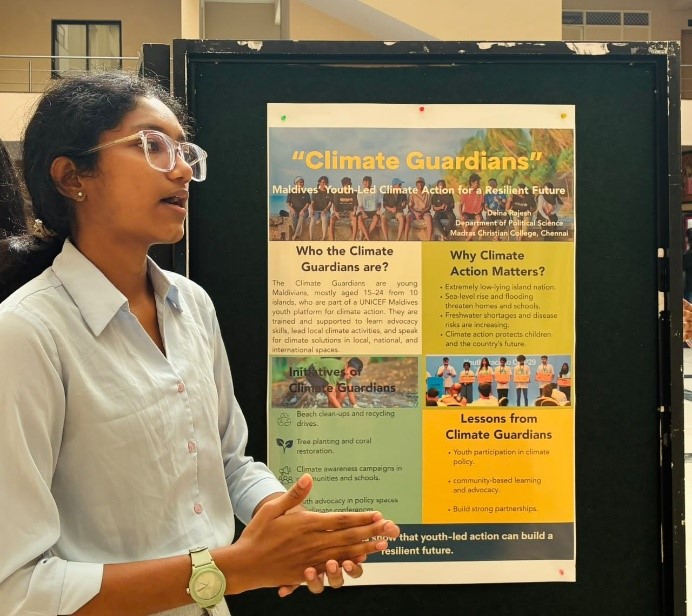
Climate Guardians are a group of young Maldivians aged between 15 – 24 who are in the forefront in response to the climate threats. UNICEF Maldives are supporting them to make their communities more resilient and sustainable in a changing climate. They are trained in leadership, communication, advocacy and climate-related issues. This support helps them to raise their voice against the issues facing by their country, advocate for a systematic action, engage in policy formulation to address the issue and present potential solutions at local and international levels. This platform ensure that their voice is heard as well as to participate in decision making. Their actions mainly focus on addressing the climate issues on a longer run. They are largely mobilizing young population to be the leaders and change makers of the country.
Climate action really matters in Maldives as it is a low-lying region with just 1 per cent land and 99 per cent sea. The region is very vulnerable to climate related issues especially sea level rise, coastal erosion, flooding, heat waves etc. These changes are a huge threat to their houses, schools and other infrastructure. Children and young people are mostly affected when the extreme weather conditions disrupt their schooling, mental conditions and travel. The chances of the impact of waterborne diseases can be fatal among children. Maldives also faces severe freshwater shortage as flooding and saltwater intrusion can contaminate their ground water sources. Climate change is also worsening the challenges that have already been existing in the country. It is impacting their industries like tourism and fisheries, poverty and malnourishment. Therefore, climate action is very essential to safeguard the environment, children’s health, education, livelihoods and future. Climate Guardians can bring a lot of changes by channelizing the capability of young people to be climate advocates and pool ideas to create solutions for the crises faced by their communities.
Climate Guardians are vibrant and diverse youth joined together to speak for the issues that are facing their country. UNICEF Maldives are encouraging the youngsters to advocate and help to enact climate policy and initiatives. It also plays an important role to spread climate awareness and resilient measures among the youth. Their initiatives include beach clean-ups, recycling drives, tree planting, coral restoration, protection of marine and coastal ecosystems. Coral restoration is particularly important because coral reefs protect islands from waves and support marine biodiversity. Climate Guardians also participate in workshops, design-thinking boot camps and awareness programs. These activities help them to identify problems and to develop practical solutions. It enables young people to connect with policymakers and influence the decision making to address their concerns. The climate guardians also communicate through podcasts, panel discussions, policy consultations and national and international forums such as COP (Conference of the Parties). They advocate for climate-resilient schools, health facilities, communities and public services through these platforms.
Their participation helps to ensure that climate policies address the needs of children and young people. Maldives became one of the first countries in the South Asia region to finalize its Nationally Determined Contributions (NDC) 3.O. This is a huge achievement for Maldivian youth for the inclusion of inputs and perspectives of children and young people in national climate action plans. Young people are not just limiting themselves as victims or spectators but they stand up and raise their concerns over the issues. They don’t wait for somebody else to take up the initiatives but they themselves took the initiative and calling for urgent action to address the climate crisis that will affect the future of the country.
The Climate Guardians initiative has several important lessons. Youth participation in the climate policy and decision making is crucial. As they represent the entire youth population of the Maldives they can contribute based on their experiences and reality. Community based learning and advocacy are essential to understand about environmental challenges and work with the communities to develop practical solutions. This helps to connect climate knowledge with real action. Youth initiatives become impactful when young people cooperate with UNICEF, government departments, local councils and civil society organizations. It also gives them access to access to various resources, skills and important decision-making spaces.
The Maldives is on the frontlines of the climate crisis, but its young people are not standing silently. Climate guardians might be a model for those countries which is affected by various climate threats. Their actions show that they are not only victims but also capable for making decisions to build a resilient and sustainable future of Maldives.
About the Author
Delna Rajesh is a Postgraduate Student at the Department of Political Science, Madras Christian College, Chennai.