The ocean is one of Sri Lanka’s most valuable natural assets, with a coastline over 1,600 kilometres long that supports rich biodiversity across coral reefs, seagrass beds, fisheries, tourism, coastal communities and livelihoods. However, marine pollution, plastic waste, and unsustainable human activities pose serious threats to the environment. In response, The Pearl Protectors has emerged as a volunteer-based marine conservation organisation dedicated to conserving and protecting Sri Lanka’s coastal belt and marine life in all its forms.
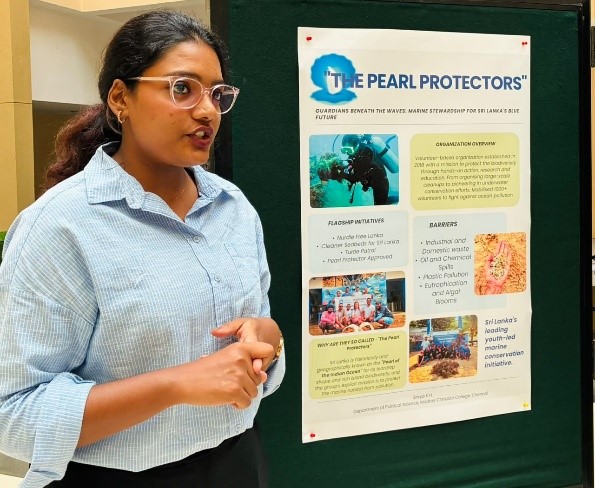
The Pearl Protectors was established in 2018 by Muditha Katuwawala, an economist turned conservationist, whose passion for the ocean and emotional connection to his home country led him to found this organisation. This volunteer-based organisation brings together like-minded individuals committed to safeguarding the sea areas and the marine habitat of Sri Lanka. Their mission is to nurture a sustainably protected marine environment in Sri Lanka where human impact does not harm its marine biodiversity. The initiative behind this organisation is to share knowledge about the importance of the ocean, create awareness, and encourage people to stop using single-use plastic, because that is one of the major issues Sri Lanka is facing. It provides opportunities for people to participate directly in marine conservation activities, including beach clean-ups, underwater clean-ups, turtle protection and awareness campaigns. By involving citizens, particularly young people, The Pearl Protectors helps transform marine conservation from an abstract environmental issue into a community responsibility. The organisation has now reported approximately 1,900 registered volunteers.
Initially, it began as an idea to clean up ocean pollution, which quickly evolved to address the most urgent marine conservation needs in Sri Lanka. Unfortunately, on May 25, 2021, the M/V X-Press Pearl maritime disaster took place. The Coastline of Sri Lanka was affected by toxic fumes, oil and chemical spills, and, worst of all, nurdles—tiny plastic pellets used in plastic manufacturing that began to pile up. After recognising the urgent need to remove these microplastics, they launched the Nurdle Free Lanka campaign to address it and began collecting as many nurdles as possible through volunteering. They built awareness and mobilised volunteers to remove the nurdles by making use of different types of sieves to collect as many nurdles as possible - built trommels, hand-held sieves, and hanging sieves. They continue to do this today, and this is by far the largest voluntary campaign in Sri Lanka, having contributed significantly to raising awareness about the impact of nurdle spills. This initiative has mobilised 2,700 volunteers through 34 coordinated clean-up activities and removed over 1.5 metric tons of nurdles and microplastics from beaches.
Another major initiative is Cleaner Seabeds for Sri Lanka, an underwater expedition programme designed to remove marine debris from seabeds and coral reef areas. Divers participate in clean-up expeditions removing plastics, discarded fishing nets, clothing, metal and other forms of marine litter. Collected marine litter and stranded fishing gear were weighed, audited, segregated and handed over to both recycling waste collectors and incineration waste collectors.
Plastic pollution is one of the central concerns of The Pearl Protectors. Through its Pearl Protector Approved programme, the organisation introduced an accreditation system for restaurants and food vendors that reduce or eliminate single-use plastics. Its creative campaigns included constructing a large Christmas tree from discarded PET bottles collected from beaches. In 2021, more than 1,300 bottles were used to construct a 12-foot installation at Wellawatta Beach, turning marine waste into a powerful public-awareness message.
Sri Lanka is home to 5 of 7 sea turtle species that come ashore to nest. Major challenges include turtles being poached for meat and shell, eggs stolen for consumption and tourist sales and plastic light pollution. During the 90-day patrol, volunteer teams will patrol beaches at night and in the early morning hours to identify nesting sites, protect them from poachers, and support ex-situ conservation in secure locations. The organisation also undertakes marine litter surveys. Its Transboundary Marine Litter Survey uses citizen science to document marine debris found along the shorelines and investigate the movement of waste across marine boundaries.
Rather than focusing only on direct environmental clean-ups, the organisation takes an integrated approach that combines education, research, advocacy, community participation and practical conservation activities. The organisation conducts seminars, panel discussions, school programmes and public awareness activities to help communities understand marine environmental problems. Perhaps the organisation’s most important contribution is its ability to connect individual action with broader environmental change. By combining volunteer activities, citizen science and policy advocacy, The Pearl Protectors has become an important civil-society organisation, demonstrating that marine conservation requires both immediate intervention and long-term behavioural and institutional change.
About the Author:
Sreya KH is a postgraduate student at the Department of Political Science, Madras Christian College, Chennai.